

Ahmed Kamel – Egypt Daily News
Egypt is readjusting its naval modernization strategy for 2026, shifting emphasis away from costly large surface combatants and toward submarines and unmanned maritime systems, a move that reflects both fiscal pressure and a changing regional security environment.
Rather than pursuing broad fleet expansion, Egyptian naval planning now points to selective prioritization investments designed to deliver high strategic impact at lower long-term cost. Submarines and autonomous maritime platforms offer precisely that balance, providing deterrence, persistence, and situational awareness across the Mediterranean, Red Sea, and the critical approaches to the Suez Canal.
The shift comes as Cairo continues to manage economic reform under IMF-backed programs while grappling with reduced maritime revenues. Disruptions in the Red Sea have significantly affected Suez Canal traffic, with Egyptian officials publicly acknowledging revenue losses compared to pre-crisis levels. For naval planners, this environment favors capabilities that stretch deterrence per dollar: undersea platforms that impose uncertainty on potential adversaries and unmanned systems that can operate continuously without placing crews at risk.
Geography and threat perception are central to this readjustment. Egypt operates across two strategic maritime theaters and must secure vital sea lines of communication, protect offshore energy infrastructure, and ensure freedom of navigation through one of the world’s most important chokepoints. Submarines and naval drones allow Egypt to maintain coverage and deterrence without the financial and operational burden of an expanded surface fleet.
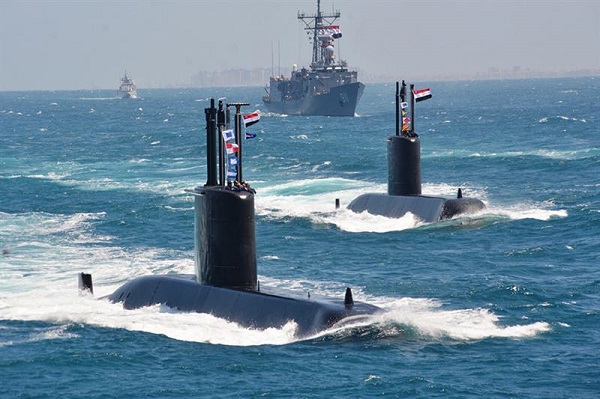
Egypt already has a modern undersea foundation. Its four German-built Type 209/1400mod diesel-electric submarines, delivered between 2016 and 2021, provide a credible strike and sea-denial capability, particularly in the Eastern Mediterranean and along the Suez axis. These boats now form the backbone of the navy’s submarine force, while older Romeo-class vessels are increasingly difficult to sustain and vulnerable to modern anti-submarine warfare.
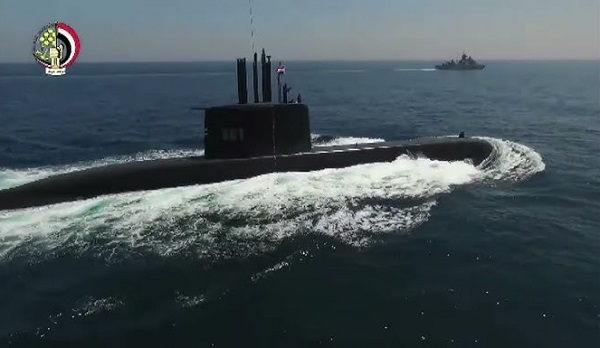
What appears to be changing in 2026 is the long-term direction. Rather than incremental upgrades, Cairo is exploring next-generation submarine options with an emphasis on industrial sovereignty. Discussions with France over a conventionally powered variant of the Barracuda submarine have reportedly slowed not over performance, but over Egypt’s demands for deeper technology transfer, local production, and control over sustainment. Similar considerations have shaped other Egyptian naval procurements, where domestic manufacturing, training autonomy, and long-term support weigh heavily.

Spain’s S-80 Plus submarine has also emerged as a potential option. An Egyptian technical evaluation reportedly followed the Spanish Navy submarine Isaac Peral’s port visit to Alexandria in November 2025, a move widely interpreted as strategic signaling. With air-independent propulsion, extended endurance, and a design optimized for stealth and autonomy, the S-80 aligns with Egypt’s requirement to operate discreetly across both maritime theaters without escalating surface fleet activity.

While submarine decisions move deliberately, progress on unmanned systems appears faster and more domestically oriented. At the EDEX 2025 defense exhibition in Cairo, Arab International Optronics unveiled the USV-AIO-001 unmanned surface vessel, equipped with a locally produced Eagle-2 remote weapon station developed in cooperation with Spain’s Escribano. Officials claimed local content of up to 70 percent, underscoring Egypt’s push to anchor unmanned maritime capabilities within its own industrial base.
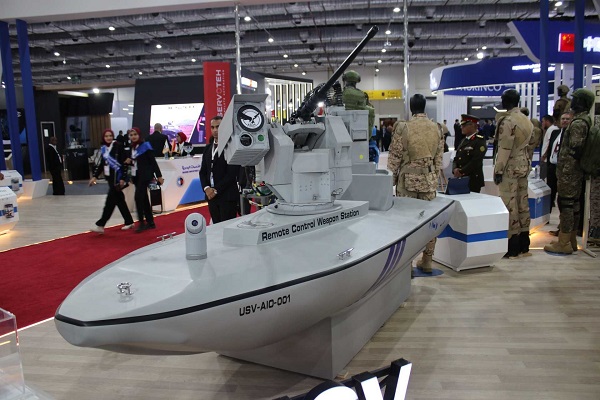
The operational rationale is clear. Unmanned patrol vessels can monitor ports, offshore energy assets, and high-traffic sea lanes such as the Suez approaches with fewer personnel and lower operating costs. Their relative expendability also makes them well suited for operating forward in environments increasingly saturated with drones and precision weapons. Supporting industrial partnerships have focused on optics, cybersecurity, artificial intelligence, and specialized training, suggesting a pathway from demonstration platforms to sustained operational service.
Regionally, Egypt’s shift reflects intensifying underwater competition. Turkey is inducting air-independent propulsion submarines and openly framing them as a step toward indigenous designs. Israel continues to highlight the strategic role of its Dolphin-class submarines, while Algeria maintains a capable Kilo-class force. Against this backdrop, Egypt’s emphasis on submarines and maritime autonomy appears aimed at preserving deterrence and relevance as budgets tighten.
Equally important is readiness and sustainment. Recent extensions of in-service support agreements for major surface combatants signal growing recognition that platform numbers alone do not translate into capability without training pipelines, depot capacity, and predictable availability. For analysts, three indicators will be critical in 2026: whether Egypt formalizes a next-generation submarine program with meaningful technology transfer, whether unmanned surface vessels like the USV-AIO-001 become programs of record integrated into naval doctrine and command systems, and whether sustainment investments translate into measurable increases in operational days at sea.
Taken together, Egypt’s evolving naval posture suggests not retrenchment, but readjusting, a move toward quieter, more autonomous, and industrially sovereign maritime power suited to an era of constrained resources and rising regional competition.
