

Ahmed Kamel – Egypt Daily News
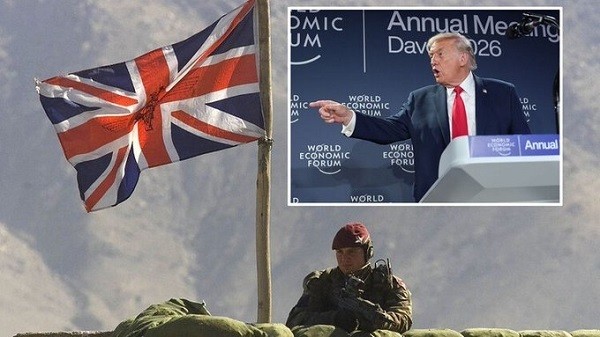
A major diplomatic row has erupted between London and Washington after US President Donald Trump made remarks widely condemned in the UK as belittling the role and sacrifice of British and allied troops during the war in Afghanistan.
Prime Minister Sir Keir Starmer on Friday described the comments as “insulting and frankly appalling” and said President Trump should apologise for suggesting that NATO forces, including British troops, stayed “a little off the front lines” during the conflict. The remarks, made in a Fox News interview, have triggered anger across Britain’s political spectrum and among military veterans and families of the fallen.
Britain lost 457 service personnel in Afghanistan between 2001 and 2014, the second-highest toll among coalition forces after the United States. Thousands more were wounded, many with life-changing injuries, during combat operations carried out alongside US forces, particularly in Helmand province, one of the most violent theatres of the war.
Speaking at Downing Street, Starmer said Trump’s comments had caused deep hurt to bereaved families and veterans. “If I had misspoken in that way or said those words, I would certainly apologise,” he said, responding directly to Diane Dernie, the mother of Ben Parkinson, a British soldier who lost both legs and suffered severe brain injuries in Afghanistan.
Dernie said she was “stunned” by Trump’s remarks and rejected the claim that British troops were removed from frontline fighting. “The Taliban didn’t plant IEDs miles back from the front line,” she said. Ian Sadler, whose son Trooper Jack Sadler was killed in 2007, echoed that view, saying British forces were consistently deployed in the most dangerous areas.
Trump’s comments came amid a wider deterioration in relations with Nato allies. Over the past week, the US president has publicly clashed with European leaders over defence commitments and questioned whether Nato partners would come to America’s aid in a future conflict. In the Fox interview, Trump said he was “not sure” Nato would support the US if it needed help, despite the alliance’s collective defence clause.
Downing Street pushed back strongly, with the prime minister’s spokesperson saying Trump was “wrong in diminishing the sacrifice and service of our troops,” noting that Nato’s mission in Afghanistan was launched in response to the September 11 attacks on the United States.
Political reaction in Britain was swift and unusually united. Conservative leader Kemi Badenoch called Trump’s comments “flat-out nonsense,” while Labour Defence Secretary John Healey said British troops should be remembered as “heroes who gave their lives in service of our nation.” Armed Forces Minister Al Cairns, who served five tours in Afghanistan with the Royal Marines, described the remarks as “utterly ridiculous,” saying coalition forces “shed blood, sweat and tears together.”
Senior figures from across Parliament, including Reform UK MPs and Liberal Democrat leader Sir Ed Davey, also condemned the remarks, underscoring the sensitivity of the issue in a country where military service in Afghanistan remains a defining experience for a generation of soldiers.
The controversy also drew a response from NATO Secretary-General Mark Rutte, who publicly corrected Trump during the World Economic Forum in Davos. Rutte reminded the US president that NATO invoked Article 5 its collective defence clause, for the first and only time in history after the 9/11 attacks. “They will, and they did in Afghanistan,” Rutte said, referring to European allies coming to America’s aid.
Coalition casualty figures underline that point. While the US suffered 2,461 military deaths in Afghanistan, America’s allies lost more than 1,100 personnel, including troops from the UK, Canada, Denmark, the Netherlands and other Nato members. Denmark, which Trump recently criticised as “ungrateful” in a separate dispute, suffered the highest per capita death toll of any coalition country.
Veterans and former officers have also spoken out. Conservative MP Ben Obese-Jecty, who served in Afghanistan, said the sacrifices of British and Nato forces were being “held too cheaply,” while Labour MP and former RAF officer Calvin Bailey said Trump’s account “bears no resemblance to the reality experienced by those of us who served there.”
The episode has revived concerns about the future of transatlantic relations under Trump, particularly as NATO grapples with renewed security challenges in Europe and the Middle East. While officials on both sides have stopped short of suggesting a lasting rupture, the dispute has highlighted the political and emotional weight of the Afghanistan war and the enduring expectation in Britain that the sacrifices made alongside the United States will be publicly recognised and respected.
