

Ahmed Kamel – Egypt Daily News
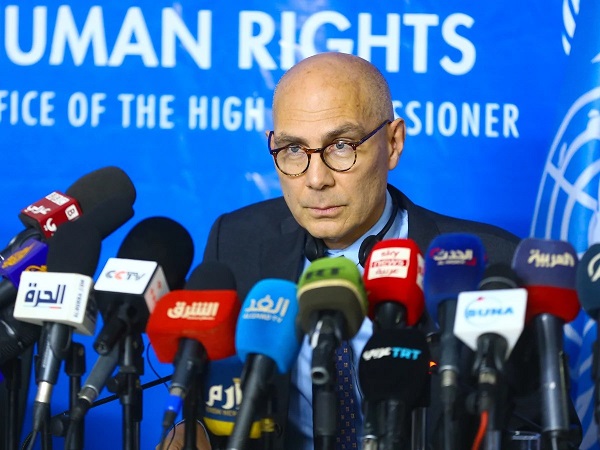
The United Nations High Commissioner for Human Rights has sharply criticised what he described as the “now-routine abuse” of migrants and refugees by US authorities, warning that current immigration enforcement practices are undermining human dignity, due process and family unity.
In a statement issued on Friday, Volker Türk said he was “astounded” by the scale and normalisation of what he called the denigration and harmful treatment of migrants in the United States, urging Washington to urgently bring its policies into line with international human rights standards.
“Where is the concern for their dignity, and our common humanity?” Türk asked, as he called on US authorities to end practices that he said are “tearing apart families” and exposing vulnerable people, particularly children, to severe and long-term harm.
The comments come amid an intensified immigration crackdown under President Donald Trump’s administration, which has deployed thousands of Immigration and Customs Enforcement (ICE) agents to several Democratic-led cities, including Minneapolis. The administration says the campaign is aimed at deporting millions of undocumented migrants nationwide.
Tensions have risen sharply in Minneapolis following reports that a five-year-old child was detained during a recent enforcement operation, prompting outrage from Democratic lawmakers and local officials. The city has already been the scene of protests since early January, when a federal agent shot and killed US citizen Renee Good during an operation that authorities later described as an act of self-defence.
Use of force and mass raids
Türk expressed particular concern over the use of large-scale enforcement actions, which he said often involve “apparently unnecessary or disproportionate force” by immigration and other federal agents. He stressed that under international law, lethal force is permitted only as a last resort and solely in response to an imminent threat to life.
He warned that a range of US migration policies are leading to arbitrary and unlawful arrests and detentions, as well as flawed deportation decisions. According to the UN rights office, migrants are being detained in locations traditionally regarded as sensitive or protected spaces, including hospitals, places of worship, schools, courthouses and private homes.
“Individuals are being surveilled and detained, sometimes violently, often solely on mere suspicion of being undocumented migrants,” Türk said. He also criticised what he described as intimidation and vilification of those who protest against immigration raids, noting that some demonstrators have themselves been subjected to arbitrary violence.
Family separations and child welfare
A central concern highlighted by the UN rights chief is the impact of enforcement practices on families. He said many arrests and removals take place without adequate efforts to preserve family unity, leaving children particularly exposed to psychological trauma, instability and long-term harm.
Human rights groups and child welfare advocates in the US have echoed these concerns, warning that detention or deportation of parents can have lasting effects on children’s mental health, education and overall development.
Rhetoric and accountability
Türk also condemned what he described as the “dehumanising portrayal” of migrants and refugees, particularly rhetoric that depicts them collectively as criminals or threats based on nationality or migration status. Such narratives, he said, are especially troubling in a country whose history and development have been shaped by successive waves of migration.
“Demonising migrants and refugees is inhuman and wrong, and it goes against the very fabric and foundations of the nation,” he said, urging US leaders at all levels to abandon what he called scapegoating tactics that fuel xenophobia and social division.
In addition, the UN rights chief called for independent and transparent investigations into deaths in ICE custody. He noted that at least 30 such deaths were reported last year, with a further six recorded so far this year, raising serious questions about conditions of detention and access to medical care.
US officials have previously defended enforcement operations as lawful and necessary to uphold immigration laws, arguing that ICE prioritises individuals with criminal records. However, critics say recent actions suggest a far broader net, with families, children and long-term residents increasingly affected.
Türk acknowledged that states have the sovereign right to set their own migration policies, but stressed that such policies must be implemented in full compliance with international law. “Respect for human rights,” he said, “is not optional, even in the context of border control and immigration enforcement.”
