

Ahmed Kamel – Egypt Daily News
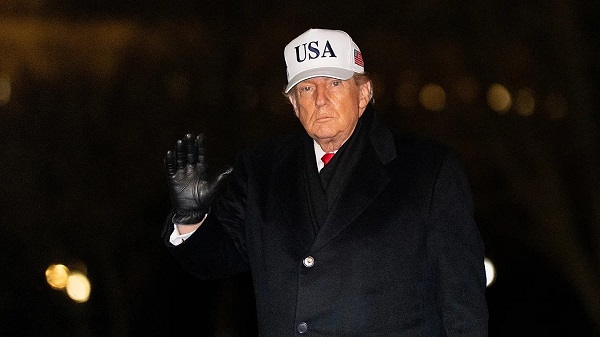
As regional and international mediation efforts accelerate to prevent a wider confrontation, U.S. President Donald Trump has issued a stark warning to Iran, saying any future escalation would be more severe than before and signaling a significant expansion of American military presence near the country.
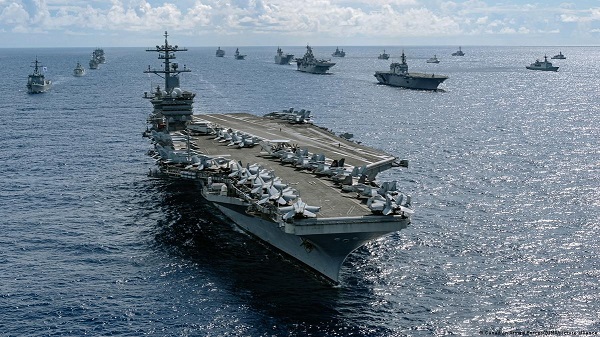
Speaking on Wednesday, Trump said the United States had dispatched a “very large” naval force toward Iran, describing it as larger than the fleet previously deployed off the coast of Venezuela. The move, he said, was intended both as a show of force and as leverage to push Tehran toward negotiations.
Trump emphasized that Washington still hopes Iran will agree to talks, reiterating his desire for what he described as a “fair and balanced” agreement. At the same time, he warned that the window for diplomacy is rapidly closing. “Time is running out,” he said, repeating a message he has delivered to Iranian leaders on multiple occasions. Any new military escalation, he added, would be “much worse” than what has occurred in the past, urging Tehran not to repeat earlier confrontations.
The warning comes amid visible military preparations by the United States. U.S. Central Command has announced plans for a multi-day exercise designed to demonstrate its ability to deploy, distribute, and sustain combat air power across its area of responsibility. While officials have not disclosed the timing, location, or specific assets involved, the exercise is widely seen as a signal of U.S. readiness as tensions with Iran rise.
Earlier this week, a U.S. naval strike group led by the nuclear-powered aircraft carrier USS Abraham Lincoln arrived in the region, accompanied by guided-missile destroyers tasked with air defense and protection of the carrier group. American officials have not ruled out further military action against Iran, particularly in response to what Washington describes as Tehran’s use of violence to suppress domestic protests. Human rights organizations have reported that thousands of people were killed over the course of several days during recent unrest, a claim Iran disputes. The situation has been further complicated by a near-total internet shutdown inside the country, limiting independent verification and drawing international criticism.
Despite the buildup, Trump has sent mixed signals about the nature and scope of any potential U.S. intervention, oscillating between threats of force and renewed calls for negotiations. This ambiguity appears intended to keep pressure on Tehran while leaving room for diplomacy.
Iran Rejects Pressure-Based Diplomacy
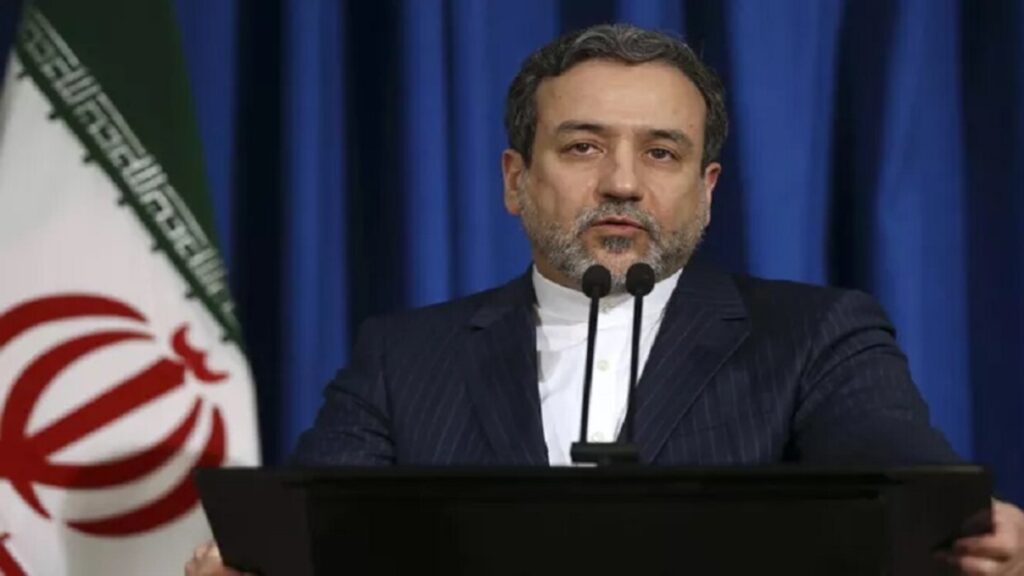
Iranian officials, however, have pushed back strongly against what they describe as coercive tactics. Foreign Minister Abbas Araghchi said any negotiation process must be based on clear principles, including equality, mutual respect, and the pursuit of shared interests. Threats, intimidation, and what he called “illogical demands,” he argued, have no place in serious diplomacy.
Araghchi stressed that imposing one’s will through force or unilateral measures cannot lead to sustainable or workable outcomes. Negotiations, he said, are only meaningful when conducted from a position of parity between the parties involved. He also denied that Iran had sought talks with Washington, and rejected reports of recent contact with U.S. envoy Steve Witkoff.
At the same time, Araghchi acknowledged that several countries are acting as intermediaries in an effort to bridge differences. He said Tehran remains in continuous contact with these mediators as part of ongoing diplomatic efforts, noting that some regional states fear that threats of military action could destabilize the entire Middle East.
Regional Warnings and Mediation Efforts
Concerns about escalation are being echoed across the region. A Gulf source told CNN that several countries, including Qatar, Oman, Saudi Arabia, and Egypt, have urged the United States to refrain from launching attacks on Iran. According to the source, these states warned of far-reaching security and economic consequences that could affect not only the region but also U.S. interests.
The message, the source said, was intended to be heard clearly in Washington, particularly given the importance of Gulf partners in Trump’s regional strategy. At the same time, these countries reportedly cautioned Iran that any attack on U.S. facilities in the Gulf would have serious repercussions for Tehran’s relations with its neighbors. Discussions have focused on lowering the tone of public rhetoric and avoiding a military option that could trigger broader instability.
The recent developments have unsettled key U.S. allies. The United Arab Emirates announced that it would not allow its airspace, territory, or territorial waters to be used for any attack on Iran, underscoring its commitment to neutrality and regional stability.
Turkey has also weighed in. In a media interview, Turkish Foreign Minister Hakan Fidan described any attack on Iran and a return to war as a mistake. He said Tehran remains open to renewed negotiations over its nuclear program and urged Washington to address disputes with Iran sequentially rather than as a single package.
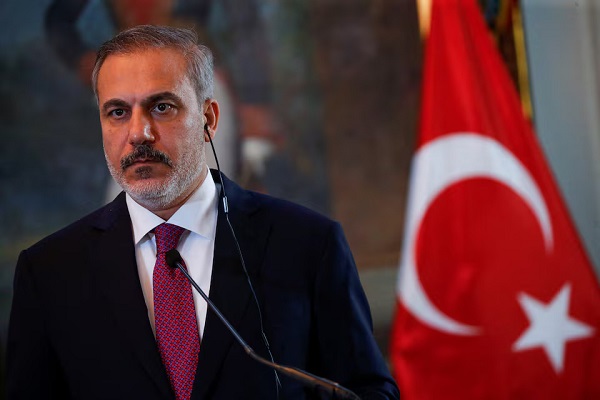
Fidan said his consistent advice to American officials has been to close files with Iran one by one, starting with the nuclear issue before moving on to others. Addressing all disputes simultaneously, he warned, risks overwhelming Iranian decision-makers and could be perceived as humiliating, making it difficult not only to sell domestically but also to accept at the leadership level. He added that during a visit to Iran two months ago, he had been frank with Iranian officials, emphasizing that building trust in the region requires Tehran to be mindful of how its actions are perceived by neighboring states.
As military deployments continue and diplomatic channels strain under pressure, the standoff appears to be entering a critical phase. With warnings intensifying on all sides and regional actors urging restraint, the coming weeks may determine whether the crisis moves toward negotiations or slides closer to open confrontation.
