

Ahmed Kamel – Egypt Daily News
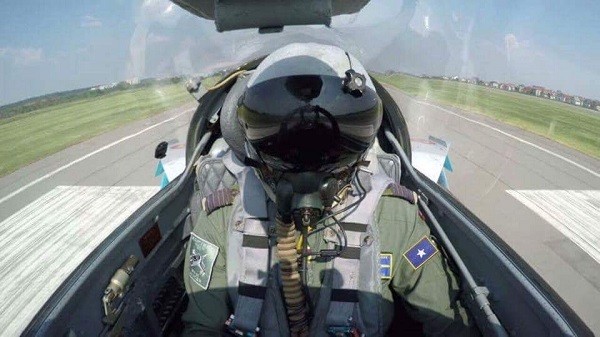
Turkey has significantly expanded its military footprint in Somalia with the deployment of three F-16 fighter jets to the capital, Mogadishu, marking a new phase in Ankara’s long-term security and strategic engagement in the Horn of Africa.
Somali officials familiar with the operation said Turkey had spent several months preparing a dedicated facility to host the advanced aircraft. Turkish engineers reportedly worked at Mogadishu International Airport to upgrade infrastructure, while satellite imagery has shown the construction of new aircraft hangars since September. Recent Turkish cargo flights are believed to have delivered spare parts, equipment, and munitions, underscoring the scale of the operation.
According to sources, the deployment is linked to broader Turkish plans in Somalia, including the anticipated arrival of an offshore oil exploration platform later this year. Ankara is expected to begin drilling off Somalia’s coast as part of energy cooperation agreements, alongside plans to develop a spaceport north of Mogadishu. Analysts say these projects highlight Turkey’s ambition to combine military presence with economic and technological influence in the country.
Although Turkey’s Ministry of Defense has not issued an official statement on the F-16 deployment, ministry sources told local media that Ankara maintains an air command structure in Somalia. They added that the Turkish air command and the joint Somali-Turkish task force continue to support Somalia’s counterterrorism capabilities through military assistance, training programs, and advisory support.
Turkey has been a key ally of the Somali government in its fight against the al-Shabaab militant group, which still controls large swathes of territory despite ongoing military operations. Turkish officials have repeatedly stressed their commitment to Somalia’s sovereignty and territorial integrity, particularly amid rising regional tensions in the Horn of Africa and international recognition of Somaliland by Israel.
In a statement issued after the first meeting of Turkey’s National Security Council in 2026, Ankara reaffirmed its support for the unity of the Federal Republic of Somalia, pledging to stand alongside the Somali people in confronting terrorist organizations and safeguarding national stability.
Turkey’s growing role has also been reflected in recent leadership changes within Somalia’s security establishment. Earlier this year, the Somali Council of Ministers appointed Brigadier General Ibrahim Mohamed Mohamed as the new commander of the Somali National Army. The officer holds a master’s degree from a Turkish university and has received extensive military training at Turkey’s National Defense University, highlighting Ankara’s influence in shaping Somalia’s military leadership.
Beyond fighter aircraft, Turkey has supplied Somalia with a range of advanced military assets, including armed drones such as the Bayraktar TB2 and Akinci, as well as three T129 ATAK attack helicopters deployed in June. In February 2024, Ankara also delivered two utility helicopters to the Somali navy as part of a comprehensive defense agreement aimed at building a domestic maritime force.
Turkey’s engagement in Somalia extends well beyond military cooperation. Since 2011, Ankara has invested heavily in the country, opening what it describes as its largest embassy worldwide in Mogadishu and providing more than $1 billion in humanitarian aid to address drought, famine, and infrastructure collapse.
Turkey also operates a major military base in the capital, manages Mogadishu’s airport and seaport, and has trained an estimated one-third of Somalia’s armed forces either in Turkey or at the TURKSOM military training facility in Mogadishu.
Taken together, the deployment of F-16s and the expansion of military, economic, and institutional ties underscore Turkey’s emergence as one of Somalia’s most influential external partners, reshaping the balance of power in the Horn of Africa and signaling Ankara’s intent to remain a central actor in the region’s security and development landscape.
