

Ahmed Kamel – Egypt Daily News
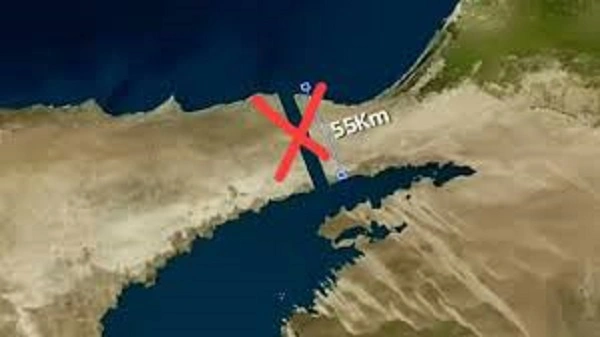
Egyptian authorities on Tuesday settled long-running debate surrounding one of the country’s most ambitious historical development proposals, announcing the rejection of plans to flood the Qattara Depression with Mediterranean seawater after a comprehensive government review concluded that the environmental and economic risks far outweigh any potential benefits.
The Egyptian Cabinet revealed the findings through an official presentation based on studies conducted by a specialized ministerial committee, stressing that the government now relies on a science-driven development strategy focused on sustainability, economic feasibility, and environmental protection.
According to the studies, technical experts evaluated five separate development scenarios for the vast depression located in Egypt’s Western Desert. All assessments ultimately favored what officials described as the “fourth scenario,” which rejects the use of the depression as a massive water reservoir and dismisses all proposals involving a direct connection to the Mediterranean Sea.
The Cabinet explained that the ministerial committee was originally formed under Decision No. 3433 of 2016 to examine multiple development possibilities for the Qattara Depression region. After years of technical and environmental analysis, the committee concluded that flooding the depression with seawater was neither practical nor economically viable.
The proposal, which has circulated for decades in Egypt’s development discussions, included plans for hydroelectric power generation, water storage, desalination projects, and agricultural expansion based on the area’s unique geographical depression below sea level. However, officials said alternative development models not dependent on seawater flooding proved more sustainable and less destructive.
Environmental concerns emerged as one of the strongest reasons behind the government’s rejection of the project. The studies warned that introducing massive quantities of seawater into the depression could trigger dangerous underground saltwater seepage, contaminating freshwater aquifers and threatening wells across surrounding desert communities.
Officials also warned that rising soil salinity could severely damage agricultural land quality, negatively affecting existing farms as well as future national agricultural projects planned for the Western Desert region.
The government identified Siwa Oasis as one of the areas facing the greatest threat under the proposed project. The oasis contains fragile ecological systems, including salt lakes, sulfur springs, wetlands, sand dunes, and rare desert habitats that experts fear could suffer irreversible damage.
The environmental review further warned that flooding the depression could disrupt the natural habitats of numerous rare species of wildlife and plants, including gazelles and striped hyenas, placing additional pressure on biodiversity in one of Egypt’s most environmentally sensitive desert regions.
Beyond environmental risks, the studies highlighted major economic consequences linked to Egypt’s oil and mineral sectors. Large portions of the Western Desert surrounding the Qattara Depression overlap with active petroleum exploration and production zones, raising fears that the project could disrupt energy operations and force the relocation of oil and gas infrastructure.
Officials said moving pipelines and modifying petroleum facilities would significantly increase operational costs while potentially discouraging future investment in Egypt’s Western Desert energy sector.
The studies also noted that the Qattara region contains valuable mineral resources, including bentonite and carbonaceous clay deposits, which the government believes should instead be preserved and utilized through economically sustainable industrial projects.
Government infographics released Tuesday showed that the overall cost of implementing the seawater flooding project would be extraordinarily high, particularly due to the need for massive excavation works, seawater transport canals, and electricity generation facilities.
The Cabinet’s media center added that electricity generated through the project would likely be more expensive than power produced through modern renewable energy alternatives, further weakening the proposal’s economic feasibility.
Egyptian officials emphasized that national development projects are now being assessed according to strict scientific and environmental standards aimed at balancing economic growth with the protection of natural resources and ecological stability.
