

Ahmed Kamel – Egypt Daily News
Egypt has placed its medical system on high alert as it prepares to receive wounded and ill patients from the Gaza Strip following the official reopening of the Rafah border crossing, in a large-scale humanitarian operation involving hospitals, emergency services, and relief organizations nationwide.
North Sinai Governor Major General Khaled Meghawer said Egypt will receive approximately 50 patients from Gaza each day, along with their companions, noting that many Palestinians currently staying in North Sinai are seeking to return home. Speaking to regional media outlets, the governor confirmed that hospitals across Sinai have been placed under maximum readiness in anticipation of the arrivals.
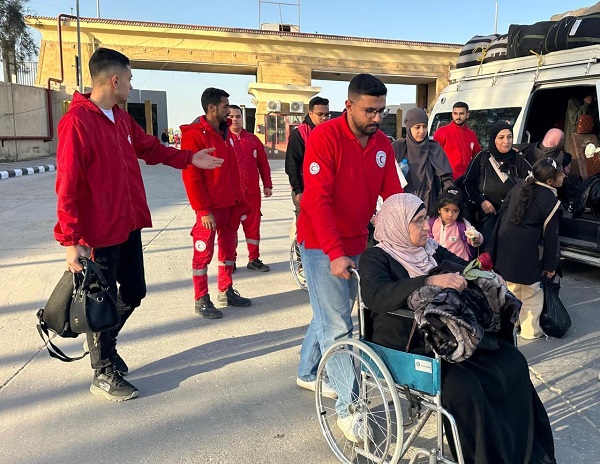
The preparations coincided with the arrival of five buses at the Rafah crossing carrying around 50 Palestinians who had completed medical treatment in Egyptian hospitals and were returning to Gaza. Officials described the movement as part of an organized, two-way flow intended to balance humanitarian needs with border management.
The medical response is being coordinated at the highest levels of government. Deputy Prime Minister and Minister of Health and Population Khaled Abdel Ghaffar chaired an expanded meeting of the national coordination committee responsible for receiving wounded and sick Palestinians. According to Health Ministry spokesperson Hossam Abdel Ghaffar, the plan includes the mobilization of roughly 150 hospitals across Egypt, with full capacity for expansion if patient numbers increase.
The ministry has allocated nearly 12,000 physicians in critical specialties and more than 18,000 nurses, in addition to deploying 30 rapid-response emergency teams capable of field intervention within hours. Between 250 and 300 fully equipped ambulances have been prepared, alongside a strategic blood reserve sufficient to support up to 1,000 transfusions per day. Officials said the measures meet, and in some cases exceed, international standards set by the World Health Organization and the Sphere humanitarian framework.
Medical supplies and pharmaceuticals have also been stockpiled in coordination with Egypt’s National Blood Bank to ensure continuity of care during emergencies. Health authorities emphasized that the system has been designed to withstand sustained demand, reflecting lessons learned from previous regional crises.
On the ground, the Egyptian Red Crescent has raised its alert level at the Rafah crossing, deploying response teams to receive incoming patients and assist those returning to Gaza after recovery. Humanitarian services include child-friendly safe spaces, psychological support, wheelchairs for the elderly, and a mobile kitchen providing hot meals. Relief teams are also distributing winter clothing, personal care kits, and a so-called “return package” for patients cleared to go back to Gaza.
The reopening of Rafah follows confirmation from an Israeli security official that the crossing has resumed operations in both directions after the arrival of the European Union Border Assistance Mission. According to Egyptian government media, the crossing will initially allow the passage of 50 people in each direction per day.
Egyptian broadcaster Cairo News Channel reported that on the first day of official operations, 50 individuals would travel from Gaza into Egypt for treatment, while an equal number would return from Egypt to the enclave. The move marks a significant development after more than two years of war and intermittent closures that severely restricted civilian movement.
Regional analysts note that Egypt’s renewed role at Rafah underscores its position as a key humanitarian and diplomatic intermediary in the Gaza conflict, as pressure mounts to address the enclave’s collapsing healthcare system and the growing number of war-related casualties.
