

Ahmed Kamel – Egypt Daily News
Israeli Prime Minister Benjamin Netanyahu has warned lawmakers about what he described as the growing strength of Egypt’s armed forces, while once again rejecting personal responsibility for the October 7, 2023 Hamas attack a dual message that highlights mounting tensions in Israel’s regional security outlook and its internal political reckoning.
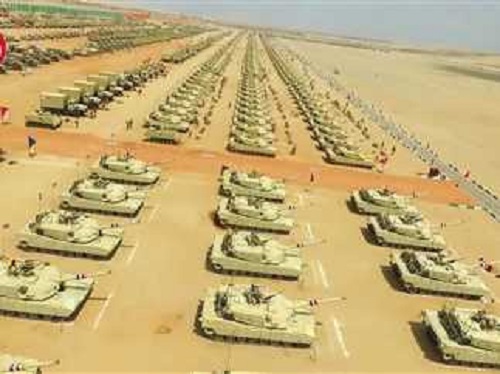
Speaking during a closed session of the Knesset Foreign Affairs and Defense Committee, Netanyahu cautioned that Egypt’s military capabilities are expanding and require close scrutiny, despite the longstanding peace treaty between the two countries.
“The power of the Egyptian army is growing, and we must monitor the matter,” Netanyahu was quoted by Israeli media as saying. “We have relations with Egypt, but we must prevent any excessive increase in power.”
His remarks come amid shifting regional dynamics, as Egypt deepens political, economic, and strategic cooperation with Türkiye. Following recent high-level meetings between Egyptian President Abdel Fattah el-Sisi and Turkish President Recep Tayyip Erdoğan, the two countries agreed to broaden coordination across multiple sectors and aim to increase bilateral trade to $15 billion by 2028. The rapprochement marks a significant evolution in Middle Eastern alliances after years of strained relations.
Within Israel’s security establishment, these developments are increasingly framed as part of a broader regional realignment that could shape long-term military planning beyond the immediate conflict in Gaza. Retired Israeli Brigadier General Amir Avivi publicly echoed these concerns, warning that Israel must be prepared for the possibility of confronting more than one conventional military force simultaneously. He argued that future preparedness should account for “two fronts against two regular armies at the same time.”
While raising alarms about external threats, Netanyahu used the same committee meeting to push back forcefully against claims of leadership failure related to the October 7 attack, one of the deadliest days in Israel’s history.
“What happened was a serious intelligence failure, but there was no betrayal,” Netanyahu told lawmakers, according to broadcaster reports.
He asserted that a key warning document issued by the Shin Bet security service in the early hours of October 7 did not reach his office until more than four hours later. Netanyahu further claimed that the original version of the document did not instruct officials to notify the prime minister and that such a directive was added only after the fact.
“The warning did not include a directive to notify the prime minister, that was inserted later retroactively,” he reportedly said.
To bolster his argument, Netanyahu read from earlier intelligence assessments prepared by senior security officials that suggested Hamas was not seeking a large-scale escalation at the time. The presentation reportedly sparked heated exchanges inside the committee, underscoring the depth of disagreement over how responsibility should be apportioned.
Netanyahu emphasized that accountability lies primarily with military and intelligence agencies, not political leadership, and said relevant materials had been transferred to the state comptroller as part of the ongoing investigations. His position stands in contrast to several current and former Israeli military and intelligence leaders who have publicly acknowledged personal responsibility for failures surrounding the attack.
The issue has become one of the most polarizing in Israeli public life. Families of victims, opposition politicians, and civil society groups continue to demand an independent state commission of inquiry, arguing that the events of October 7 represent a systemic collapse that cannot be reduced to a technical intelligence lapse.
Protest movements accuse the government of attempting to shield political leaders from scrutiny while shifting blame onto professional security institutions. Critics argue that the attack cannot be separated from years of strategic decisions regarding Gaza, Hamas, and broader regional policy.
As the war and its aftermath continue to reshape Israel’s domestic and regional landscape, Netanyahu’s insistence that no leadership failure occurred has further intensified tensions, both within the political system and between the government and large segments of the public still seeking answers and accountability.
