

Ahmed Kamel – Egypt Daily News
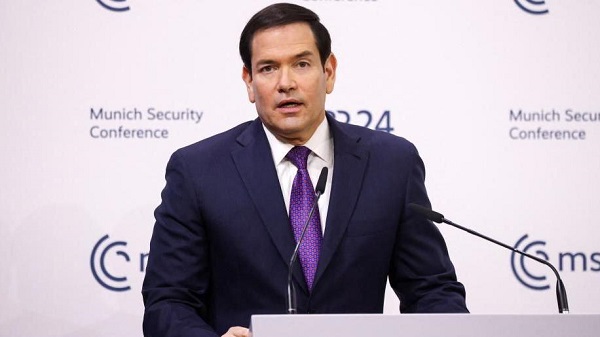
U.S. Secretary of State Marco Rubio delivered a measured but unmistakably firm message to European allies at the annual Munich Security Conference, seeking to calm tensions while reinforcing the Trump administration’s determination to recalibrate the trans-Atlantic relationship.
Addressing the gathering one year after Vice President JD Vance jolted the same audience with a sharp critique of European policies, Rubio struck a more reassuring tone. Yet beneath the softer rhetoric was a clear signal: Washington’s demands for greater reciprocity, tougher migration controls and policy realignment remain unchanged under President Donald Trump.
“An end of the trans-Atlantic era is neither our goal nor our wish,” Rubio told European leaders. “Our home may be in the Western hemisphere, but we will always be a child of Europe.”
Resetting — Not Retreating
Rubio reminded the audience of centuries-old ties between the United States and Europe, invoking shared sacrifices “from Kapyong to Kandahar” as evidence of enduring solidarity. His remarks stood in contrast to past comments by Trump that had unsettled NATO allies, particularly regarding defense burdens and Afghanistan.
Still, Rubio made clear that the administration’s policy direction has not shifted. He criticized what he called a “climate cult” and warned of “an unprecedented wave of mass migration that threatens the cohesion of our societies.” He argued that Western optimism following the Cold War produced what he described as a “dangerous delusion”, the belief that liberal democracy would inevitably spread worldwide and that trade alone could replace national sovereignty.
“We made these mistakes together,” Rubio said. “Now together we owe it to our people to face those facts and to move forward to rebuild.”
Administration officials accompanying Rubio acknowledged that the substance of his message echoed themes advanced by Vance the previous year. The difference, they suggested, was in delivery — a deliberate effort to ease friction after months of rhetorical escalation.
European Response: Reassured, But Guarded
European leaders responded cautiously. Ursula von der Leyen, president of the European Commission, described Rubio’s remarks as “very reassuring,” while noting that other voices within the administration have adopted a harsher tone.
In her own address, von der Leyen emphasized that Europe must become “more independent,” particularly in defense and digital regulation. She defended Europe’s approach to online content moderation and climate policy, signaling that fundamental value differences remain.
German Chancellor Friedrich Merz had opened the conference by calling for efforts to “repair and revive trans-Atlantic trust together,” arguing that even the United States cannot navigate today’s fractured global order alone.
British Prime Minister Keir Starmer similarly warned against complacency, urging the United Kingdom to strengthen European ties and shift from “overdependence to interdependence” in defense and economic security.
Estonian Defense Minister Hanno Pevkur described Rubio’s “child of Europe” remark as bold but cautioned that significant work remains to rebuild trust.
Greenland Lingers in the Background
One of the most sensitive issues hanging over the summit Trump’s renewed interest in Greenland, went unmentioned in Rubio’s formal speech. Last month, Trump’s suggestion of asserting U.S. control over the Arctic territory, a self-governing region within the Kingdom of Denmark, triggered diplomatic tension across NATO.
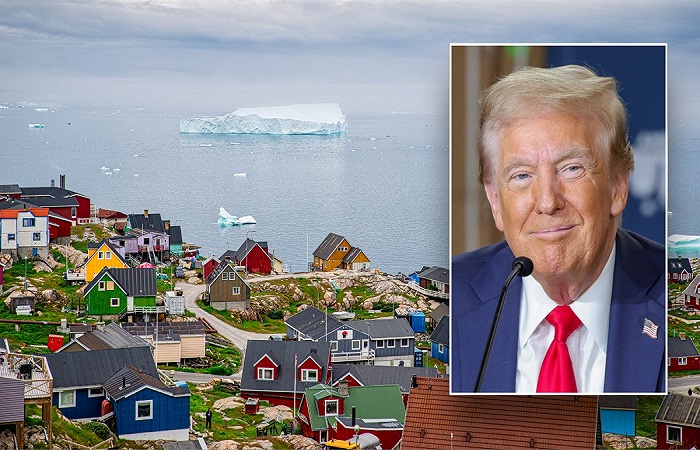
Although technical discussions have since begun between Washington, Copenhagen and Nuuk on Arctic security cooperation, Danish Prime Minister Mette Frederiksen made clear the issue is far from resolved.
“The desire from the U.S. president is exactly the same,” she said, emphasizing that Greenland is not for sale and that its people have the right to self-determination.
A New Phase in the Alliance
Rubio’s appearance underscored a broader reality confronting both sides of the Atlantic: the post–World War II framework that long defined U.S.-European relations is evolving. While Washington insists it is not abandoning the alliance, it is openly demanding structural changes, from defense spending to migration policy to trade arrangements.
European leaders, for their part, are increasingly vocal about strategic autonomy, even as they seek to preserve American engagement.
In Munich, the message was clear on both sides: the trans-Atlantic partnership endures, but it is entering a more transactional and uncertain phase, one in which reassurance and rivalry now coexist on the same diplomatic stage.
