

Ahmed Kamel – Egypt Daily News
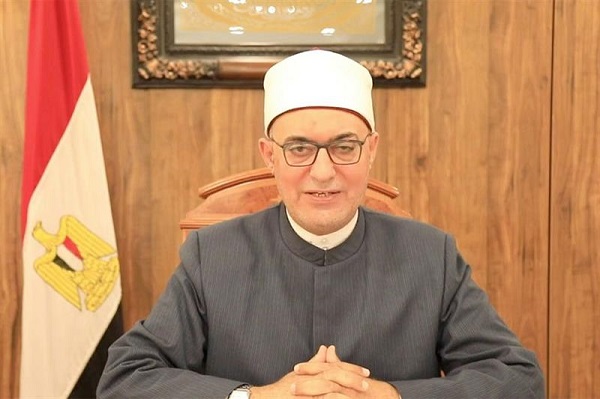
Egypt’s Grand Mufti, Dr. Nazir Mohamed Ayyad, extended his warmest congratulations to President Abdel Fattah El-Sisi, the Egyptian people, and the Arab and Islamic nations on the occasion of the holy month of Ramadan, invoking prayers for peace, stability, and blessings for Egypt and the wider Muslim world.
The first day of Ramadan in Egypt will be Thursday.
In his official message, the Grand Mufti conveyed his sincere wishes to President El-Sisi, describing Ramadan as a sacred season marked by renewed faith, spiritual discipline, and moral reflection. He prayed that the holy month would bring security and tranquility to Egypt and all Muslim countries, and that it would return to humanity at large with goodness, prosperity, and divine blessings.
Ramadan, the ninth month of the Islamic lunar calendar, holds profound religious significance for more than a billion Muslims worldwide. It commemorates the revelation of the Quran to the Prophet Muhammad and is observed through fasting from dawn to sunset, prayer, charitable giving, and spiritual reflection. Across Egypt’s cities and villages, Ramadan is traditionally marked by communal iftar meals, charitable initiatives, and vibrant nighttime prayers that draw large congregations to mosques.
Dr. Ayyad emphasized that Ramadan represents a profound spiritual opportunity in which values of piety, self-restraint, and compassion are renewed. He noted that the holy month deepens the principles of mercy and social solidarity, urging citizens to make the most of its days and nights by purifying hearts, refining character, and strengthening bonds of love and harmony.
The Grand Mufti’s message aligns with a longstanding tradition in Egypt, where senior religious authorities mark religious occasions with official statements highlighting themes of unity and national cohesion. The office of the Grand Mufti, known as Dar al-Ifta, plays a central role in issuing religious guidance and promoting moderate Islamic discourse both domestically and internationally.
In recent years, official Ramadan messages in Egypt have often underscored themes of social solidarity, particularly amid regional challenges and global economic pressures. Religious leaders frequently call for increased charitable giving during the holy month, reflecting Islam’s emphasis on zakat and voluntary acts of kindness, which take on heightened importance during Ramadan.
As families across Egypt prepare for the month with traditional decorations, lanterns, and communal gatherings, the Grand Mufti’s message serves as both a spiritual reminder and a national call for unity. In a time when many societies face uncertainty and division, Ramadan’s core message of patience, generosity, and reconciliation remains deeply resonant.
Concluding his statement, Dr. Ayyad expressed hope that Ramadan would inspire renewed commitment to mutual respect and collective responsibility, reinforcing Egypt’s longstanding values of coexistence and solidarity while extending prayers for peace and stability across the Arab and Islamic worlds.
