

Ahmed Kamel – Egypt Daily News
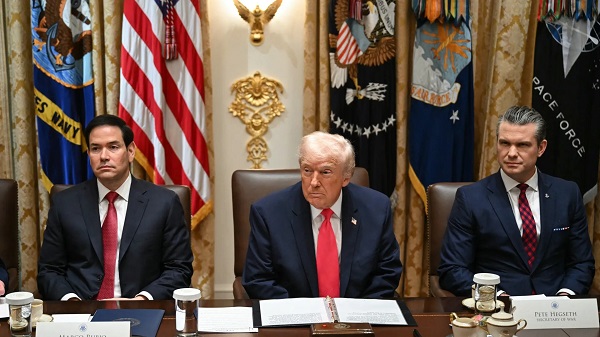
President Donald Trump convened an urgent national security meeting at the White House on Wednesday amid escalating tensions with Iran, as senior international officials warned that military action could be imminent.
According to a report by Axios, Trump summoned his top foreign policy and defense advisers for a high-level briefing on the deteriorating nuclear standoff with Tehran. The meeting followed diplomatic talks earlier this week in Geneva between U.S. and Iranian representatives aimed at reviving stalled negotiations over Iran’s nuclear program.
Sources familiar with the discussions described the session as one of the most consequential of Trump’s presidency, with military options said to be under active review. Administration officials reportedly presented the president with a range of scenarios, from renewed diplomatic engagement to targeted strikes on Iranian nuclear infrastructure.
The crisis comes amid what defense analysts describe as the most significant American military build-up in the region in more than two decades. In recent weeks, the United States has repositioned naval strike groups, deployed additional fighter squadrons, and reinforced troop presence across key strategic points bordering Iran. Pentagon officials have not publicly detailed the full scope of the mobilization, but regional observers note parallels with force movements seen prior to the 2003 invasion of Iraq.
While U.S. officials have stopped short of confirming that a strike is imminent, rhetoric from allied leaders has heightened concerns that military action could occur within hours. On Thursday, Polish Prime Minister Donald Tusk issued a stark warning urging citizens to leave Iran immediately.
“Please leave Iran immediately and do not go to this country under any circumstances,” Tusk said, suggesting that evacuation routes could soon close if hostilities begin.
Poland, a key member of NATO, has been closely aligned with Washington on security matters, and Tusk’s unusually urgent language signaled growing alarm among transatlantic allies. Other European governments are reportedly reviewing contingency plans for evacuations and potential disruptions to energy markets should conflict erupt.
At the heart of the crisis is Iran’s expanding nuclear program. Western intelligence agencies have long expressed concern over Tehran’s uranium enrichment levels and stockpiles, which they argue exceed civilian energy requirements. Iranian officials maintain that their program is peaceful and accuse Washington of undermining diplomatic progress through sanctions and military pressure.
The current confrontation follows months of faltering negotiations aimed at restoring or replacing the 2015 nuclear agreement. Analysts say mutual distrust has deepened since the U.S. withdrew from the accord during Trump’s first term, reimposing sweeping sanctions that crippled Iran’s economy.
Regional implications of a strike would be profound. The Strait of Hormuz, through which roughly a fifth of the world’s oil supply passes, could become a flashpoint. Energy markets have already shown signs of volatility, with crude prices fluctuating sharply on reports of heightened military readiness.
Inside Washington, lawmakers from both parties are said to be seeking briefings on the administration’s intentions. Some have urged caution, warning that a direct military confrontation with Iran could spiral into a broader regional war involving proxy forces across Iraq, Syria, Lebanon and the Gulf.
Security experts note that Iran possesses significant retaliatory capabilities, including ballistic missiles and allied militias positioned throughout the Middle East. Any U.S. strike on nuclear facilities could prompt immediate countermeasures targeting American bases, naval assets, or regional partners.
As diplomatic channels remain fragile and military assets stand on alert, the coming hours may prove decisive. Whether the White House opts for force or renewed negotiation, the stakes extend far beyond Washington and Tehran, carrying consequences for global security, energy stability and the balance of power in the Middle East.
