

Ahmed Kamel – Egypt Daily News
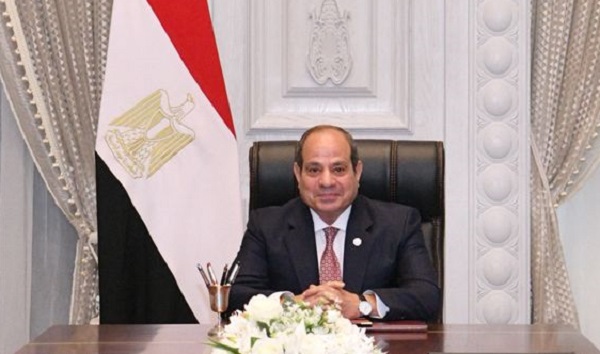
President Abdel Fattah el-Sisi has stepped up diplomatic outreach across the Middle East amid growing concerns in Cairo that the escalating war involving the United States, Israel and Iran could destabilize the region and trigger serious global economic consequences.
Speaking during the annual Egyptian Family Iftar gathering in Cairo, President El-Sisi warned that the Middle East is passing through one of its most dangerous periods in recent years, cautioning that continued military escalation could have wide-ranging humanitarian, security and economic repercussions.
“Our region is standing at a historic crossroads,” the Egyptian president said, warning that further escalation could produce severe consequences affecting not only the Middle East but also the wider global economy.
Egyptian officials have become increasingly concerned that the expanding confrontation, driven by military operations against Iran by Israel and the United States, could draw additional countries into the conflict and deepen instability across an already fragile region.
In response, President El-Sisi said Egypt is intensifying diplomatic efforts to prevent the war from spreading further. According to the Egyptian presidency, the president held a phone call with Iraqi Prime Minister Mohammed Shia’ Al Sudani, during which he reaffirmed Egypt’s support for Iraq’s sovereignty and security.
President El-Sisi stressed Cairo’s firm rejection of violations of Arab state sovereignty and warned against attempts to drag regional countries into the widening conflict. The two leaders also discussed the importance of strengthening Arab coordination to address the growing security challenges resulting from the war.
The Egyptian leader has also held consultations with several regional heads of state in recent days, including King Hamad bin Isa Al Khalifa of Bahrain, UAE President Mohamed bin Zayed Al Nahyan, Emir Tamim bin Hamad Al Thani of Qatar and King Abdullah II of Jordan.
Egyptian officials described the discussions as part of a broader diplomatic push aimed at reinforcing collective Arab security and preventing the conflict from expanding across the region.
At the same time, Egyptian Foreign Minister Badr Abdelatty has launched a regional tour that includes Qatar, the United Arab Emirates and Oman in an effort to strengthen diplomatic coordination and support de-escalation efforts.
Cairo has also indicated its willingness to play a mediating role between Iran and the United States in an attempt to halt the conflict and open channels for dialogue.
Economic shockwaves spreading
President El-Sisi warned that the war is already sending shockwaves through the global economy, disrupting supply chains and pushing up energy and food prices worldwide.
He said the tense geopolitical climate created by the conflict has cast a “heavy shadow” over international markets, raising concerns about long-term economic stability if the war continues.
Egypt itself has begun to feel the economic impact. Rising global energy prices have contributed to the government’s recent decision to increase domestic fuel prices for the first time this year, a move that has sparked criticism among some segments of the public.
Analysts say the economic consequences could deepen if fighting spreads to major energy-producing regions or disrupts key maritime trade routes in the Middle East.
The conflict has also raised alarms over global shipping routes, particularly the strategically vital Suez Canal.
During a meeting with Prime Minister Mostafa Madbouly and Osama Rabie, chairman of the Suez Canal Authority, President El-Sisi reviewed the potential impact of the regional war on maritime traffic through the waterway.
Officials said Egypt has maintained heightened operational readiness to ensure uninterrupted navigation through the canal, one of the world’s most important trade corridors linking Europe and Asia.
Authorities are also accelerating maritime industry initiatives, including expanding shipbuilding capabilities and increasing domestic production of maritime equipment such as tugboats.
Domestic pressures and economic reforms
At home, President El-Sisi acknowledged growing public frustration over rising fuel prices and the broader economic pressures facing Egyptian households.
“I understand the negative reactions to the recent increase in petroleum prices,” he said, noting that the government had been forced to take difficult decisions to prevent deeper financial strain on the state budget.
Egypt currently spends around $20 billion annually on petroleum products needed to operate its electricity and energy infrastructure, according to the president.
To reduce long-term dependence on fossil fuels, the government is accelerating plans to expand renewable energy capacity, aiming to generate 42 percent of Egypt’s electricity from renewable sources by 2030.
President El-Sisi also called on government officials to communicate more openly with the public about economic challenges, amid criticism in local media that authorities have not been sufficiently transparent about the pressures facing the economy.
Regional instability and repeated global crises have already placed significant strain on Egypt’s finances, he said, including a sharp drop in revenues from the Suez Canal due to disruptions in international shipping.
Despite these challenges, the president stressed that the government remains committed to expanding social protection programs and supporting vulnerable families.
He also warned that traders attempting to exploit the current crisis by raising prices unfairly could face legal penalties.
As tensions continue to rise across the Middle East, President El-Sisi urged Egyptians to remain united in the face of mounting regional uncertainty. “Unity and vigilance are essential in these difficult circumstances,” he said, warning that miscalculations have previously led to the collapse of several states across the region.
