

Ahmed Kamel – Egypt Daily News
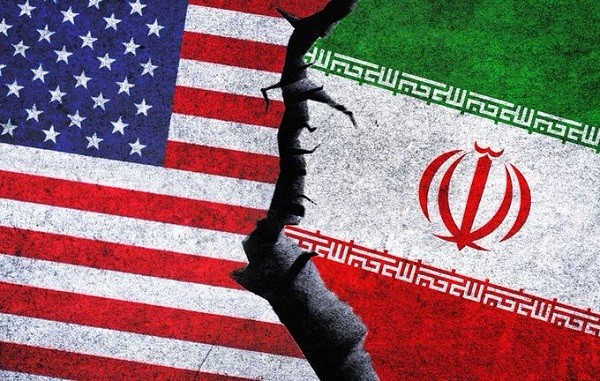
The United States launched what it described as “self-defense” strikes against Iranian military targets near the Strait of Hormuz on Monday, adding fresh uncertainty to ongoing negotiations aimed at ending months of conflict between Washington and Tehran.
The strikes targeted missile launch sites and boats allegedly involved in deploying naval mines, according to the U.S. military, which said the operation was carried out to protect American forces from immediate threats while maintaining restraint during the current ceasefire.
The latest military action came only hours after Iranian officials met Qatari mediators in Doha as part of intensive diplomatic efforts coordinated with the United States to finalize a framework agreement intended to end the war that erupted earlier this year.
Military action amid diplomacy
The U.S. Central Command confirmed the attacks, describing them as limited defensive operations. However, officials provided few details about the nature of the threats or how the strikes might affect ongoing negotiations.
Iranian authorities did not immediately issue an official response. Reports from Iranian media indicated that explosions were heard around Bandar Abbas, the strategic port city overlooking the Strait of Hormuz. A website linked to former Revolutionary Guard commander Mohsen Rezaei reported that four Revolutionary Guard personnel were killed in attacks on military boats.
The developments underscore the fragile nature of the ceasefire, which has already faced multiple violations since taking effect.
Deal remains stalled over key disputes
Despite the renewed violence, diplomatic contacts between Washington and Tehran continue.
Negotiators are reportedly working toward a memorandum of understanding that could establish the framework for a broader settlement. However, disagreements over the wording of provisions related to Iran’s nuclear activities, sanctions relief, and future security guarantees have delayed progress.
President Donald Trump sought to project optimism, saying negotiations were “proceeding nicely” even as military operations were underway. The contradiction between active diplomacy and ongoing military exchanges reflects the complex reality of a conflict where both sides continue to negotiate while maintaining military pressure.
Strait of Hormuz remains critical flashpoint
The latest strikes focused attention once again on the Strait of Hormuz, one of the world’s most important energy corridors.
Roughly one-fifth of globally traded oil and natural gas traditionally passes through the narrow waterway connecting the Persian Gulf to international markets. Any disruption in the area immediately raises concerns among energy traders and governments dependent on Gulf exports.
Iran has repeatedly signaled that it retains the capability to threaten shipping routes in the region, making the strait a central factor in both military planning and diplomatic negotiations.
Trump links Iran deal to Abraham Accords expansion
Adding another layer of complexity, Trump said any long-term agreement should include broader regional normalization efforts involving Israel.
The U.S. president argued that several countries, including Saudi Arabia, Qatar and Pakistan, should join the Abraham Accords, the U.S.-brokered agreements that established diplomatic relations between Israel and several Arab states during his first term.
Trump described regional participation in the accords as an important element of a wider Middle East settlement and suggested that most countries involved in current negotiations should eventually sign on. The proposal immediately generated questions about whether expanding the Abraham Accords could complicate already difficult negotiations with Iran and its regional partners.
Saudi Arabia and Pakistan maintain conditions
Saudi Arabia has consistently maintained that normalization with Israel remains linked to the establishment of an independent Palestinian state based on pre-1967 borders with East Jerusalem as its capital.
Pakistan also continues to condition recognition of Israel on progress toward Palestinian statehood.
Political analysts in Islamabad noted that Pakistan’s official position has not changed despite Trump’s proposal, while former diplomats questioned whether adding the Abraham Accords issue to the negotiations would help or hinder efforts to secure a ceasefire agreement.
Even so, regional observers believe diplomatic channels remain active, with Qatar, Saudi Arabia and Pakistan continuing to play significant mediation roles.
Iran’s supreme leader issues warning
Meanwhile, Iranian Supreme Leader Mojtaba Khamenei issued a written message marking the Hajj season, declaring that the United States would no longer enjoy a secure military presence in the Gulf region.
Khamenei said a new regional order was emerging and argued that Middle Eastern countries would no longer serve as protective platforms for American military bases. He also launched a sharp attack on Israel, claiming that the country was approaching what he described as the final stage of its existence.
The statement was the latest in a series of written messages issued since Khamenei succeeded his father, Ali Khamenei, following his assassination earlier this year.
Uncertain path ahead
More than three months after the conflict began, diplomats continue working to bridge significant differences between Washington and Tehran.
While both sides publicly express interest in reaching a settlement, the latest U.S. strikes demonstrate how quickly tensions can escalate even as negotiations advance.
With disagreements over nuclear provisions still unresolved and new geopolitical demands emerging, the path toward a final agreement remains uncertain despite ongoing mediation efforts across the region.
