

Ahmed Kamel – Egypt Daily News
President Donald Trump says he will not rush into a deal with Iran despite reports of progress. Major disputes remain over the Strait of Hormuz, sanctions relief, frozen assets and Tehran’s nuclear program.
President Donald Trump signaled Sunday that an agreement to formally end the months-long U.S.-Iran conflict is not as close as previously suggested, cooling expectations that a breakthrough announcement would be made within days.
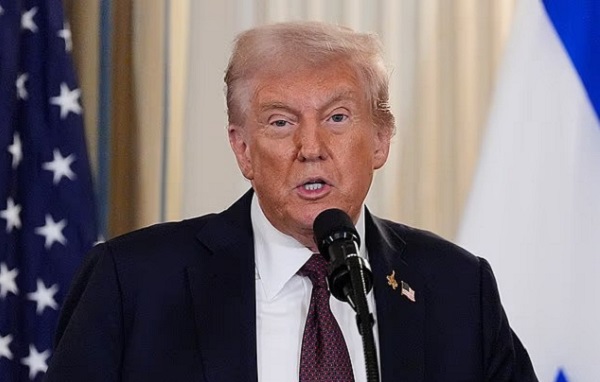
In a message posted on Truth Social, Trump declared that the United States would not be rushed into signing an agreement with Tehran, despite reports from regional diplomats and administration officials that negotiations had made significant progress.
“Time is on our side,” Trump wrote, adding that there could be “no mistakes” in any final arrangement with Iran. The statement marked a noticeable shift in tone from Saturday, when Trump suggested that a deal had been “largely negotiated” and only awaited final details before being announced.
A senior administration official later confirmed that negotiations were continuing and that progress had been made, but cautioned that no agreement would be signed immediately.
Momentum Slows After Optimism
The latest comments have introduced fresh uncertainty into diplomatic efforts aimed at transforming the fragile ceasefire between Washington, Israel and Tehran into a broader political settlement. Secretary of State Marco Rubio had earlier indicated that positive developments had occurred during intensive discussions involving Gulf allies, raising hopes that an agreement could emerge quickly.
Behind the scenes, Trump held consultations with leaders from Saudi Arabia, Qatar, Turkey, Egypt, Jordan, Pakistan and the United Arab Emirates. Vice President JD Vance and special envoy Steve Witkoff also participated in regional discussions, according to diplomatic sources familiar with the talks.
While officials describe the negotiations as constructive, key issues remain unresolved, including the future of Iran’s nuclear program, sanctions relief, frozen Iranian assets and control of the strategically vital Strait of Hormuz.
Strait of Hormuz Remains a Major Sticking Point
One of the central elements under discussion is the future status of the Strait of Hormuz, the narrow waterway through which a significant portion of global oil exports passes.
Iranian media have reported that a preliminary memorandum could allow commercial shipping to gradually return to pre-war levels within 30 days. Tehran is also seeking the removal of restrictions affecting its ports and maritime trade.
However, significant disagreements remain.
Trump has insisted that the U.S. blockade measures would remain in place until a final agreement is certified and signed, while Iranian officials have maintained that any reopening of maritime traffic would continue under Iranian supervision.
Tehran has repeatedly emphasized that reopening the waterway does not mean surrendering control over one of the world’s most strategically important energy chokepoints.
Nuclear Questions Still Unresolved
Perhaps the most difficult challenge facing negotiators remains Iran’s nuclear program.
Reports from both American and Iranian sources suggest that a preliminary framework could include Iranian assurances that it will not pursue nuclear weapons and a commitment to enter future negotiations regarding its stockpile of highly enriched uranium.
Yet Iranian officials have publicly denied that such issues are currently being negotiated.
State-linked media outlets in Tehran have insisted that Iran has made no commitments regarding surrendering uranium stockpiles, dismantling nuclear facilities or abandoning future nuclear capabilities. The dispute highlights the deep gap between Washington and Tehran on a question that was one of the original triggers of the conflict.
Trump has repeatedly argued that Iran’s stockpile of highly enriched uranium must eventually be addressed, while Iranian leaders continue to defend what they describe as their legitimate nuclear rights.
Sanctions Relief and Frozen Assets
Economic pressure remains another major obstacle.
Iran is pushing for the immediate release of billions of dollars in frozen overseas assets and broader sanctions relief as part of any settlement. Iranian officials argue that economic normalization must begin early in the process if negotiations are to succeed.
Washington, however, appears reluctant to move quickly. U.S. officials have reportedly linked both sanctions relief and asset releases to Iran’s implementation of commitments regarding maritime security and broader compliance with future agreements.
For Tehran, whose economy has been battered by years of sanctions, access to frozen funds and oil revenues remains one of the most important objectives of the negotiations.
Republican Critics Warn Against Concessions
As negotiations continue, several influential Republican lawmakers have openly questioned the direction of the talks. Senator Roger Wicker warned that a ceasefire arrangement without stronger guarantees from Tehran could undermine military gains achieved during the conflict.
Senator Ted Cruz expressed concerns that an agreement could leave Iran politically strengthened, while Senator Lindsey Graham questioned whether a deal that preserves significant Iranian capabilities would alter the regional balance of power.
Trump responded forcefully to the criticism, arguing that opponents were attacking an agreement they had not yet seen. “Nobody has seen it, or knows what it is,” Trump wrote, insisting that any deal he signs would be fundamentally different from the Obama-era nuclear agreement, which he has repeatedly criticized.
A Long Road Ahead
Despite signs of progress, both Washington and Tehran are signaling that the most difficult negotiations have yet to begin.
Current discussions appear focused on securing a memorandum of understanding that would preserve the ceasefire and establish a framework for future talks rather than immediately resolving all outstanding disputes. Questions surrounding uranium enrichment, sanctions removal, ballistic missiles, regional security arrangements and Iran’s role across the Middle East remain largely unsettled.
For now, hopes of an imminent breakthrough have faded, replaced by a more cautious reality: negotiations are advancing, but the path toward a comprehensive agreement remains uncertain and politically fraught on all sides.
