

Ahmed Kamel – Egypt Daily News
President Abdel Fattah El-Sisi reviewed on Monday the latest developments in Egypt’s national project to localize the manufacturing of prosthetic limbs and assistive devices, as part of a broader state strategy to strengthen healthcare sovereignty and enhance the quality of life for persons with physical disabilities.
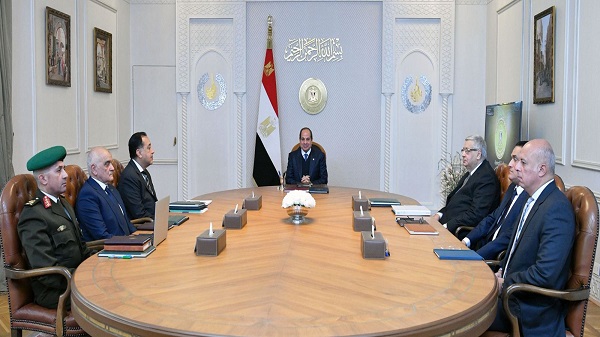
The meeting brought together Prime Minister Mostafa Madbouly; Presidential Advisor for Health and Prevention Mohamed Awad Taj El-Din; Major General El-Sayed El-Ghaly, Chairman of the Board of Trustees of the Fund for Honoring Martyrs, Victims, Missing Persons and the Injured of Military, Terrorist and Security Operations and Their Families; Major General Medically Qualified Eid El-Tawil, Chairman of Locomed Egypt; and Major General Dr. Mohamed Metwally, Head of the Technical Committee for Managing the Assistive Devices Project and the company’s Managing Director.
According to Presidential Spokesperson Ambassador Mohamed El-Shennawy, President El-Sisi was briefed on ongoing efforts by relevant state institutions to establish an integrated industrial complex for prosthetic limbs and assistive devices in Egypt, built in line with the latest international medical and technological standards and in cooperation with global expertise. The project aims to ensure the provision of high-quality assistive devices while supporting the empowerment, independence, and full societal integration of people with mobility impairments, in alignment with Egypt’s Vision 2030 and the Sustainable Development Goals.
The president also followed up on plans to localize the production of prosthetic devices through the training of Egyptian technical and medical personnel, reducing reliance on imports and ensuring sustainable access to advanced assistive technologies at competitive costs.
As part of the first phase of implementation, the government is currently working to establish seven assembly and fitting centers nationwide. The initiative is being coordinated with the Ministries of Social Solidarity and Planning, Economic Development and International Cooperation, as well as the Egyptian Authority for Unified Procurement, in partnership with German prosthetics manufacturer Ottobock, a global leader in the field.
During the meeting, President El-Sisi stressed the importance of strong governance mechanisms in contracting with prosthetics manufacturers, calling for strict adherence to international technical and quality standards. He directed that contracts be approved according to clear regulatory frameworks, with periodic performance evaluations of partner companies and continuous assessment to ensure that products meet the actual needs of beneficiaries.
The president further instructed officials to expedite steps toward acquiring full domestic manufacturing capabilities for prosthetic limbs and assistive devices in accordance with internationally accredited specifications. He emphasized the establishment of a comprehensive industrial and service-oriented complex to provide integrated care for individuals with physical disabilities, underscoring that the project is driven by humanitarian, ethical, and social considerations.
Looking ahead, the president highlighted the potential for the industrial complex to evolve into a regional center of excellence serving patients across the Middle East and Africa, capitalizing on Egypt’s existing infrastructure, medical expertise, and growing experience in prosthetics and rehabilitation services.
The initiative comes amid increasing global attention to inclusive healthcare systems and the localization of medical industries, particularly in developing economies seeking resilience against supply chain disruptions. By investing in domestic production and international partnerships, Egypt aims to position itself as both a provider of advanced assistive technologies and a regional hub for rehabilitation and disability support services.
