

Ahmed Kamel – Egypt Daily News
The Federal Reserve has kept interest rates unchanged for the third consecutive meeting, signaling a cautious stance as policymakers navigate persistent inflation and rising geopolitical uncertainty.
In its latest decision, the Federal Open Market Committee maintained the benchmark rate within the 3.75%–4% range, marking the lowest level since October 2022. The move follows three consecutive rate cuts over the past year, each by 25 basis points, as the central bank attempts to balance economic growth with price stability.
The decision comes at a sensitive moment for global markets, with policymakers weighing the economic fallout from ongoing tensions in the Middle East alongside fluctuating energy prices and stubborn inflationary pressures.
In its official statement, the Fed described the U.S. economy as continuing to expand at a “solid pace,” even as job gains have moderated in recent months and unemployment has remained broadly stable.
However, inflation remains above target, driven in part by elevated global energy costs. Officials also highlighted that geopolitical developments are adding another layer of uncertainty to the economic outlook an implicit acknowledgment of how external shocks continue to influence U.S. monetary policy.
The central bank reiterated its commitment to its dual mandate: achieving maximum employment while bringing inflation back down to its long-term target of 2%. It emphasized that future policy decisions will remain data-dependent, with close monitoring of labor market conditions, inflation trends, and broader financial developments.
Divisions Emerge Inside the Fed
The latest decision exposed a degree of internal divergence within the committee.
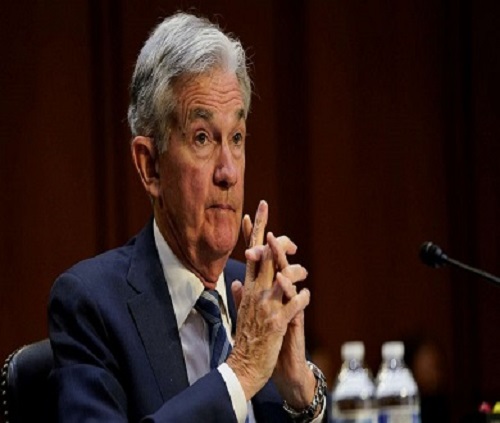
While Fed Chair Jerome Powell and Vice Chair John Williams backed holding rates steady, not all members were aligned.
One policymaker supported an immediate 25 basis point rate cut, while others agreed on maintaining current rates but opposed signaling any near-term shift toward easing, highlighting a growing debate over the timing of the next policy move.
Recent inflation data has added to that tension, with figures rising from around 2.4% to nearly 3.3%, reinforcing the Fed’s decision to pause and reassess rather than rush into further rate adjustments.
Leadership Transition Adds Uncertainty
Complicating the outlook further is the approaching end of Powell’s tenure. His expected departure in mid-May could mark a turning point for U.S. monetary policy, as markets brace for a potential shift in direction under new leadership.
Kevin Warsh has emerged as a leading candidate to succeed Powell, with momentum building in the Senate toward confirming his appointment.
Still, market participants remain skeptical about the likelihood of near-term rate cuts, with expectations now pushed well into next year. Much will depend on whether incoming leadership can convince policymakers that productivity gains in the U.S. economy are strong enough to ease inflation pressures sustainably.
Global Impact
The Fed’s decision carries significant implications far beyond the United States. For emerging markets—including economies like Egypt—U.S. interest rate policy directly influences capital flows, currency stability, and borrowing costs.
By opting for caution, the Federal Reserve is effectively signaling that the fight against inflation is not over, while also acknowledging that global instability is now a central factor shaping monetary policy decisions.
