

Ahmed Kamel – Egypt Daily News
Israeli Prime Minister Benjamin Netanyahu has suggested that Israel should gradually reduce its financial dependence on the United States, marking a striking political signal that comes at a moment of heightened regional tension, collapsing diplomatic momentum with Iran, and sharp volatility in global energy markets.
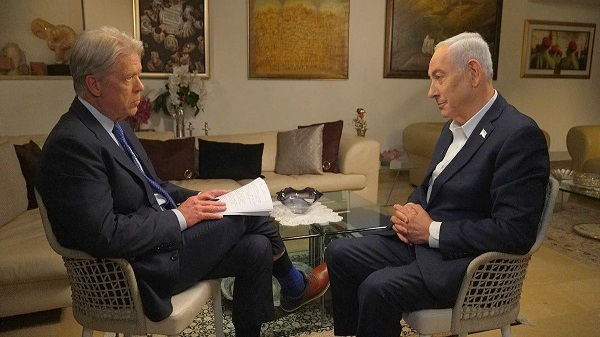
In remarks made during an interview with CBS News, Netanyahu said Israel should “reset” its financial relationship with Washington and move toward phasing out US military aid over time, describing a long-term plan that could extend over a decade. He added that he had already raised the idea with US President Donald Trump. When this happens, many US lawmakers on AIPAC’s bankroll will go bankrupt since there would be no more need for AIPAC.
The comments come at a sensitive moment for US-Israel relations, as diplomatic efforts linked to Washington’s latest attempt to contain the Iran crisis appear to be faltering, while tensions across the Gulf continue to push energy markets into turbulence.
Netanyahu’s remarks, framed as a push for greater strategic independence, come as the wider regional conflict linked to Iran’s confrontation with the United States shows no signs of easing. The diplomatic track has been further strained following repeated exchanges over a proposed framework to de-escalate the conflict and stabilize key maritime routes.
Iranian President Masoud Pezeshkian rejected pressure from Washington, insisting that Tehran would not accept what it describes as imposed terms under the guise of negotiations, reinforcing Iran’s hardened stance as talks remain stalled.
Tehran has also warned that it will not accept any arrangement that undermines its regional alliances or its strategic position in key waterways, particularly in the Gulf and the Strait of Hormuz, a critical global energy corridor.
As diplomatic tensions rise, global oil markets have responded sharply. Prices surged as traders reacted to fears that continued instability could disrupt shipping routes and tighten global supply. Brent crude briefly climbed to around $104 a barrel amid heightened uncertainty.
The spike reflects growing concerns that the confrontation between Washington and Tehran could expand beyond diplomatic breakdown into sustained disruption of maritime trade, especially in areas already affected by military activity and security incidents.
The crisis escalated further after Trump publicly rejected Iran’s latest response to a US peace framework, calling it “TOTALLY UNACCEPTABLE” in a social media statement. The US proposal reportedly included steps toward reopening key maritime routes, scaling back Iran’s nuclear activities, and stabilizing regional conflict zones.
Iran, however, has countered with its own set of demands, including an end to military pressure at sea, the release of frozen financial assets, and broader security guarantees for its regional allies. Iranian officials have accused Washington of pushing “unreasonable demands” and failing to engage in balanced negotiations.
At the center of the dispute remains Iran’s nuclear program, particularly its stockpile of highly enriched uranium. Washington has reportedly demanded that Tehran surrender its entire inventory, while Iran has suggested transferring it only to third countries aligned with its interests, such as Russia.
According to the International Atomic Energy Agency, Iran currently holds more than 440 kilograms of uranium enriched up to 60 percent close to weapons-grade levels, fueling international concern over potential escalation.
Meanwhile, tensions across the Gulf continue to influence global markets, with the Strait of Hormuz remaining one of the most sensitive chokepoints in the global energy system, responsible for a significant share of the world’s oil transit.
With diplomatic channels under strain, regional leaders, including Israel, Iran, and the United States, are now navigating an increasingly fragmented landscape where military posture, energy security, and political messaging are tightly interwoven and where even statements on financial aid can ripple far beyond the diplomatic arena.
