

Ahmed Kamel – Egypt Daily News
Israeli Prime Minister Benjamin Netanyahu declared that the confrontation with Iran is still ongoing and warned that Israel must go further in dismantling Iran’s nuclear capabilities, including the removal of highly enriched uranium “even by force if necessary.”
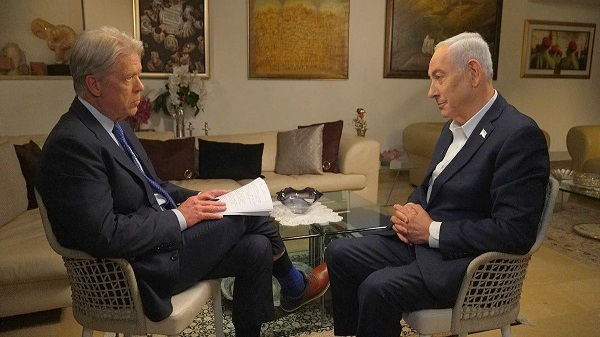
In an interview with CBS News, Netanyahu said Israel had already delivered a significant blow to Iran but insisted the conflict was far from finished, signaling continued escalation in one of the world’s most volatile geopolitical flashpoints.
“We struck a major blow against Iran, but the war is not over,” Netanyahu said, framing the confrontation as part of a broader struggle over Iran’s nuclear ambitions and regional influence.
He stressed that Iran’s nuclear facilities must be dismantled completely and that enriched uranium stockpiles must be removed to prevent any possibility of future weaponization.
The Israeli leader also referenced high-level wartime coordination with U.S. President Donald Trump, describing discussions held inside the war room ahead of decisions to strike Iranian targets, underscoring the deep strategic alignment between Washington and Tel Aviv during the conflict.
In parallel remarks, Trump stated that the United States would eventually “reach” Iran’s enriched uranium, even if it is buried deep under rubble, adding that it remains under continuous monitoring by U.S. Space Force systems.
He warned that any attempt to move or secure the material would be detected, adding that the U.S. would act decisively if necessary. Trump reiterated that Washington will never allow Iran to acquire nuclear weapons and claimed Iran’s military capabilities have been significantly weakened.
According to Trump, Iran no longer possesses effective air power or air defense systems, and any remaining strategic targets inside the country could still be struck if needed. He also argued that rebuilding Iran’s nuclear capabilities would take years even if further strikes are avoided.
Trump further defended the earlier U.S. military involvement, saying he believed Iran was close to obtaining a nuclear weapon and would have used it against Israel and other regional actors if allowed to proceed.
Meanwhile, Iranian state-linked media reported that Tehran has formally delivered its response to a U.S. proposal aimed at ending the war through diplomatic channels via Pakistan, which is acting as a mediator.
The Iranian response reportedly prioritizes ending active hostilities across the region as a prerequisite for any broader negotiations, particularly regarding the future of the nuclear file.
The war, which erupted on February 28, has already resulted in more than 3,000 deaths according to earlier reports, marking one of the most intense escalations in the region in recent years. A temporary ceasefire was announced on April 8 for two weeks, but tensions have continued to simmer.
Subsequent talks held in Islamabad failed to produce a breakthrough, and while full-scale fighting has not officially resumed, the United States has intensified pressure through a maritime blockade on Iranian ports.
With diplomatic efforts once again underway through international intermediaries, both sides remain entrenched in their positions, while fears grow that any miscalculation could reignite open warfare across the region and further destabilize global energy and security systems.
