

Ahmed Kamel – Egypt Daily News
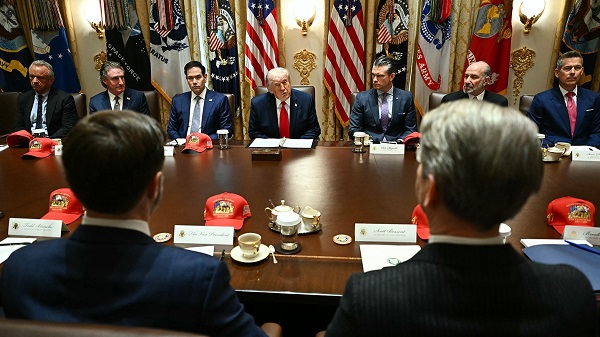
President Donald Trump will hold Wednesday’s cabinet meeting at the White House instead of Camp David after plans for the presidential retreat were postponed due to expected bad weather, as attention remains focused on ongoing negotiations linked to the conflict with Iran.
The cabinet session, the 12th of Trump’s second term, had initially been scheduled for Camp David, the historic presidential retreat in Maryland that has often hosted major diplomatic discussions and high-level strategic meetings. The site is best known internationally for the Camp David Accords that laid the foundation for peace between Egypt and Israel.
Trump confirmed the venue change in a post on Truth Social, saying forecasts of heavy rain prompted the administration to keep the meeting in Washington.
“Based on the possible bad weather conditions tomorrow, we will be having our Cabinet Meeting in the White House, and will be postponing the Cabinet trip to Camp David,” Trump wrote.
According to the White House, discussions during the meeting are expected to focus on economic performance, small business policy, anti-fraud initiatives and foreign affairs.
The gathering comes at a sensitive time for the administration as diplomatic efforts surrounding the nearly three-month conflict with Iran continue alongside ongoing military tensions in the region.
Trump said over the weekend that a possible agreement with Tehran was close, describing negotiations as “largely negotiated.” However, reports later emerged that U.S. strikes targeted Iranian-linked positions, reportedly killing members of the Islamic Revolutionary Guard Corps.
Despite the continued military pressure, negotiations are believed to remain active behind the scenes, although officials have provided few details on the scope or timeline of any potential agreement.
Trump’s comments in recent days have drawn attention in Washington, particularly among conservative political figures divided over whether diplomacy with Tehran should continue.
The cabinet meeting also comes as the administration faces growing scrutiny over economic uncertainty and public concerns tied to the broader regional conflict.
