

Ahmed Kamel – Egypt Daily News
The United States could need years to fully replenish key missile stockpiles depleted during the war with Iran, according to a new analysis warning that prolonged shortages may weaken Washington’s ability to respond to a future conflict with China over Taiwan.
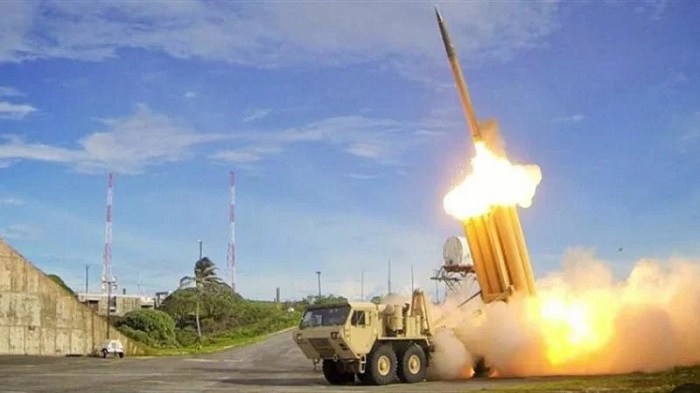
The report, released Wednesday by the Center for Strategic and International Studies, says American defense contractors may require at least three years to restore inventories of several advanced weapons systems heavily used during the Iran conflict, including Tomahawk cruise missiles and Patriot and THAAD air defense interceptors.
Researchers said the issue is no longer primarily about funding but about the time needed to expand industrial production and rebuild manufacturing capacity after years of relatively low output.
“The United States has enough munitions for any plausible scenario in the Iran war, but the depleted inventories have created a window of vulnerability for a potential Western Pacific conflict,” the report stated.
The findings arrive as tensions between Washington and Beijing continue to simmer over Taiwan, which China claims as its territory. Chinese President Xi Jinping recently warned that mishandling relations with Taiwan could lead to direct confrontation between the United States and China.
The analysis notes that both the administration of President Donald Trump and Congress have sharply increased military spending to accelerate weapons production. Trump’s proposed $1.5 trillion defense budget for 2027 includes major investments aimed at expanding manufacturing of advanced munitions first prioritized under former President Joe Biden.
But despite the funding surge, the report says rebuilding inventories will remain a lengthy process because advanced missile systems depend on highly specialized supply chains and complex manufacturing networks that cannot be rapidly expanded.
Defense Secretary Pete Hegseth has repeatedly argued that the administration is pushing contractors to dramatically increase production capacity, telling lawmakers that some manufacturers could eventually double or triple output levels.
During Wednesday’s cabinet meeting, Hegseth praised new investments in defense production facilities, saying weapons were being manufactured “faster than ever.”
Pentagon spokesman Sean Parnell also insisted the U.S. military retains sufficient capabilities for any future operation ordered by the president. Still, some military analysts and watchdog groups have raised concerns that the Iran war exposed deeper structural weaknesses inside the American defense industrial base.
Virginia Burger, a senior defense analyst at the Project On Government Oversight and a former Marine officer, said officials likely understood before the conflict that inventories could fall to critical levels during a prolonged campaign.
According to the CSIS analysis, the U.S. fired more than 1,000 Tomahawk missiles during operations connected to the Iran war, and restoring inventories to prewar levels may take until late 2030.
Production remains limited because manufacturers historically received relatively small orders following the end of the Cold War, when U.S. military planners assumed future wars would be short and regional rather than prolonged conflicts requiring massive quantities of advanced weapons.
The report estimates that replenishing THAAD interceptor stockpiles could take until the end of 2029, while restoring Patriot missile inventories may continue into mid-2029.
Defense giant Lockheed Martin said it is investing billions of dollars into expanding production facilities across the United States, while RTX Corporation, the parent company of Raytheon, also pointed to major investments aimed at accelerating missile manufacturing.
The report notes that Washington now faces competing demands for missile systems, including maintaining its own reserves, supporting Ukraine’s air defenses against Russia and fulfilling commitments to allied nations that rely on Patriot systems.
Despite the concerns, the CSIS study argued that the situation is not entirely unfavorable for Washington, pointing to recent U.S. military operations against Iran, Venezuela and Houthi forces in Yemen as evidence of operational experience that China currently lacks.
“China is deeply aware that it has no recent combat experience and that it performed poorly in its last war, against Vietnam in 1979,” the report stated, arguing that the imbalance in combat experience could still help preserve deterrence while U.S. stockpiles recover.
