

Ahmed Kamel – Egypt Daily News
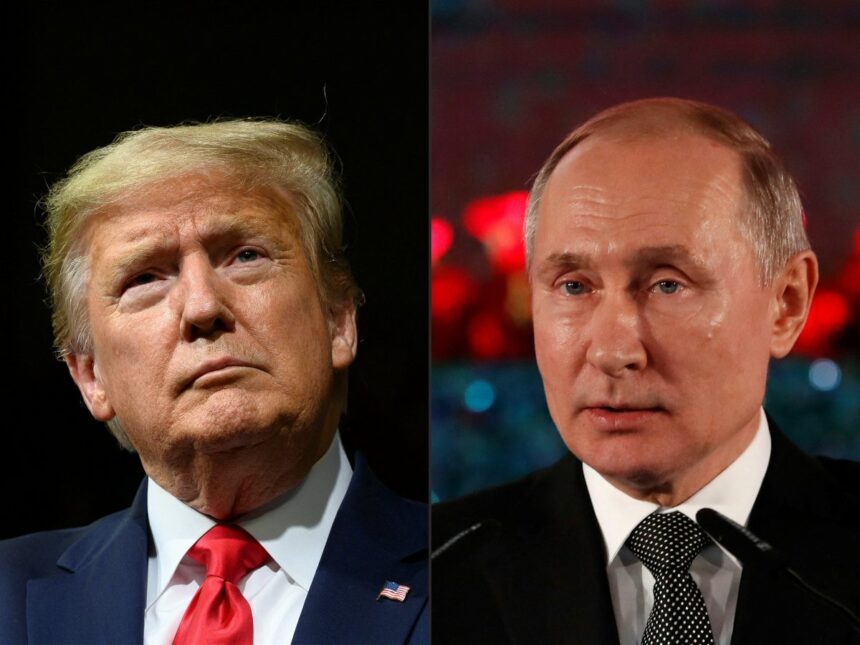
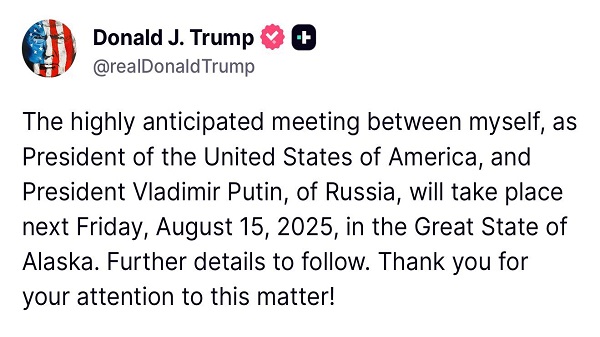
In a dramatic and unexpected diplomatic development, former U.S. President Donald Trump announced that he will meet Russian President Vladimir Putin on Friday, August 15, 2025, in the U.S. state of Alaska. The announcement, made via Trump’s social media platform Truth Social, has drawn global attention as it raises the possibility of a breakthrough in the protracted war in Ukraine but also stirs deep concerns among Western allies.
“The long-awaited meeting between me, as President of the United States, and Russian President Vladimir Putin will take place next Friday, August 15, in the great state of Alaska,” Trump wrote, confirming what many had speculated for weeks.
The Kremlin has also confirmed the summit plans. Yuri Ushakov, a senior aide to President Putin, stated that the two leaders will focus on finding a long-term peaceful resolution to the Ukraine crisis, which has now entered its fourth year. According to Ushakov, Moscow will approach the discussions “positively and enthusiastically,” despite the complexity of the issues involved.
Why Alaska?
The choice of Alaska as the meeting venue has raised eyebrows but also drawn practical praise from Russian officials. Kirill Dmitriev, head of the Russian Direct Investment Fund and an influential voice in Russian diplomacy, called the location “ideal,” citing Alaska’s geographic proximity to Russia. The Bering Strait between the two countries narrows to just four kilometers at its closest point.
Dmitriev emphasized the importance of boosting U.S.-Russia cooperation in the Arctic region, particularly in areas such as economic development, environmental protection, and energy resources. He framed the summit as a potential turning point for bilateral relations that have been strained since the beginning of the war in Ukraine.
A Controversial Peace Plan?
Perhaps the most explosive part of Trump’s announcement was his suggestion that the summit could lead to a deal to end the war between Russia and Ukraine possibly through a land exchange arrangement. While no official details have been released, the mere hint of territorial concessions by Ukraine has ignited a wave of concern across Europe.
Some EU states, already critical of Trump’s previous conciliatory stance toward Russia, are alarmed at the idea of legitimizing territorial changes through negotiations without Ukraine’s full participation and approval. Critics argue that any such deal would set a dangerous precedent and undermine international norms regarding sovereignty and territorial integrity.
For his part, Dmitriev warned of “enormous efforts” by certain unnamed countries to disrupt the meeting. In a Telegram post, he claimed that several states with a vested interest in prolonging the war would likely launch “provocations and disinformation campaigns” to derail the summit.
While he did not name specific nations, the remarks appear to target Western European countries that remain skeptical of any deal perceived to reward Russian military aggression.
Strategic Risks and Global Stakes
The Trump-Putin summit comes at a critical juncture. The conflict in Ukraine has evolved into a brutal and entrenched war of attrition, with heavy losses on both sides and limited progress on the battlefield. Meanwhile, global economic and security dynamics have been reshaped by the war, fueling food insecurity, energy disruptions, and diplomatic realignments.
Observers note that any agreement that emerges from the Alaska summit would need to be comprehensive, enforceable, and internationally supported to have any chance of lasting success. Skeptics, however, caution that Trump’s unilateral diplomacy, especially with a figure like Putin, may sideline key stakeholders including NATO and the EU and lead to a fragile or even unstable peace.
Despite the risks, the planned summit is being seen by some as a rare opportunity to open new diplomatic channels between Washington and Moscow. The mere act of face-to-face dialogue between the two leaders after years of sanctions, tensions, and proxy conflicts has injected a dose of cautious optimism into a conflict that many feared had no clear end in sight.
As the world watches, all eyes will be on Alaska next Friday, where Trump and Putin will sit down in a politically charged setting that may shape the trajectory of not only the war in Ukraine, but the global order in the years to come.
