

Ahmed Kamel – Egypt Daily News
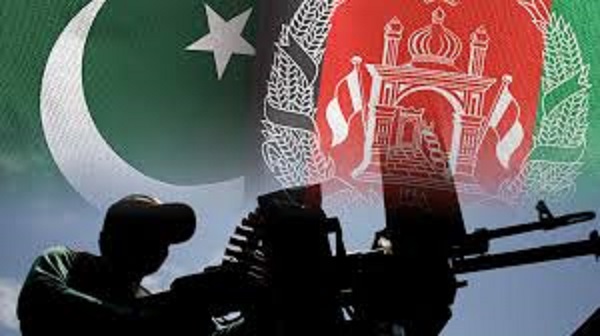
Tensions have flared along the Pakistan-Afghanistan border, where fierce overnight clashes between Pakistani forces and Taliban fighters left at least 23 Pakistani soldiers and over 200 Afghan militants dead, according to a statement issued Sunday by the Pakistani military.
The Pakistani government condemned what it described as “provocative actions” by the Afghan Taliban and vowed a “strong and effective response.” The incident marks one of the most serious escalations in cross-border violence in recent years, amid an already deteriorating relationship between the two neighbors.
Prime Minister Shehbaz Sharif warned that Islamabad would not tolerate violations of its territorial sovereignty. “There will be no compromise on Pakistan’s defense,” Sharif said in a statement. “Every provocation will be met with a strong and effective reply.” He further accused the Taliban-led Afghan government of harboring and enabling militant groups that pose a direct threat to Pakistan’s national security.
The clashes erupted late Saturday near the volatile Durand Line, the porous and often disputed border dividing the two countries. According to Pakistani officials, Afghan Taliban forces launched coordinated attacks at multiple points along the frontier, initially using light weaponry before escalating to heavy artillery. In response, Pakistani troops returned fire and reportedly shot down three Afghan drones suspected of carrying explosives.
Following the violence, both countries shuttered key border crossings, including the Torkham crossing linking Pakistan’s Khyber Pakhtunkhwa province with Afghanistan’s Nangarhar province, and the Chaman crossing further south. The closures have disrupted trade and movement, deepening the humanitarian and economic impact on both sides.
The Afghan Ministry of Defense, led by the Taliban, claimed responsibility for initiating the military operation, describing it as retaliation for what it alleges were cross-border airstrikes by Pakistani forces earlier in the week. Explosions had been reported days earlier in Kabul and in southeastern provinces, which Afghan officials attributed to Pakistani military action.
“The Islamic Emirate’s armed forces successfully carried out operations against Pakistani security forces along the Durand Line in response to repeated violations and airstrikes,” said Inayatullah Khwarazmi, a spokesperson for the Taliban defense ministry. He stated that the operation ended at midnight but warned that Afghan forces remained on alert and would act decisively against any further incursion.
In a separate statement, Taliban government spokesperson Zabihullah Mujahid claimed that the Afghan side had inflicted heavy casualties during the overnight clashes, saying 58 Pakistani soldiers were killed and another 30 wounded. He also confirmed the deaths of nine Taliban fighters.
Reports of intense firefights came from multiple Afghan provinces bordering Pakistan, including Kunar, Nangarhar, Paktia, Khost, and Helmand. These regions have long been flashpoints for cross-border insurgent activity and military skirmishes.
The latest confrontation marks a dangerous escalation in a conflict that has simmered for years but has intensified since the Taliban’s return to power in Kabul in August 2021. Pakistan has repeatedly accused the Taliban of allowing Tehrik-i-Taliban Pakistan (TTP), a militant group with ideological ties to the Afghan Taliban, to operate freely from Afghan soil.
Islamabad holds the TTP responsible for a surge in deadly attacks targeting Pakistani security forces, particularly in the mountainous tribal regions along the Afghan border. The group, which was emboldened by the Taliban’s takeover of Afghanistan, has carried out dozens of attacks over the past year.
Afghan officials, however, reject these accusations and, in turn, blame Pakistan for supporting other militant groups, including factions of the so-called Islamic State (ISIS), which have also carried out attacks within Afghanistan.
The border violence comes amid a grim backdrop: 2024 was the deadliest year in nearly a decade for Pakistan in terms of militant violence, with over 1,600 fatalities, the majority among military personnel. The sharp rise in violence has reignited fears of a broader regional destabilization, just as both countries struggle with internal economic and political crises.
As both sides trade accusations and casualties mount, calls are growing from international observers for de-escalation and dialogue. But on the ground, the threat of further bloodshed looms large and any diplomatic thaw appears increasingly remote.
