

Ahmed Kamel – Egypt Daily News
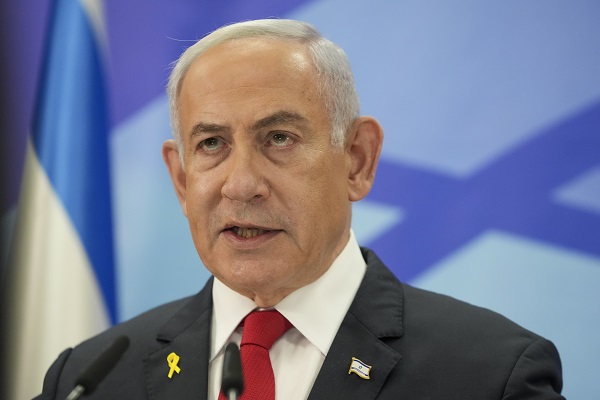
Israeli Prime Minister Benjamin Netanyahu said on Wednesday that Israel plans to invest 350 billion shekels, or approximately $110 billion, over the next decade to develop an independent domestic weapons industry, a move aimed at reducing reliance on foreign arms suppliers, including close allies.
Speaking at a graduation ceremony for new Israeli Air Force pilots at Hatzerim Airbase in southern Israel, Netanyahu said the government had recently approved the massive investment as part of a long-term strategy to ensure Israel’s military self-sufficiency and maintain its technological edge on future battlefields.
“We will continue to obtain essential supplies while at the same time working to arm ourselves independently,” Netanyahu said. “I do not know whether any country can achieve complete self-sufficiency, but we will make every effort to ensure that as much of our weaponry as possible is produced in Israel.”
Netanyahu described the initiative as a strategic priority, saying its ultimate goal is to build an independent arms industry for Israel and reduce dependence on any external party, “including allies.” According to the prime minister, domestically produced weapons systems would help guarantee Israel’s military superiority in the years ahead.
The announcement comes as Israel remains engaged on multiple fronts across the Middle East and amid heightened scrutiny of its military operations. During Israel’s prolonged military campaign in Gaza, several countries including traditional partners such as Germany, Britain, Spain, and the Netherlands have imposed restrictions, reviews, or suspensions on arms exports to Israel, citing concerns over potential violations of international law.
These measures have underscored Israel’s vulnerability to political and legal pressures affecting international arms supplies, reinforcing arguments within the Israeli leadership for greater self-reliance in defense manufacturing. Netanyahu’s remarks suggest that recent export restrictions have accelerated long-standing plans to strengthen Israel’s domestic defense industry.
Israel already possesses a significant military-industrial base, producing advanced systems ranging from drones and missile defenses to cyber and surveillance technologies. However, the new investment plan signals a push to expand production capacity further, reduce dependence on imported components, and secure supply chains during times of conflict.
While Netanyahu did not provide detailed breakdowns of how the funds would be allocated, the scale of the investment suggests major expansion across research and development, manufacturing infrastructure, and advanced weapons systems. Analysts say the plan could reshape Israel’s defense sector and deepen the country’s focus on strategic autonomy at a time of growing geopolitical uncertainty.
The decade-long investment reflects a broader shift in Israeli defense policy, prioritizing independence and resilience as the regional security environment grows more complex and international arms transfers become increasingly subject to political conditions.
