

Ahmed Kamel – Egypt Daily News
Protests erupted across Iran’s capital late Thursday after a call by exiled Crown Prince Reza Pahlavi for mass demonstrations, marking a new escalation in unrest that has spread nationwide amid worsening economic conditions. Witnesses said residents shouted slogans from their homes and thousands gathered in the streets of Tehran, as authorities swiftly cut internet access and telephone lines across large parts of the country.
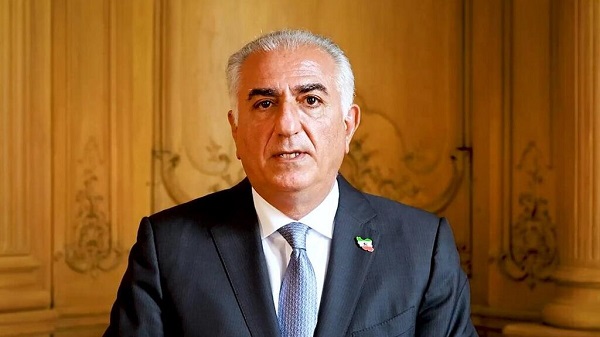
The demonstrations represented the first major test of Pahlavi’s ability to mobilize public support inside Iran. Pahlavi, the son of the late shah who fled the country ahead of the 1979 Islamic Revolution, called on Iranians to rally at 8 p.m. local time on Thursday and Friday. As the hour struck, chanting echoed through neighborhoods across Tehran, with protesters shouting slogans such as “Death to the dictator” and “Death to the Islamic Republic.” In some areas, demonstrators voiced praise for the shah, with chants including “This is the final battle, Pahlavi will return.”
The protests followed demonstrations that had already spread to cities and rural towns across Iran earlier in the week, fueled by anger over the country’s deteriorating economy. Markets and bazaars in several areas closed in apparent solidarity with the protesters. According to the U.S.-based Human Rights Activists News Agency, at least 41 people have been killed in violence linked to the demonstrations so far, while more than 2,270 others have been detained.
As protests gathered momentum, internet monitoring firms Cloudflare and NetBlocks reported a nationwide disruption to internet connectivity, attributing the outage to government interference. Telephone services were also affected, with attempts to place calls into Iran from abroad failing. In previous protest waves, such shutdowns have often preceded widespread security crackdowns.
In a statement, Pahlavi urged Iranians to maintain pressure on the authorities. “Great nation of Iran, the eyes of the world are upon you,” he said. “Take to the streets and, as a united front, shout your demands.” He warned Iran’s leadership and the Revolutionary Guard that the international community, including U.S. President Donald Trump, was watching closely, adding that repression would not go unanswered.
Despite the scale of the demonstrations, analysts note that Iran’s protest movement remains largely leaderless. “The lack of a viable alternative has undermined past protests in Iran,” wrote Nate Swanson of the Atlantic Council, pointing out that many potential opposition leaders have been arrested, persecuted, or forced into exile over decades of state repression.
Iranian authorities have offered little official acknowledgment of the scope of the unrest, though state and semi-official media have reported attacks on security forces. The judiciary’s Mizan news agency said a police colonel was fatally stabbed in a town outside Tehran. The Fars news agency reported that gunmen killed two security personnel and wounded dozens more in the southwestern city of Lordegan. Other incidents, including deadly attacks on police stations, were reported in several provinces, while the Revolutionary Guard confirmed the deaths of two of its members in Kermanshah.
Iran has experienced repeated nationwide protests in recent years, but the current wave comes amid exceptional economic strain. Following tighter sanctions and the aftermath of a recent conflict, the Iranian rial collapsed in December, reaching about 1.4 million to the U.S. dollar. Protesters have repeatedly chanted against Iran’s theocratic system, calling for an end to clerical rule.
U.S. President Donald Trump last week warned Tehran that if it “violently kills peaceful protesters,” the United States would “come to their rescue,” prompting a sharp response from Iran’s Foreign Ministry. The ministry accused Washington of hypocrisy, citing a long history of U.S. intervention in Iran’s internal affairs. Nevertheless, the U.S. State Department has continued to amplify online footage of protests and economic grievances on social media.
The unrest has also drawn renewed attention to the fate of political prisoners, including Nobel Peace Prize laureate Narges Mohammadi, who remains jailed. Her son, Ali Rahmani, said the protests reflect longstanding demands repeated over decades: an end to the Islamic Republic, clerical rule, and what he described as a patriarchal and authoritarian system.
As demonstrations continue and communications remain restricted, uncertainty hangs over how the Iranian authorities will respond and whether the latest wave of protests can sustain momentum in the face of repression.
