

Ahmed Kamel – Egypt Daily News
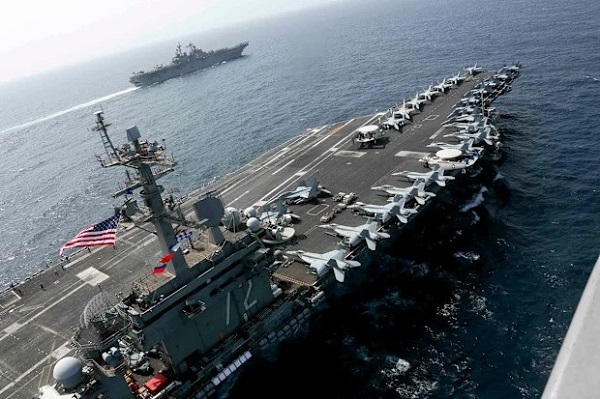
The United States has deployed its nuclear-powered aircraft carrier, the USS Abraham Lincoln, along with three guided-missile destroyers, to the Middle East, marking a significant increase in American military presence amid escalating tensions with Iran. The move comes as Tehran faces internal unrest, with widespread protests triggered by economic and political grievances being met with a violent crackdown.
The Lincoln Carrier Strike Group brings thousands of additional U.S. personnel, advanced aircraft, and weapons systems into the region. Officials described the deployment as aimed at promoting regional security and stability while leaving President Donald Trump with multiple options should he choose to take military action against Iran. The carrier hosts fighter jets capable of conventional strikes and electronic warfare, while the accompanying destroyers carry hundreds of missiles, including Tomahawk cruise missiles, significantly enhancing U.S. power projection.
President Trump has characterized the deployment as precautionary, saying he hopes it will not be necessary to use force. However, he has repeatedly warned that military action could follow if Iran continues mass executions or violent repression of protesters. In recent days, Trump suggested that any U.S. response could make previous strikes on Iranian nuclear sites “look like peanuts,” signaling the administration’s readiness for decisive action if provoked.
Iran has responded with warnings that any attack would be treated as an “all-out war,” while allied militias in Iraq and Yemen have threatened retaliatory strikes. The region remains tense, as Gulf states hosting U.S. forces have urged caution and refused to allow their territories to be used for offensive operations against Iran.
The deployment reflects a broader strategy of rapid repositioning of U.S. military assets to the Middle East in response to global crises. Analysts note that while the show of force is intended to deter escalation, it also underscores the fragility of regional security. With internal unrest in Iran, threats from allied militias, and differing positions among Gulf states, the risk of miscalculation remains high.
The presence of the Lincoln strike group is a reminder of the United States’ commitment to defending its interests and allies in the region, but the evolving situation will test both American deterrence strategies and Tehran’s willingness to respond. Whether the deployment ultimately prevents conflict or becomes a precursor to deeper confrontation will depend on political decisions in Washington and Tehran, as well as reactions from regional powers.
