

Ahmed Kamel – Egypt Daily News
Iran has warned that any potential ground invasion by the United States would lead to severe consequences for American forces, while reiterating that it has not sought a ceasefire despite escalating regional tensions and recent joint military strikes.
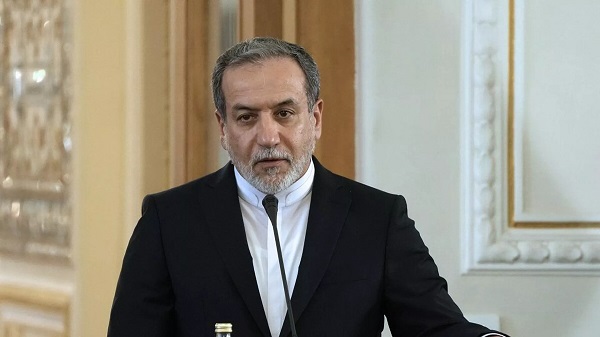
Speaking in an interview with the U.S. network NBC News, Iranian Foreign Minister Abbas Araghchi said Iran is fully prepared to confront what he described as a possible American ground incursion. He cautioned that such a move would be “a major disaster” for U.S. troops.
Araghchi’s remarks come roughly a week after coordinated strikes attributed to United States and Israel targeted locations in Iran while diplomatic talks were simultaneously taking place in Geneva.
Rejecting claims that Tehran had sought to reduce tensions, Araghchi insisted that Iran did not request a ceasefire during the current crisis, nor during a previous conflict in June that lasted 12 days.
“We did not ask for a ceasefire even the last time,” he said. “Israel was the one that requested an unconditional ceasefire after twelve days of our resistance to their aggression.”
The Iranian foreign minister argued that the timing of the latest strikes, which occurred while negotiations were underway in Geneva, had effectively derailed diplomatic prospects. According to Araghchi, the attacks deepened Tehran’s mistrust toward Western negotiating partners.
He added that Iran currently sees little reason to reengage in talks with parties it believes are not negotiating in good faith.
Araghchi also revealed that he has had no communication with U.S. envoys such as Steve Witkoff or Jared Kushner since the previous week, dismissing speculation that back-channel communications were taking place.
“Iran has not requested a ceasefire and rejects negotiations with the United States,” Araghchi said, arguing that launching attacks while talks were underway had undermined any potential for future diplomatic engagement.
Attention has also focused on the strategic Strait of Hormuz, through which roughly a fifth of the world’s oil supply passes. Araghchi attempted to strike a measured tone regarding the vital shipping route.
“Iran has no intention of closing the Strait of Hormuz,” he said, but added that Tehran could reconsider its options if the war continues or expands, signaling that military measures remain under consideration should the conflict escalate further.
Meanwhile, Iran expressed appreciation for the stance taken by Saudi Arabia during the ongoing crisis. Iranian Ambassador to Riyadh Alireza Enayati praised the kingdom for not allowing its airspace or territory to be used in military operations related to the conflict.
“We appreciate what we have repeatedly heard from our brothers in Saudi Arabia,” Enayati told AFP. “We accept what Saudi Arabia says and reaffirm it.”
However, tensions between the two regional powers have been tested by recent accusations from Riyadh that Iran was responsible for drone attacks targeting a U.S. diplomatic compound in the Saudi capital and earlier strikes against the Ras Tanura oil refinery.
Enayati strongly rejected the allegations, insisting that Iran had no involvement in the reported drone attack on the U.S. embassy compound in Riyadh. He said Tehran had clearly denied any role and stressed that any party responsible for such operations must bear responsibility for its actions.
The Iranian envoy also rejected suggestions that Tehran was waging a regional war, instead describing the current crisis as a conflict that had been imposed on the broader region.
Prior to the outbreak of the current hostilities, Saudi Arabia had supported diplomatic initiatives aimed at reducing tensions between Iran and the United States and pledged that its territory would not be used to launch attacks against Iran.
Iranian officials say they value that commitment, viewing it as a stabilizing factor amid mounting regional tensions that continue to threaten key energy routes and security across the Middle East.
