

Ahmed Kamel – Egypt Daily News
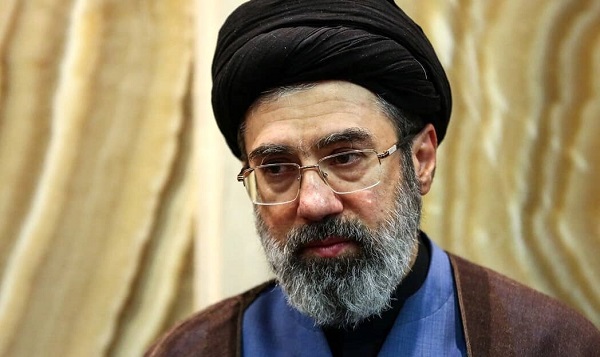
Iran’s Assembly of Experts has appointed Mojtaba Khamenei as the country’s new Supreme Leader, state media reported, following the death of his father, Ali Khamenei, in an Israeli airstrike that dramatically escalated tensions across the Middle East.
Mojtaba Khamenei, 56, the second-oldest son of the late leader, was selected roughly a week after his father was killed during Israeli strikes that targeted key government and military facilities in Tehran. The appointment comes at a time of heightened regional instability, with Iran launching retaliatory attacks against Israel and other targets following the strikes on its capital.
According to Iranian state outlets, the Assembly of Experts the body constitutionally responsible for selecting and supervising the Supreme Leader, convened in an emergency session to decide on the succession. The choice of Mojtaba Khamenei has stirred controversy, however, with critics and opposition media alleging that powerful factions within the Islamic Revolutionary Guard Corps (IRGC) pushed for his selection.
Despite long being considered influential within Iran’s political establishment, Mojtaba Khamenei does not hold a senior clerical rank and has never officially served in government. His profile differs from previous holders of the position, which traditionally requires both political authority and religious standing within the Shiite clerical hierarchy.
Nevertheless, Mojtaba has been regarded for years as a key behind-the-scenes power broker in Tehran. Analysts say he cultivated close ties with senior commanders in the IRGC and security apparatus, particularly after playing a role in managing internal political dynamics during the later years of his father’s leadership.
Born in 1969, Mojtaba Khamenei studied theology in the holy city of Qom and served in Iran’s armed forces during the Iran-Iraq War in the 1980s. Over the past two decades he has gradually built influence through connections with conservative clerics, security officials and hardline political factions. His potential succession had long been debated among observers of Iranian politics, though the prospect remained controversial due to fears it could resemble hereditary rule.
Former Supreme Leader Ali Khamenei himself was reported in the past to have expressed reservations about the idea of dynastic succession, wary of comparisons to the monarchy of Shah Mohammad Reza Pahlavi that was overthrown during the 1979 Iranian Revolution.
The leadership transition comes as Iran faces one of the most dangerous military confrontations in decades. In the days following the Israeli strike that killed the elder Khamenei, Iran launched waves of ballistic missiles and drones targeting Israel and military-linked infrastructure in the United Arab Emirates.
Iranian officials, however, have signaled that the country is not currently seeking a ceasefire, framing the confrontation as a defensive response to Israeli attacks.
The appointment of Mojtaba Khamenei at such a volatile moment places him at the center of both Iran’s domestic power structure and a rapidly evolving regional crisis. Analysts say his relationship with the Revolutionary Guards could shape Iran’s strategic decisions in the coming days, particularly as the conflict with Israel continues to unfold and international pressure for de-escalation grows.
