

Ahmed Kamel – Egypt Daily News
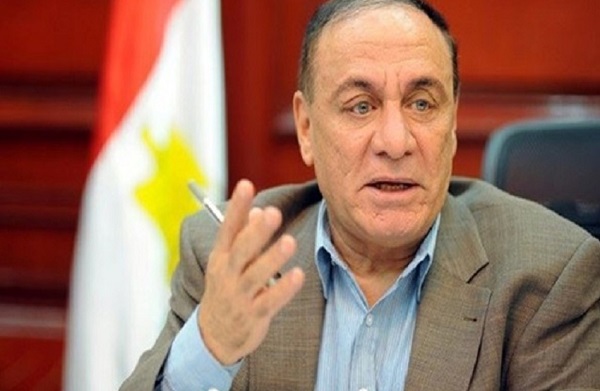
Retired Major General Samir Farag has warned that the ongoing war involving the United States, Israel and Iran carries serious strategic and economic consequences for the Middle East, while renewing calls for Arab states to unite behind Egypt’s proposal for a joint Arab military force.
Speaking during televised remarks on the Egyptian program Hadret Al-Mowaten, Farag said the first week of the conflict saw major developments on the battlefield after coordinated strikes by U.S. and Israeli forces targeted key Iranian military structures. According to Farag, the attacks eliminated senior leadership figures and dealt a significant blow to Iran’s military command system, including officials connected to the country’s defense establishment and the Islamic Revolutionary Guard Corps.
Farag said the strikes also focused heavily on dismantling Iran’s defensive capabilities, particularly its air defense systems and air force infrastructure. As a result, he argued, the skies over Iran have effectively come under the control of U.S. and Israeli forces, creating what military experts refer to as full air superiority.
“With the destruction of much of its air defenses and aerial capabilities, the Iranian sky has effectively become open to American and Israeli operations,” Farag said, noting that Iran’s remaining options are largely limited to its ballistic missile arsenal and its fleet of unmanned aerial vehicles.
The Egyptian military expert also warned that the conflict is already producing serious economic ripple effects across the global energy market. Iranian retaliatory strikes and threats directed at Gulf energy infrastructure have increased fears about disruptions to oil and natural gas exports from the region.
Farag pointed to the surge in global gas prices following security concerns surrounding exports from the Gulf. The situation has been compounded by rising tensions around the strategic Strait of Hormuz, a vital maritime corridor through which a significant share of the world’s oil passes each day.
Iranian threats to close the strait have further unsettled global shipping markets. According to Farag, international maritime insurers, including the London-based Lloyd’s of London, have reconsidered insurance coverage for vessels traveling through the area, reflecting the growing risks associated with navigation in the Gulf.
Farag said the second phase of the war appears to be shifting toward strikes on Iran’s economic infrastructure, including energy facilities such as oil storage tanks. He warned that future attacks could expand to include electricity networks, water stations and railways, a strategy that could place additional pressure on the Iranian government by affecting civilian life.
At the same time, Farag cautioned that Iran could intensify its retaliation against regional targets, particularly Gulf states hosting Western military bases. Such a scenario, he said, could significantly broaden the conflict and further destabilize the region.
The Egyptian analyst also addressed speculation circulating about the possibility of U.S. special operations forces entering Iran to target nuclear materials. Some reports have mentioned elite American units such as the 82nd Airborne Division and Delta Force.
Farag dismissed these discussions as unrealistic from a military perspective, explaining that special operations depend on secrecy and surprise. With Iranian forces already on high alert, particularly units of the Revolutionary Guard deployed in mountainous terrain, he said any such operation would face severe challenges.
According to Farag, Iran still possesses additional strategic cards that it has not fully played in the conflict. He pointed to the potential involvement of allied groups across the region, including the Lebanese organization Hezbollah and the Yemeni Houthis.
One of the most significant threats, he said, could be an attempt to disrupt global shipping routes through the Bab el-Mandeb Strait at the southern entrance to the Red Sea. Any closure or disruption there could have serious consequences for international trade and energy supplies.
Farag also suggested that economic pressure may ultimately become the key factor influencing the trajectory of the conflict. Rising energy prices, global shipping disruptions and the growing financial cost of military operations could place increasing strain on the United States and its allies.
Despite the rapidly evolving military situation, Farag emphasized that the most important lesson for the Arab world is the need for greater regional self-reliance in security matters.
He specifically pointed to the long-standing proposal by Egyptian President Abdel Fattah el-Sisi to establish a unified Arab military force capable of responding collectively to regional crises.
Farag said the current conflict demonstrates the dangers of relying solely on external powers for protection and urged Arab governments to revisit Egypt’s proposal seriously.
“The lesson that Arabs must understand,” Farag said, “is that we must depend on ourselves. Relying entirely on foreign powers leaves countries exposed. I hope that after this war, Arab states will wake up and return to the proposal made by Egypt to form a unified Arab army.”
According to Farag, strengthening Arab military coordination under a collective framework led by regional powers such as Egypt could help ensure greater stability and security in an increasingly volatile Middle East.
