

Ahmed Kamel – Egypt Daily News
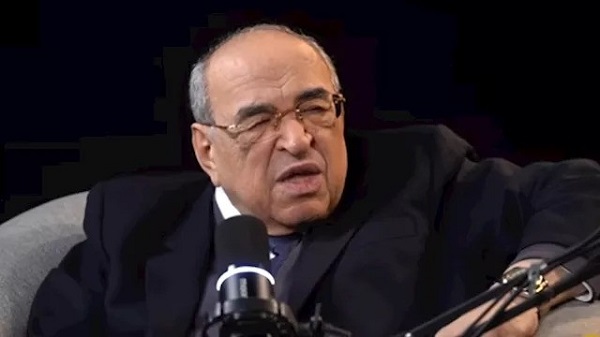
Mostafa El-Feki said divisions among Arab states and conflicting regional interests have weakened collective Arab positions on major strategic issues, including the construction of Ethiopia’s controversial Grand Ethiopian Renaissance Dam.
Speaking during an interview on the podcast “Critical Questions” hosted by Egyptian journalist Magdy El-Gallad, El-Feki said the Arab world no longer acts with the unity that once characterized its political stance on major regional matters.
He explained that diverging national interests increasingly shape the policies of Arab governments, resulting in differing approaches toward issues ranging from relations with Israel to regional conflicts.
“The Arab countries are no longer speaking with one voice as they once did,” El-Feki said, noting that differences in strategic priorities often produce conflicting positions even among traditional allies.
As an example, he pointed to disagreements between Saudi Arabia and United Arab Emirates over developments in Yemen, despite the two states maintaining a longstanding alliance.
“These differences reflect the reality that each country now pursues its own interests,” he said, adding that some Arab governments have established official or informal relations with Israel while others continue to reject any engagement.
El-Feki also cited the situation in Sudan as another example of diverging priorities within the Arab world. Egypt, he said, seeks a stable and unified Sudan, while other regional powers may have different economic or geopolitical interests in the country.
“Egypt wants a secure, stable and strong Sudan,” he said. “Saudi Arabia does not oppose that, but the United Arab Emirates has certain interests in southern territories and along the Yemeni border, as well as very large investments. That makes the issue more complicated.”
Addressing the issue of the Grand Ethiopian Renaissance Dam, El-Feki said Arab contributions to the project cannot be ignored, even if the topic remains politically sensitive in Egypt.
“We cannot bury our heads in the sand and deny the reality,” he said, noting that he wrote an article several years ago titled “The Arabs and the Renaissance Dam” in which he discussed the scale of Arab investments and support tied to the project.
The massive dam, built by Ethiopia on the Blue Nile, has long been a source of tension with Egypt and Sudan, both of which depend heavily on Nile waters. Cairo fears the dam could significantly reduce its share of the river’s flow, particularly during drought periods.
El-Feki argued that the most effective approach to managing the dispute would be a balanced agreement protecting the rights of all parties involved.
“If I were in the position of some Gulf leaders, I would have set clear conditions with the Ethiopian side regarding water quotas,” he said. “Investments and pressure tools should be used in a way that protects the interests of Egypt, the region’s major state.”
He suggested that the current arrangements appear to offer Ethiopia limited economic advantages such as agricultural land, livestock resources and commercial opportunities, while Egypt faces far greater challenges due to water scarcity and limited natural resources.
“In the end, Egypt is the country that bears the greatest burden,” El-Feki said, concluding with a stark remark that some of the current dynamics seem to convey the message: “Egypt can go to hell.”
