

Ahmed Kamel – Egypt Daily News
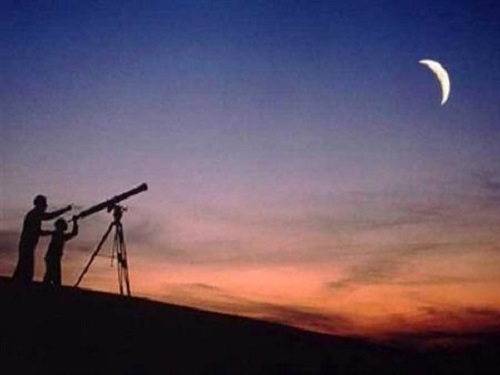
Dar al-Ifta al-Misriyyah will observe the crescent moon marking the beginning of Eid al-Fitr on the evening of Thursday, March 19, 2026, corresponding to the 29th day of the Islamic month of Ramadan for the year 1447 AH.
According to the institution, the official announcement confirming the start of the new month of Shawwal will be delivered by Nazir Mohamed Ayad approximately 30 minutes after sunset following Maghrib prayers. The statement will be broadcast live on Egyptian television after the religious authorities complete the traditional moon-sighting process.
Astronomical calculations from the National Research Institute of Astronomy and Geophysics indicate that the crescent moon of Shawwal will be born immediately after the astronomical conjunction at 3:25 a.m. Cairo local time on Thursday, March 19, the official day of observation.
The new crescent is expected to remain visible in the sky over Mecca for approximately 30 minutes after sunset and around 35 minutes in Cairo. Across other Egyptian governorates, the moon is projected to remain visible for between 30 and 37 minutes, while in Arab and Islamic capitals visibility is expected to range from 11 to 42 minutes after sunset.
Based on these astronomical projections, the first day of Shawwal and therefore Eid al-Fitr would fall on Friday, March 20, 2026.
According to Ramadan calendars issued by the astronomy institute, the Eid prayer in Cairo is expected to take place at 6:24 a.m. local time.
The Islamic calendar, also known as the Hijri calendar, is based on lunar cycles and measures months according to the time it takes the moon to complete a full orbit around the Earth. The calendar consists of twelve months, beginning with Muharram and ending with Dhu al-Hijjah.
Several Muslim-majority countries, including Saudi Arabia, use the Hijri calendar for official religious observances. The system was formally established during the rule of Umar ibn al-Khattab, who designated the migration of Muhammad from Mecca to Medina in 622 CE as the starting point of the Islamic era.
The annual moon-sighting announcement remains one of the most closely followed religious events in Egypt, marking the end of the fasting month of Ramadan and the beginning of one of the most important holidays in the Islamic world.
