

Ahmed Kamel – Egypt Daily News
A senior U.S. counterterrorism official has resigned in protest over Washington’s war with Iran, exposing rare internal dissent within the national security establishment as the conflict continues to escalate.
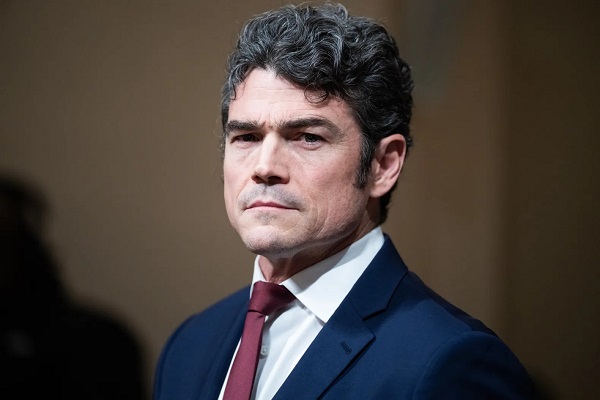
Joe Kent, director of the National Counterterrorism Center, announced he was stepping down, saying he could not “in good conscience” support the Trump administration’s decision to go to war. In a blunt public statement, Kent argued that Iran posed “no imminent threat” to the United States and claimed the conflict had been driven by pressure from Israel and its allies in Washington.
The White House has not publicly responded to the resignation, and a spokesperson for Tulsi Gabbard did not immediately comment. Kent’s departure marks one of the highest-level breaks within the administration since the start of the war and could intensify scrutiny of the decision-making process behind the conflict.
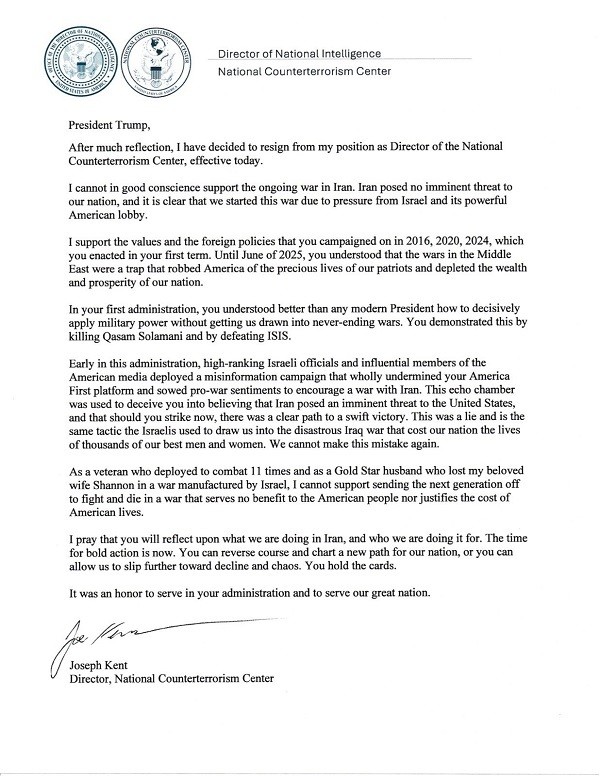
Before joining the administration, Kent served as a Green Beret with 11 deployments and later worked at the CIA, building a career in counterterrorism operations. However, his appointment to lead the National Counterterrorism Center faced strong opposition from Democrats, who pointed to his past promotion of conspiracy theories and ties to far-right figures.
Lawmakers also raised concerns about his reported participation in a private Signal group chat used by members of Donald Trump’s national security team to discuss sensitive military plans, questioning both judgment and security protocols at the highest levels of government.
Kent’s resignation comes at a critical moment in the conflict, as tensions with Iran continue to rise and the risk of broader regional escalation grows. His public criticism adds to mounting debate in Washington over the rationale for the war, particularly as questions persist over whether Iran posed an immediate threat that justified military action.
While the administration has defended its strategy, Kent’s departure underscores unease within parts of the U.S. security apparatus, highlighting fractures that could deepen as the war progresses.
