

Ahmed Kamel – Egypt Daily News
A sharp escalation in rhetoric and military signaling has intensified concerns over the security of global energy supplies, as U.S. President Donald Trump issued a 48-hour ultimatum to Iran to reopen the Strait of Hormuz, threatening to target the country’s energy infrastructure if it fails to comply.
The warning was met with an immediate and equally forceful response from Tehran, which vowed to retaliate by striking energy facilities and critical infrastructure linked to U.S. interests across the region. Iranian military officials stated that any attack on the country’s oil and energy installations would trigger a broader response targeting energy, information technology, and desalination facilities.
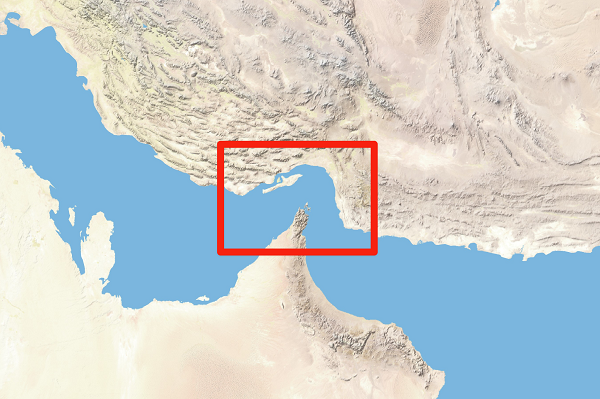
The exchange underscores a rapidly deteriorating situation in the Gulf, where the Strait of Hormuz has emerged as the central flashpoint. The narrow maritime corridor, through which a significant portion of the world’s oil supply passes, has increasingly become a strategic lever in the confrontation between Washington and Tehran.
The latest tensions follow a series of military developments, including reported strikes on Iran’s Natanz nuclear facility and subsequent Iranian missile attacks targeting southern Israel. According to international monitoring bodies, including the International Atomic Energy Agency, no radiation leaks or structural damage were detected at key nuclear sites, despite the escalation.
On the ground, the situation remains volatile. Reports from regional media suggest that missile strikes caused significant destruction in parts of southern Israel, although details remain contested. The broader exchange has reinforced fears of a widening conflict that could draw in additional regional actors.
At sea, the situation is equally tense. Despite U.S. claims of having neutralized several Iranian vessels suspected of laying naval mines, concerns persist over the possible presence of explosives along key shipping routes. These fears have contributed to a climate of uncertainty among commercial shipping operators, with insurance costs and risk assessments rising sharply.
Complicating matters further, Washington has struggled to secure broad international backing for military operations aimed at securing the waterway. Several members of NATO and countries within the European Union have declined to participate in direct military involvement, highlighting divisions among Western allies over how to respond to the crisis.
Japan has also taken a cautious stance. While ruling out immediate military participation, Japanese Foreign Minister Toshimitsu Motegi suggested that Tokyo could consider deploying its advanced mine-clearing capabilities, but only in the context of a ceasefire agreement. He emphasized that any such move would depend on de-escalation and coordination among the parties involved.
For its part, Iran has sought to balance its warnings with signals of conditional openness. Officials stated that the Strait of Hormuz remains accessible to international shipping, with the exception of vessels linked to what Tehran describes as hostile actors. Iranian representatives to international maritime bodies have also expressed willingness to cooperate on ensuring navigation safety, provided that broader hostilities come to an end.
Iranian officials maintain that diplomacy remains their preferred path, but insist that meaningful dialogue must be accompanied by a complete cessation of military actions and steps toward rebuilding trust. They argue that recent U.S. and Israeli strikes are the primary drivers of the current crisis in the Gulf.
Adding to the uncertainty, a maritime security report indicated that an unidentified projectile exploded near a commercial cargo vessel off the coast of the United Arab Emirates, not far from the Strait of Hormuz. While no casualties were reported, the incident has heightened concerns about the security of shipping lanes in one of the world’s most strategically vital maritime corridors.
As tensions continue to rise, the Strait of Hormuz stands at the center of a crisis with potentially far-reaching consequences for global energy markets and regional stability. Diplomatic efforts remain limited, and with both sides holding firm to their positions, the risk of further escalation appears to be growing.
