

Ahmed Kamel – Egypt Daily News
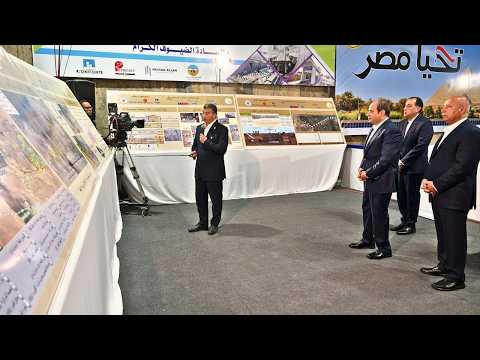
Egypt is accelerating one of its most critical infrastructure bets, as President Abdel Fattah el-Sisi personally inspected construction works at the Pyramids Metro Station, part of the highly anticipated Phase One of Cairo Metro Line 4.
The visit, carried out in Giza, was not symbolic. It was a clear signal that the state is prioritizing rapid execution of a transport project designed to reshape mobility across Greater Cairo and absorb mounting population pressure in some of its most congested districts.
President Sisi was received on-site by Prime Minister Mostafa Madbouly, Transport Minister Kamel al-Wazir, and Giza Governor Ahmed Rashed, alongside Japanese officials including Ambassador Fumio Iwai and representatives of the Japan International Cooperation Agency—a key partner in financing and technical support.
A Strategic Transport Artery in the Making
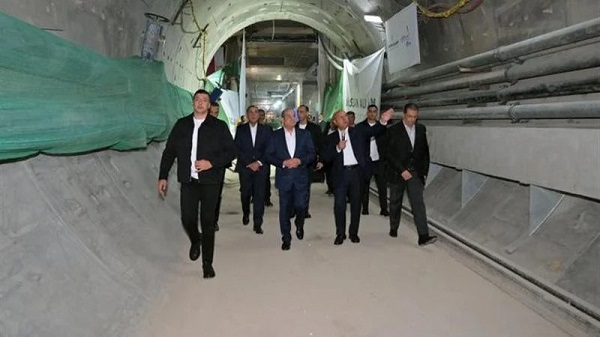
At the heart of the tour was the massive tunnel boring operation. President Sisi reviewed progress on the tunneling machine before officially triggering the continuation of excavation works, marking the completion of a critical 6.35-kilometer tunnel segment between Hadayek Al Ashgar and the Pyramids station.
The Pyramids station itself is a cornerstone of Line 4, a project that is expected to transform east-west connectivity across Cairo. Once completed, the line will link 6th of October City to New Cairo, cutting through densely populated zones including Haram, Faisal, Omraniya, Nasr City, and areas surrounding Al-Azhar University.
Officials say the line is designed to carry up to 2 million passengers daily, a figure that underscores both the scale of Cairo’s congestion crisis and the urgency behind the government’s infrastructure push.
2028 Deadline and Pressure to Deliver
According to project briefings presented during the visit, the Pyramids station is scheduled to open in the first half of 2028. But Sisi made it clear that timelines are not flexible.
He issued direct instructions for continuous monitoring of construction progress, stressing the need for speed without compromising on quality, safety standards, or technical precision.
The message was unmistakable: delays are not acceptable on projects of this scale.
Integration with a Broader Transport Network
Beyond the metro itself, Line 4 is being positioned as part of a wider, integrated transport ecosystem. It will connect with the 6th of October monorail and align with Egypt’s broader strategy to build a sustainable, green mass transit network.
Transport Minister Kamel al-Wazir outlined ongoing work inside the tunnels, including installation of concrete linings, rail systems, signaling infrastructure, and electrical networks—critical stages that determine long-term operational efficiency.
Egypt’s Infrastructure Gamble
This project is part of a larger national push to modernize Egypt’s urban transport systems, reduce reliance on private vehicles, and ease chronic traffic bottlenecks that cost the economy billions annually. But beyond easing congestion, the metro expansion carries deeper implications. It is about urban restructuring, redirecting how millions of Egyptians move, work, and access economic opportunities.
With international partners like JICA involved and direct presidential oversight now visible, the Line 4 project is no longer just another metro expansion.
It is a test of execution.
And the clock is already ticking toward 2028.
