

Ahmed Kamel – Egypt Daily News
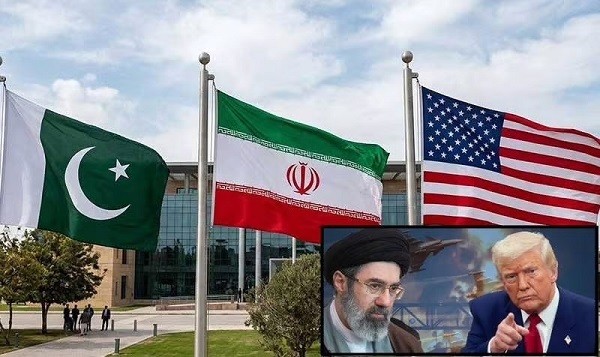
Iran has quietly moved its latest negotiating card delivered not directly to Washington, but through Pakistani intermediaries, signaling that diplomacy is still alive even as the rhetoric from both sides hardens and the true cost of conflict begins to surface.
According to Barak Ravid of Axios, Iran submitted its response to U.S. revisions on a draft agreement to end the war on Thursday, routing the message through Pakistani mediators rather than engaging Washington directly. The indirect channel is not a detail it is the story. It reflects both distrust and necessity.
The move comes as Pakistani mediators attempt to keep negotiations from collapsing under the weight of political deadlines and escalating threats. Reporting from CNN suggests those mediators still believe a “fair deal” is within reach. But their optimism is carefully worded and increasingly fragile.
Time is no longer a background factor. It is the pressure point. Friday has effectively become a cutoff for Pakistan to receive Iran’s revised proposal, after Donald Trump rejected an earlier version. That rejection reset the clock and raised the stakes. Tehran now faces a narrowing window to respond without appearing weak, while Washington balances negotiation with visible pressure.
And the pressure is not theoretical.
This week alone has seen a sharp uptick in threats and hostile messaging from both sides, suggesting that diplomacy is being conducted under the shadow of potential escalation rather than in its absence. The contrast is stark: quiet backchannel negotiations on one hand, increasingly public confrontation on the other.
Meanwhile, the financial reality of the conflict is beginning to break through the official narrative.
According to CBS News, the true cost of the war is approaching $50 billion, roughly double the $25 billion figure publicly cited by Pentagon officials. That lower estimate, presented during congressional testimony by Pete Hegseth and Dan Caine, notably excludes significant categories of loss, including damaged equipment and infrastructure.
That gap is not just an accounting issue, it is a credibility issue. Understating war costs may buy short-term political cover, but it raises long-term questions about transparency and strategy.
Pakistan’s role, often framed as neutral mediation, is now central. Islamabad is not just passing messages; it is holding together a negotiation that neither Washington nor Tehran seems willing, or able to conduct directly.
The result is a fragile diplomatic structure built on urgency, mistrust, and rising costs.
For now, the message flow continues. But the balance is shifting. If the revised Iranian proposal fails to meet U.S. expectations, the next phase may not be negotiation, it may be escalation, with a price tag that is already proving far higher than publicly admitted.
