

Ahmed Kamel – Egypt Daily News
Egypt has taken another significant step in its energy transition strategy after signing a series of agreements to build large-scale battery storage facilities and establish a domestic manufacturing base for energy storage systems, a move officials say will strengthen grid stability and expand the country’s renewable energy capacity.
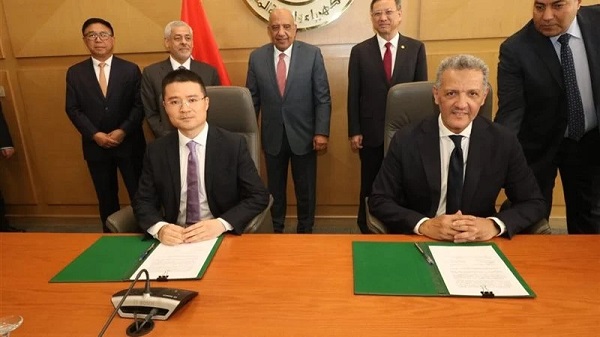
The agreements, signed in the presence of Electricity and Renewable Energy Minister Mahmoud Esmat, cover the construction of two standalone battery energy storage projects with a combined capacity of 1,500 megawatt-hours, alongside a new factory capable of producing energy storage battery systems with an annual capacity of 3,000 megawatt-hours.
The projects will be developed in two of Egypt’s key renewable energy hubs. One facility, operated by Horus Storage Company, will be built in Zaafarana with a storage capacity of 500 megawatt-hours. The second, developed by Nefertiti Storage Company in Benban, will add another 1,000 megawatt-hours to the national grid’s energy storage capability.
Strengthening the Renewable Energy Backbone
The new projects form part of Egypt’s broader effort to integrate larger volumes of solar and wind power into the electricity network while ensuring reliable power supply during periods of fluctuating generation.
Battery storage systems allow excess electricity generated from renewable sources to be stored and released when demand rises or renewable output declines, helping stabilize the grid and reduce dependence on conventional fossil-fuel power plants.
The agreements include engineering, procurement and construction (EPC) contracts involving major international partners, including UAE-based AMEA Power, China Energy Engineering Corporation, Gotion, and CEIG.
The signing ceremony was attended by Hussein Al Nowais, Chairman of AMEA Power Group, and Ni Jin, Chairman of China Energy Group, alongside senior executives from the participating companies.
Egypt Targets Rapid Expansion
Speaking during the ceremony, Esmat said battery energy storage technology was introduced into Egypt’s national electricity grid for the first time only last year, marking a major shift in the country’s power sector modernization efforts.
He noted that the government’s renewable energy strategy requires substantial investment in storage infrastructure to guarantee grid security and ensure uninterrupted electricity supplies as the share of solar and wind energy continues to grow.
According to the minister, Egypt has already identified a pipeline of projects with defined implementation schedules aimed at expanding national battery storage capacity to 14,320 megawatt-hours by 2028.
Manufacturing Ambitions
Beyond the storage facilities themselves, the new agreements also focus on localizing advanced energy technologies through domestic manufacturing.
Officials view the planned battery factory as part of a broader strategy to attract foreign investment, transfer technology, and develop local industrial capabilities in renewable energy equipment and infrastructure.
Esmat said partnerships between international developers and the private sector would play a key role in maximizing the value of Egypt’s renewable energy resources while supporting the country’s ambition to become a regional hub for clean energy technologies and equipment manufacturing.
The minister reaffirmed the government’s commitment to supporting strategic partnerships that contribute to sustainable development goals, enhance energy security, and accelerate Egypt’s transition toward a lower-carbon economy.
