
Ahmed Kamel – Egypt Daily News
Egypt’s parliamentary parties are divided over President Abdel-Fattah el-Sisi’s request for authority to send the Armed Forces to support Saudi Arabia if Riyadh asks for military assistance. Some party blocs have pledged to vote in favour, while the Egyptian Social Democratic Party plans to abstain, citing a lack of information about the mission, its costs and the risks to Egyptian personnel.
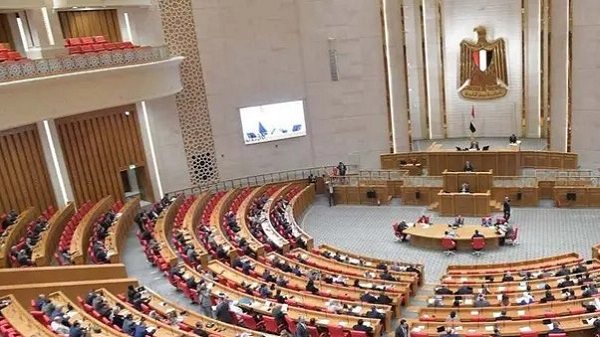
The House of Representatives began closed-door deliberations on Sunday after President Sisi called for an emergency session. The debate was extended to allow more lawmakers to speak. A vote initially expected on Tuesday was later postponed; parliament is now due to reconvene on October 26, with the decision requiring a two-thirds majority.
The proposed authorization comes amid escalating attacks on Saudi Arabia by Yemen’s Houthi movement. President Sisi has described any Egyptian role as defensive, conditional on a Saudi request and subject to parliamentary approval. He has said Egypt does not intend to attack another party, but would act to help protect the kingdom’s security and borders if asked.
The Egyptian Social Democratic Party’s 11-member parliamentary bloc has said it will abstain. MP Freddy el-Bayadi said the party supports Saudi Arabia’s right to defend itself and considers Gulf security, particularly Saudi security, closely connected to Egypt’s national interests. But he said lawmakers had not received enough information to assess the proposed mandate.
El-Bayadi questioned what tasks Egyptian forces might be assigned, how long a deployment could last and what its financial and human costs could be. He also warned that joining the conflict could expose Egyptian forces, facilities and economic interests to retaliation. In particular, he pointed to the risks to shipping through the Red Sea and the Bab al-Mandab Strait, as well as to the Suez Canal, if the Houthis responded to Egyptian involvement by targeting maritime traffic.
The party’s position, he said, was not a rejection of solidarity with Saudi Arabia, but an objection to approving an insufficiently defined military commitment. He called for a careful assessment of the diplomatic and security consequences, the safety of Egyptian personnel and the possible economic effects before Parliament grants authorization.
Other parties have announced support. The Republican People’s Party, whose parliamentary bloc has 24 members, said it would vote in favour. Bloc leader Tarek el-Tawil described Saudi security as inseparable from Egypt’s and said the kingdom should receive support in the face of Houthi attacks. He said the extension of debate was procedural, allowing more lawmakers to state their positions.
The Justice Party has also authorized its parliamentary bloc to support President Sisi’s request. Bloc leader Mohamed Fouad said the party’s political bureau had instructed its MPs to approve a request to send the Armed Forces abroad, subject to the procedures and safeguards set out in Article 152 of the Constitution. He said the additional time in Parliament was intended to allow lawmakers and political groups to express their views.
The Wafd Party’s parliamentary bloc has likewise announced unanimous support. Fouad Badrawi, a senior party official, called assistance to Saudi Arabia a national duty and argued that an attack on the kingdom’s security would also threaten Egypt’s national security. He said his party trusted the president to determine what support was appropriate in light of national interests.
Those in favour have presented the request as an expression of Arab solidarity and a response to threats against a close regional partner. But the debate has also exposed concerns over how much discretion Parliament might grant the president. Some lawmakers and political groups have objected to what they describe as an open-ended or vague mandate, arguing that a vote should specify the mission’s purpose and limits.
Article 152 of Egypt’s Constitution states that the president may not declare war or send the Armed Forces on a combat mission outside the country without first consulting the National Defence Council and obtaining approval from two-thirds of Parliament. The parliamentary rules require the decision to be taken in an urgent, closed session. The National Defence Council met before the debate and pledged all necessary and possible support to Saudi Arabia, while also calling for political and diplomatic efforts to reduce regional tensions.
The session’s postponement means the political contest is not yet resolved. Support from several major party blocs has not eliminated objections from lawmakers who want clearer information or oppose military involvement. The coming vote will determine whether the president receives formal authorization, but the precise scope of any approved mission remains a central question.
The debate also coincides with calls for diplomacy. Al-Azhar, Egypt’s leading religious institution, urged the creation of an Arab and Islamic mediation committee to help halt regional conflicts and bring opposing parties together. Its appeal reflects an alternative emphasis in the discussion: support for Saudi Arabia, some argue, can be pursued through mediation and de-escalation rather than direct military participation.
