

Ahmed Kamel – Egypt Daily News
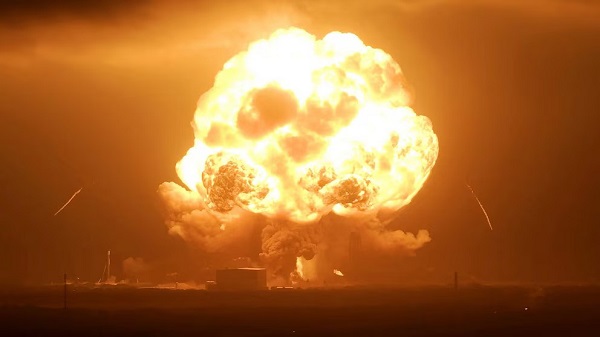
A Blue Origin rocket exploded in a massive fireball during a late-night engine test at Cape Canaveral on Thursday, forcing the company into another high-profile setback as it races to establish its New Glenn launch system in the fiercely competitive commercial space industry.
The blast erupted during a static fire test at Cape Canaveral Space Force Station in Florida, where engineers were preparing the heavy-lift rocket for an upcoming mission expected to carry 48 Amazon satellites into low-Earth orbit. Images and videos circulating online showed flames and thick smoke engulfing the launch pad moments after the engines ignited.
Blue Origin later confirmed the failure, saying the rocket “experienced an anomaly during today’s hotfire test,” though the company stressed that all personnel had been safely evacuated and no injuries were reported.
Jeff Bezos, the company’s founder, acknowledged the seriousness of the incident in a message posted on social media, calling it a “very rough day” for the program while insisting the company would move forward with the investigation and rebuild effort.
Local authorities said there was no threat to nearby communities despite the intensity of the explosion. Brevard County Sheriff Wayne Ivey said emergency teams were monitoring the site while allowing the fire to burn itself out under controlled conditions.
The failed test represents a major disruption for Blue Origin’s long-delayed New Glenn program, which the company hopes will eventually compete directly with SpaceX in the global satellite launch market. The rocket was designed to become the backbone of Blue Origin’s future commercial and government missions, including launches tied to Amazon’s growing satellite internet ambitions.
Static fire tests are considered one of the final and most critical stages before launch. During the procedure, the rocket’s engines are ignited at full power while the vehicle remains locked to the launch tower, allowing engineers to evaluate performance under launch-like conditions without liftoff.
Thursday’s explosion follows earlier problems involving New Glenn missions, including difficulties placing payloads into their intended orbit, adding to concerns over the pace of the rocket’s development program after years of delays and mounting competition in the private space sector.
The setback could also ripple into future NASA operations. Blue Origin has secured contracts linked to the Artemis lunar program and broader Moon Base initiatives, projects that depend heavily on reliable heavy-launch capability.
NASA Administrator Jared Isaacman described the incident as a reminder of the risks involved in modern spaceflight, saying the agency would work closely with Blue Origin during the investigation into the cause of the failure.
“Spaceflight is unforgiving, and developing new heavy-lift launch capability is extraordinarily difficult,” Isaacman said, adding that NASA would later assess whether the incident could affect Artemis-related timelines.
The explosion comes as private space companies are under increasing pressure to deliver reliable launch systems amid booming demand for military, communications and lunar exploration missions. While rocket failures remain common during development phases, the destruction of a launch vehicle during ground testing is likely to intensify scrutiny over Blue Origin’s readiness to compete at the highest level of the industry.
