

Ahmed Kamel – Egypt Daily News
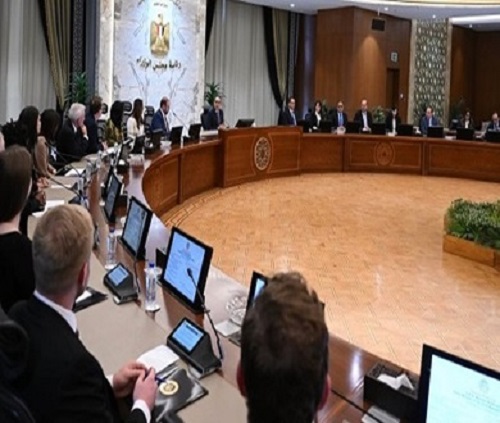
Egypt’s Cabinet has approved a new draft law governing personal status for Christian citizens, marking a major step toward unifying and modernizing family-related legislation. The decision came during a government meeting chaired by Prime Minister Mostafa Madbouly and follows direct instructions from President Abdel Fattah El-Sisi to accelerate the submission of family law reforms for both Christians and Muslims.
Officials confirmed that the draft will be sent to parliament in the coming weeks as part of a broader legislative package that also includes reforms for Muslim personal status law and the establishment of a Family Support Fund. The government says the move is designed to strengthen family stability, protect rights, and respond to long-standing public demands for clearer and more consistent legal frameworks.
The legislation is rooted in Article 3 of Egypt’s constitution, which states that the principles of Christian religious laws are the primary source for regulating the personal status of Christian citizens. In line with that requirement, a legal committee was formed under a 2023 prime ministerial decree to draft the law, bringing together representatives from the Ministry of Justice, relevant government bodies, and Christian denominations.
According to the Ministry of Justice, the drafting process involved 35 formal meetings held through April 2026, with participation from senior religious leaders, legal advisors, and members of both houses of parliament. The discussions aimed to produce a unified legal text that respects doctrinal differences while covering all aspects of family law in a single, coherent statute.
Justice Minister Mahmoud El-Sherif said the government also conducted an extensive public consultation process, allowing members of Christian communities to review and comment on the draft. Feedback from these sessions contributed to broad agreement on most provisions, while additional input was gathered from key national institutions including the Supreme Judicial Council, the National Council for Human Rights, the National Council for Women, and the National Council for Childhood and Motherhood.
One of the central goals of the new law is to consolidate previously scattered regulations into a single legislative framework. Until now, Christian family matters in Egypt have been governed by multiple legal instruments of varying authority, often creating confusion for both citizens and courts. The new draft is intended to simplify legal procedures, improve judicial efficiency, and make the law more accessible to non-specialists.
Officials emphasized that the law has been structured with clear organization and straightforward language, enabling individuals to better understand their rights and obligations. It also seeks to ensure equality before the law in areas not directly tied to religious doctrine, such as housing arrangements, child custody, visitation rights, and related civil matters.
At the same time, the government stressed that doctrinal issues specific to each denomination have been carefully preserved. The law applies to multiple Christian communities in Egypt, including Coptic Orthodox, Syriac Orthodox, Greek Orthodox, Armenian Orthodox, Evangelical, and Catholic groups, while allowing for certain provisions to reflect the unique beliefs of each.
The draft covers a wide range of personal status issues, including engagement, marriage, grounds for divorce and annulment, civil dissolution for some denominations, custody, visitation, educational guardianship, lineage, missing persons, and inheritance. Officials describe it as the most comprehensive attempt to regulate Christian family life under a unified legal system in Egypt’s modern history.
The bill now heads to parliament, where it is expected to generate significant debate as lawmakers review one of the most sensitive and consequential social reforms in recent years.
