

Ahmed Kamel – Egypt Daily News
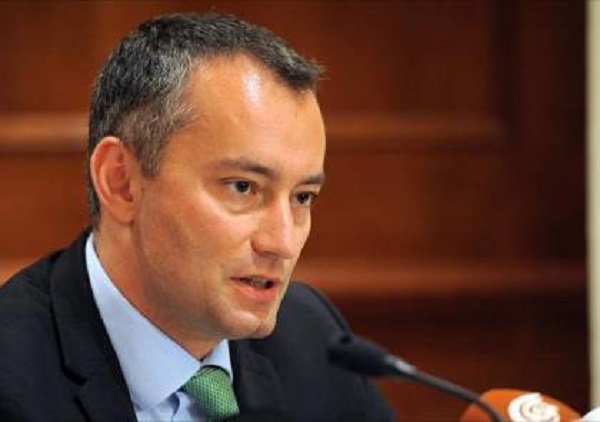
A sudden diplomatic move has injected new urgency into the Gaza crisis after Nikolay Mladenov arrived in Israel late Monday for high-level meetings with security officials, following the reported collapse of indirect negotiations in Cairo and rising warnings of a possible return to war.
Talks break down amid deepening disputes The visit comes at a critical moment, with Israeli military radio claiming that recent discussions between Mladenov and Hamas in Cairo have reached a dead end. At the center of the dispute lies a fundamental disagreement over disarmament, sequencing of the ceasefire phases, and the terms required to move toward a broader political settlement.
Humanitarian pressure meets security demands According to Israeli reports, Mladenov is expected to push for increased humanitarian access to Gaza Strip, including the entry of aid and a reduction in Israeli military operations. However, the same reports indicate that Hamas remains firm in its refusal to discuss disarmament under current conditions, citing what it describes as repeated Israeli violations of the ceasefire and severe delays in the delivery of humanitarian assistance.
No official confirmation, growing uncertainty Despite the significance of the visit, neither the Israeli government nor Mladenov’s office has issued an official statement confirming his arrival or clarifying the status of the negotiations. The absence of formal communication has only deepened uncertainty around the future of the fragile truce.
Hamas insists on full implementation of phase one Hamas officials have reiterated that any transition to the second phase of the agreement is contingent on Israel fully implementing its initial commitments. These include halting military operations, facilitating aid entrance, and easing the blockade conditions that continue to fuel the humanitarian crisis. Palestinian factions argue that moving forward without these guarantees would undermine the entire framework of the agreement.
Unified Palestinian stance on disarmament issue In a notable development, multiple Palestinian factions including Palestinian Islamic Jihad and Popular Front for the Liberation of Palestine, have aligned behind a unified position rejecting any discussion of weapons before the completion of the first phase. They insist that the issue of arms must be addressed within a broader national framework tied to political rights and the eventual establishment of a Palestinian state.
Israel holds firm as tensions escalate On the other side, Israel has reportedly refused to withdraw from key positions and continues to link progress in negotiations to security guarantees, including disarmament. Israeli media reports suggest the military has expanded its operational control on the ground, fueling concerns that preparations for renewed large-scale operations may already be underway.
Ceasefire under strain as violations mount The fragile truce, which came into effect in October under a framework associated with Donald Trump, is facing increasing pressure. Palestinian sources accuse Israel of repeated violations, including ongoing strikes and tightening restrictions, while Israeli officials point to unresolved security threats. The result is a rapidly deteriorating situation in which both sides question the viability of the agreement.
A diplomatic race against escalation With mediation efforts involving regional and international actors including Egypt, Qatar, Turkey, and partial US participation intensifying behind the scenes, Mladenov’s sudden arrival signals a last-minute push to salvage the process. Yet with core disagreements unresolved and trust eroding, the window for de-escalation appears to be narrowing.
The coming hours may prove decisive Whether this unexpected diplomatic intervention can revive stalled talks or merely delay a renewed confrontation remains unclear. What is certain, however, is that the situation is once again approaching a turning point, where political failure could quickly translate into military escalation on the ground.
