

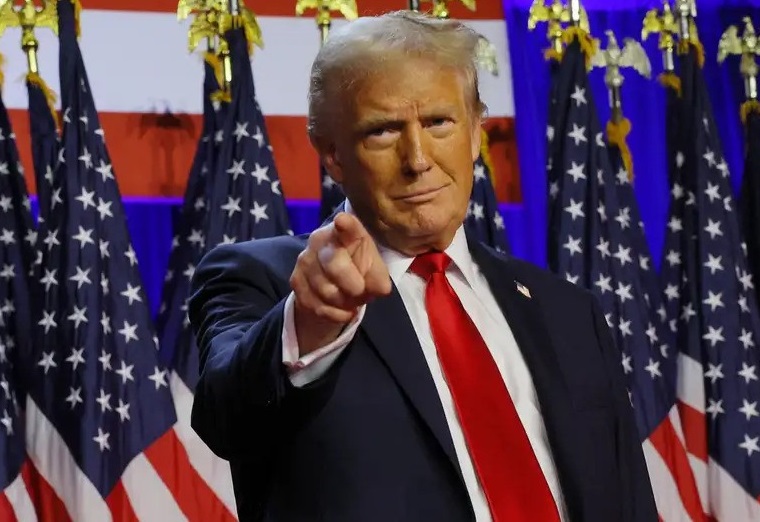
Egypt Daily News – Former U.S. President Donald Trump has announced plans to notify more than 150 countries of potential tariff increases as part of his renewed push for a global trade overhaul. Speaking at the White House on Wednesday, Trump said these nations could soon face uniform tariff rates of 10% to 15%, a move that could have far-reaching consequences for global trade dynamics.
“We’re going to send out notices of payment,” Trump told reporters. “These notices will include what the tariff rate will be. It’ll be uniform for everyone in that group.” He emphasized that the countries targeted are “not major powers” and “don’t have significant trade activity.”
Later that evening, in an interview with Real America’s Voice, Trump added, “The rate will probably be 10 or 15 percent. We haven’t decided yet.”
Warnings and Deadlines
The tariff threats follow a wave of new demands issued by Trump in recent days, targeting multiple countries with proposed duties that would take effect on August 1 unless new trade terms are negotiated. The notifications extend a previous deadline of July 9 by an additional three weeks, triggering a flurry of diplomatic efforts by U.S. trade partners hoping to avert the hike.
Alicia García Herrero, chief Asia-Pacific economist at Natixis Bank, commented that while Trump’s proposal has rattled markets, it also offers a degree of predictability. “For most of the world, and especially Asia, which already faces some of the highest tariffs, this announcement can be seen as somewhat positive. It offers smaller nations clarity and the proposed rates are lower than feared,” she said. García Herrero added that the move shows Trump is aware that excessively high tariffs could cause major economic disruptions.
Tariff Notices Framed as “Deals”
Although Trump and his advisers initially expressed hopes of forging individual trade deals, the former president has shifted rhetoric, describing the tariff notices themselves as “deals.” This signals a decreased willingness to engage in bilateral negotiations, though he indicated that nations can still seek agreements that may lower the proposed rates.
The proposed tariffs align closely with previous threats made by Trump in April, which were suspended shortly after market instability ensued. However, this new wave of notifications has introduced fresh uncertainty, particularly in financial markets, and has caught some allies off guard, notably the European Union, which had been in early-stage talks for a trade agreement.
In the same interview, Trump said, “We might strike a deal with Europe you know, I’m not too concerned about it,” suggesting that even informal messages sent to EU leaders could be interpreted as binding agreements in his view.
When asked about Canada, which is reportedly facing a 35% tariff on some goods as of August, Trump replied, “It’s too early to say.”
A Shift in Global Trade Strategy
This latest move marks a continuation of Trump’s aggressive trade-first approach, a hallmark of his first term in office. If implemented, the blanket tariff strategy would upend long-standing trade norms and risk retaliation from affected countries, many of whom rely heavily on access to U.S. markets.
While the Trump campaign frames the initiative as a corrective measure for what it views as unfair trade imbalances, analysts caution that such broad actions could disrupt global supply chains, drive up consumer prices, and strain international alliances.
With uncertainty looming, affected nations now face a tight window to respond or brace for a new era of protectionist U.S. trade policy.
