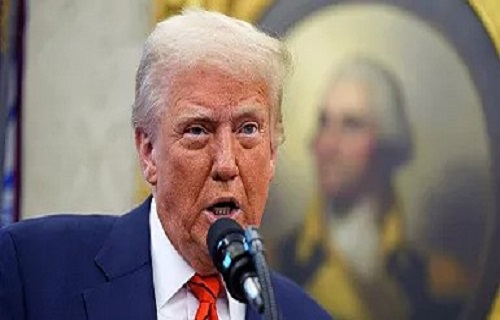
In a dramatic and controversial move, U.S. President Donald Trump announced the designation of Antifa as a “major terrorist organization” just one week after the assassination of his close conservative ally, Charlie Kirk. The decision has sparked a wave of debate across the American political spectrum, further polarizing an already tense national atmosphere.
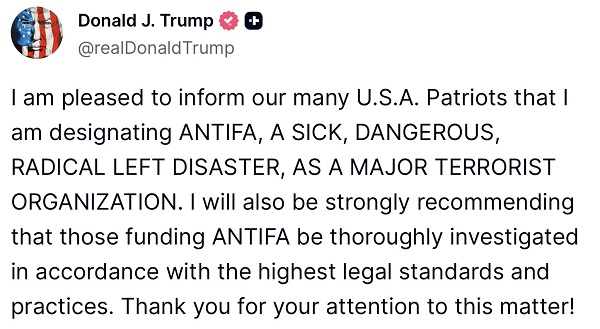
Posting on his social media platform Truth Social on Wednesday, Trump wrote:
“I am pleased to inform many U.S.A Patriots that I am designating Antifa, A sick, dangerous radical leftist disaster, as a major terrorist organization.”
Trump also called for a sweeping investigation into Antifa’s alleged financial backers, stating he would push for an inquiry that adheres to the “highest legal standards and practices.”
A Highly Charged Political Context
The announcement follows the shocking assassination of Charlie Kirk — a prominent conservative activist and founder of the youth-focused political organization Turning Point USA, who was gunned down under circumstances that remain under investigation. Though no formal connection has yet been established between the perpetrators and Antifa-affiliated groups, the timing of the designation has fueled speculation and conspiracy theories among Trump supporters and right-wing media outlets.
While federal law enforcement agencies are responsible for addressing domestic terrorism in the U.S., the country does not maintain an official list of designated “domestic terrorist organizations” akin to its foreign terrorist organization list. This makes Trump’s move largely symbolic but politically potent.
A Longstanding Target
Antifa, short for “anti-fascist,” is a loosely organized, far-left movement with no formal structure or leadership. It comprises activists who identify as staunchly opposed to fascism, white supremacy, and far-right extremism. However, the group has been repeatedly criticized by conservatives for its confrontational and, at times, violent tactics, particularly during protests, counter-demonstrations, and clashes with law enforcement.
Trump has blamed Antifa for a variety of incidents throughout his political career, including the Black Lives Matter protests of 2020 and, controversially, has attempted to link them to the January 6 Capitol riots despite those being carried out predominantly by his own supporters.
Criticism from Legal and Civil Rights Groups
Legal experts and civil liberties organizations were quick to respond to Trump’s declaration, pointing out the absence of a legal framework for such a designation within U.S. domestic law.
“There is no legal mechanism for designating a domestic group as a terrorist organization in the way Trump is suggesting,” said Mary McCord, a former Justice Department official. “This is political messaging not a legally binding action.”
The American Civil Liberties Union (ACLU) warned that labeling domestic protest movements as terrorists without due process sets a dangerous precedent that could be used to suppress dissent across the political spectrum.
Antifa’s Growing Visibility
While Antifa remains decentralized and often operates anonymously, its visibility has grown in recent years, particularly in urban centers like Portland, Seattle, and New York where activists have frequently clashed with police and right-wing demonstrators. Though its core ideology opposes authoritarianism and fascism, critics argue that its embrace of militant protest methods undermines the legitimacy of peaceful activism.
A recent surge in membership and public activity among Antifa-affiliated groups has coincided with rising political tensions ahead of the 2026 midterm elections, according to a report by independent watchdogs tracking political extremism in the U.S.
What’s Next?
Trump’s announcement, while not legally binding, may lay the groundwork for future executive orders or congressional actions targeting Antifa and similar movements. It also sends a clear political signal to his base that he intends to continue his hardline stance against left-wing activism, especially as he prepares for what is expected to be a contentious presidential election campaign.
As investigations into Charlie Kirk’s assassination continue, law enforcement officials have yet to publicly link the murder to any specific group. Meanwhile, Trump’s latest move is certain to intensify the political fault lines that have defined American discourse in recent years.