

Ahmed Kamel – Egypt Daily News
The Egypt Defence Expo (EDEX 2025) opened on December 1 at the Egypt International Exhibition Centre in Cairo, marking the fourth edition of a rapidly expanding platform that has become central to the Middle East and Africa’s defense landscape. Running through December 4, the exhibition gathers more than 450 companies from over 80 countries and is expected to draw some 40,000 military officials, industry leaders, and policymakers.
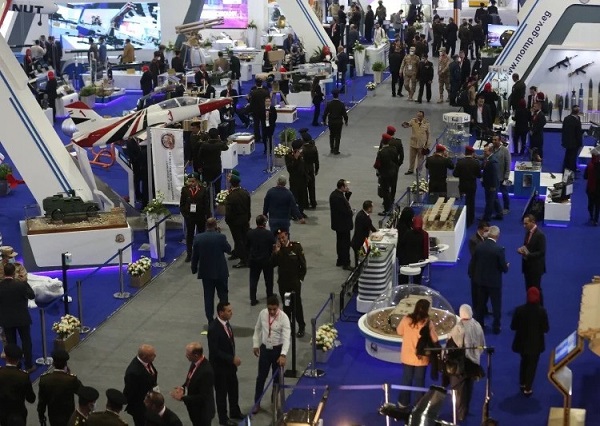
This year’s expo stands out not only for its scale but for a significant organisational milestone. For the first time since its 2018 launch, EDEX is being managed entirely by Egyptian institutions. A joint committee comprising the Ministry of Military Production, the Armed Forces, and the Arab Organization for Industrialization (AOI) has assumed full control of planning and execution, an intentional shift reflecting Cairo’s broader strategy of consolidating sovereignty over both hard- and soft-power tools. The move signals Egypt’s ambition to master not only defense manufacturing but also the logistical and diplomatic infrastructure needed to host major international events without foreign operators.
At the heart of EDEX 2025 is an accelerated push toward the localisation of defense technology. Egypt’s long-term effort to reduce dependency on imports is visible across the exhibition floor, where more than 260 locally produced systems and components are on display. This year also marks the formal integration of civilian industry into the defense production pipeline. For the first time, the Federation of Egyptian Industries is participating, following a series of assessments that cleared select civilian manufacturers to supply dual-use components.
The arrangement is designed to free the Ministry of Military Production to concentrate on sensitive, high-tech systems while civilian factories provide standardised parts, an approach that deepens industrial capacity and broadens national resilience.
The international spread of exhibitors illustrates evolving geopolitical dynamics. Türkiye has emerged as the largest foreign participant in EDEX 2025, fielding 81 companies representing virtually every sector of its defense industry. The scale of Turkish participation, surpassing even its strong presence in 2023, underscores the rapid warming of relations between Cairo and Ankara and Türkiye’s desire to expand its footprint among African and Arab militaries. Major Turkish players such as Istanbul Naval Shipyard and electronics giant Aselsan joined dozens of smaller manufacturers in showcasing advanced systems.
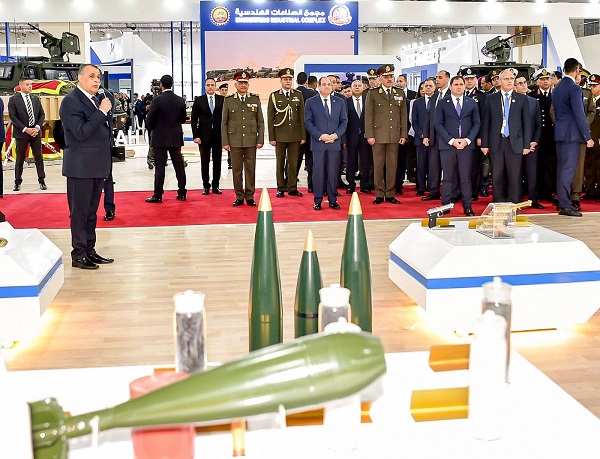
Azerbaijan also mounted a prominent delegation, led by Minister of Defense Industry Vugar Mustafayev and Ambassador Elkhan Polukhov. Azerbaijani firms are displaying a wide range of defense technologies as part of a pavilion drawing officials from more than 50 countries. Their participation reflects growing defense-industrial cooperation between Egypt and Caspian-region states.
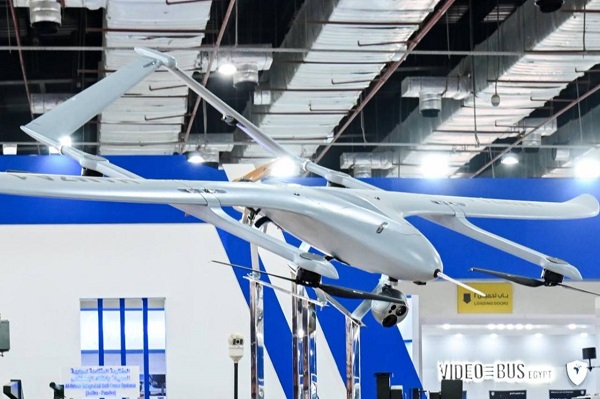
The most symbolic reveal of the expo came with the unveiling of Hamza-1, Egypt’s first locally produced vertical-takeoff drone, developed in partnership with Türkiye’s Havelsan. Designed for surveillance, reconnaissance, and artillery target acquisition, Hamza-1 represents a concrete step in Egyptian–Turkish defense cooperation and a milestone in Cairo’s efforts to develop homegrown unmanned systems.
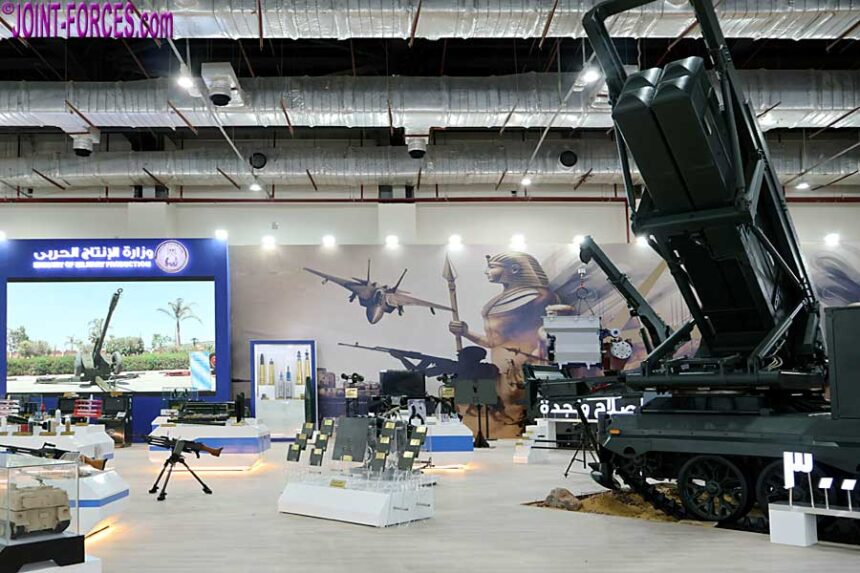
Minister of State for Military Production Mohamed Salah El-Din Mostafa highlighted an array of new Egyptian-made products debuting at EDEX 2025. Leading the lineup is the Ra’ad 300, a tracked, multi-caliber guided rocket launcher capable of striking targets up to 300 kilometers away.
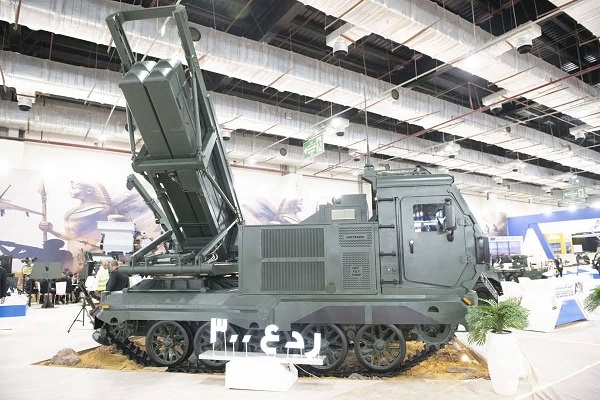
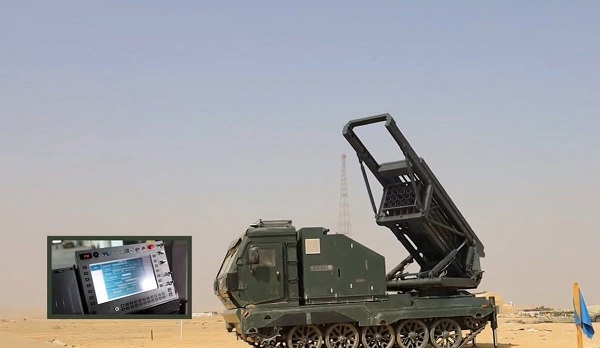
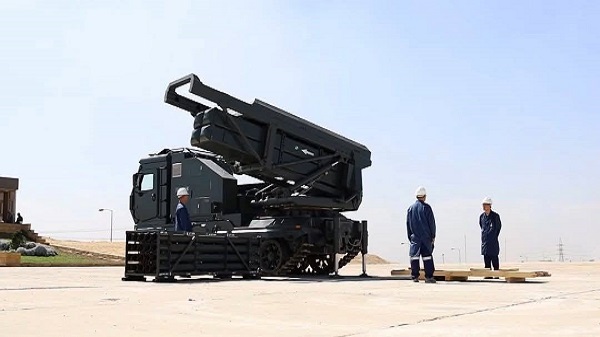
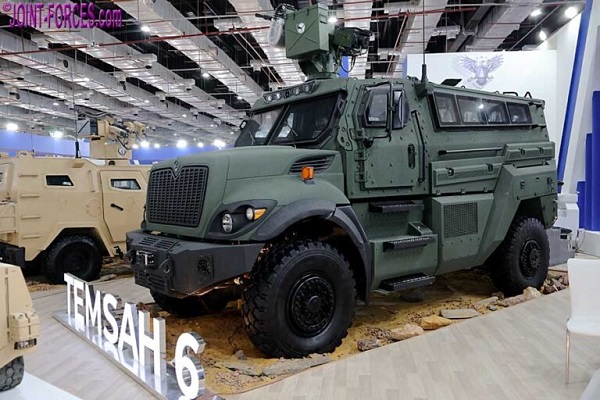
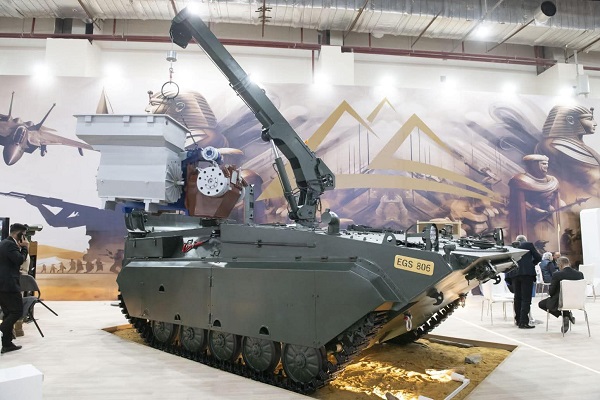
Engineered to operate on both paved and rugged terrain, the launcher underscores Egypt’s push into long-range precision fire capabilities. The minister also unveiled the Sina 806, a fully Egyptian-made armored repair vehicle built to match the protection levels of combat vehicles while carrying a full suite of tools and spare components.
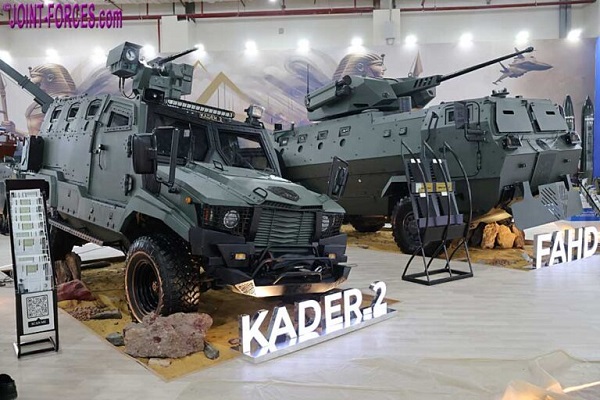
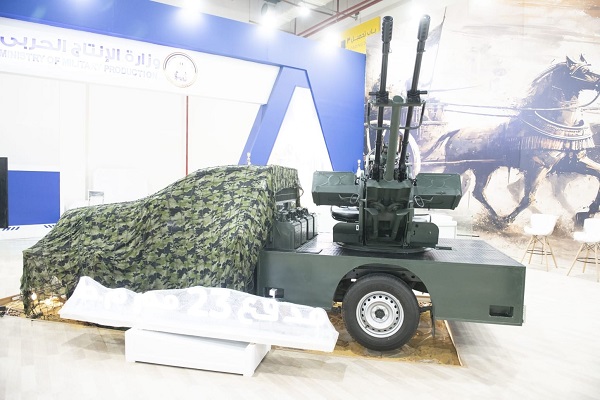
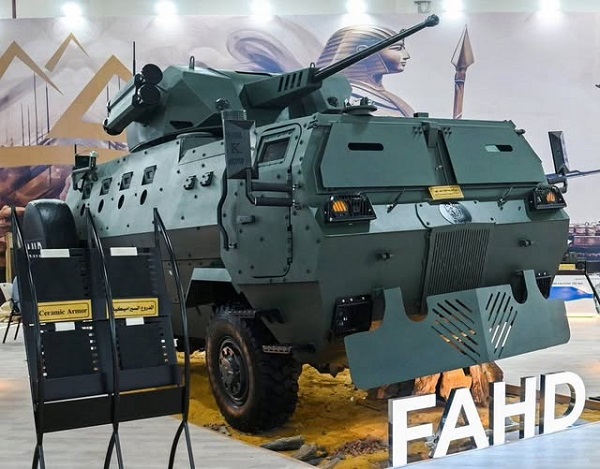
Another innovation is the adaptation of the twin-barrel 23 mm anti-aircraft cannon to a lightweight 4×4 platform, a redesign achieved by modifying the recoil system. This upgrade enables the weapon to engage both aerial and ground threats while remaining mobile and easily deployable.
One of the most consequential industrial achievements announced at the expo is Egypt’s successful localisation of armored steel production. The Ministry of Military Production revealed that it can now produce armored steel up to 30 mm thick, doubling previous capabilities, and in significantly wider sheets. This positions Egypt among a select group of only six countries capable of manufacturing this strategic material, which is vital for tanks and armored fighting vehicles.
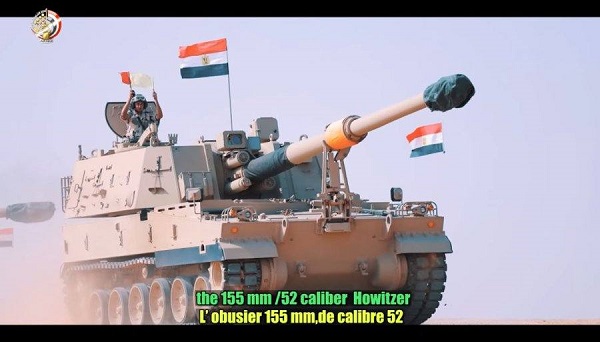
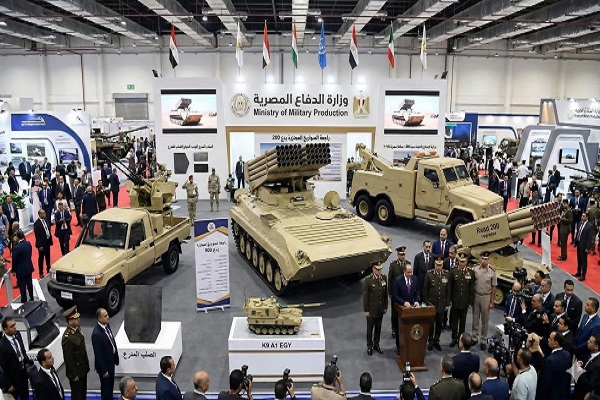
EDEX 2025 also features a scaled model of the 155 mm/52-caliber K9 A1 EGY howitzer, part of Egypt’s strategic partnership to localize production of one of the world’s most advanced artillery systems. A dedicated production line is being prepared, with the first battalion slated for delivery to the Egyptian Armed Forces in the first half of 2026. Ammunition for the system has already entered production domestically.

The Ra’ad 200 rocket launcher also received an upgrade, with a new hydraulic launcher-control system replacing the earlier electric version displayed at EDEX 2023.
As EDEX 2025 continues, the exhibition underscores a decisive trend: Egypt is not merely displaying imported technology, it is asserting itself as an emerging regional hub for defense manufacturing. The expo’s combination of international participation, new partnerships, and domestically produced innovations reflects a defense sector in transition, positioning Egypt to shape the region’s military-industrial balance in the years ahead.
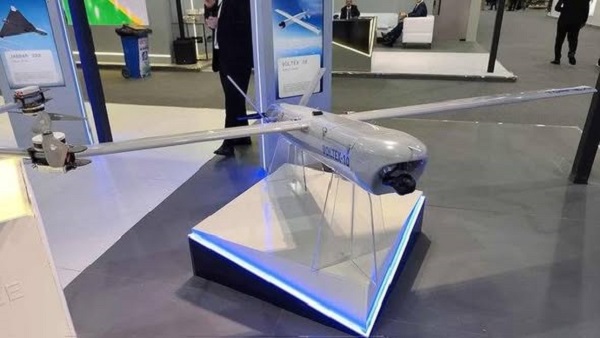
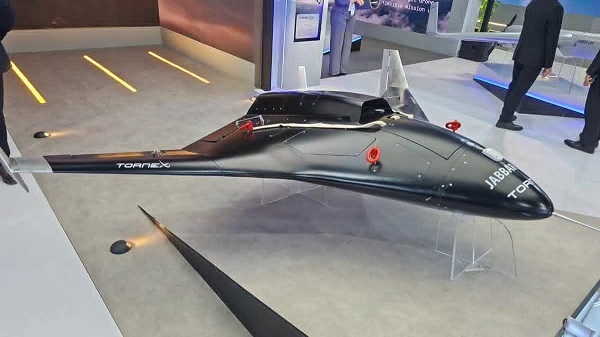
Among the notable domestic exhibitors at EDEX 2025 was the Egyptian defense company Tornex, which showcased its new line of “Voltex” loitering munitions—systems designed to hover over a target area before striking with precision. The Voltex-5, the smaller of the two models, features a range of 180 kilometers, an endurance of 60 minutes, and carries a 5-kilogram explosive payload. Its larger counterpart, the Voltex-10, extends the operational envelope significantly with a 400-kilometer range, a two-hour flight endurance, and a maximum speed of 200 km/h, all while delivering a 10-kilogram warhead.
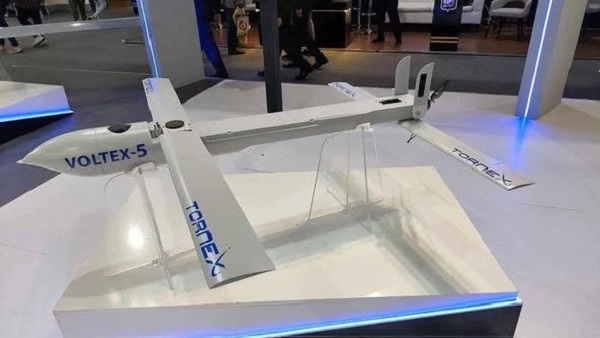
The unveiling of the Voltex family underscores Egypt’s growing entry into the highly competitive loitering-munitions sector and reflects a broader push toward indigenous development of precision-guided weaponry.
Egypt also highlighted a major advancement in its precision-guided munitions portfolio with the display of the GK-100 smart bomb. The GK-100 is not a standalone weapon but a modular guidance kit designed to transform Egypt’s domestically produced unguided bombs into high-precision glide munitions.
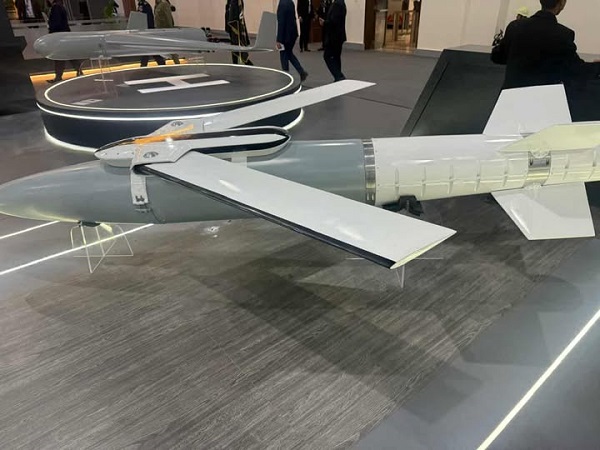
The kit incorporates aerodynamic wings that allow the bomb to glide over long distances, extending its range to nearly 100 kilometers, while maintaining accuracy through an integrated guidance system. Compatible with Egyptian-made bombs of up to 1,000 kilograms, the GK-100 represents a significant step forward in enhancing the strike capabilities of the Egyptian Air Force while reducing dependence on foreign precision-guidance solutions.
