

Ahmed Kamel – Egypt Daily News
Iran warned that global oil prices could surge to $200 per barrel as its forces targeted merchant vessels in Gulf waters, escalating fears of a prolonged energy crisis amid the ongoing war involving the United States and Israel.
The conflict, triggered nearly two weeks ago by joint U.S. and Israeli air strikes on Iranian targets, has already killed around 2,000 people, most of them in Iran and Lebanon, and has sent shockwaves through global energy markets and international shipping routes.
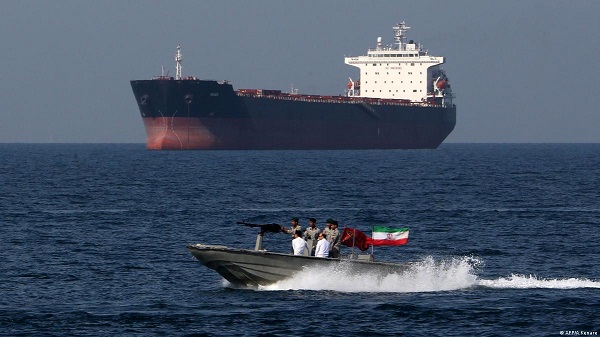
On Wednesday, three commercial vessels were reported hit in Gulf waters after Iran’s Islamic Revolutionary Guard Corps said it had opened fire on ships that allegedly ignored orders issued by Iranian forces. The incidents added to mounting concerns about the safety of maritime traffic in the region.
Among the vessels damaged was a Thai-flagged bulk carrier that caught fire, forcing the crew to abandon ship while three sailors were reported missing and believed trapped in the engine room. Two additional ships a Japanese-flagged container vessel and a bulk carrier registered in the Marshall Islands, were also reported to have sustained damage from projectiles.
The attacks bring the total number of merchant ships struck since the conflict began to at least 14, highlighting the growing risks to global trade.
The violence has effectively shut down traffic through the Strait of Hormuz, the narrow channel along Iran’s southern coast through which roughly one-fifth of the world’s oil supply normally passes. Shipping companies have largely halted operations in the area due to fears of mines and missile attacks.
Sources indicated that Iran may have deployed naval mines in the strait, further complicating any attempt to restore safe passage.
Amid the escalating crisis, oil prices have swung sharply. Crude briefly surged to nearly $120 per barrel earlier in the week before falling back toward $90, only to rise again by more than 4 percent on Wednesday as news of the maritime attacks spread.
The growing threat to global energy supplies has prompted urgent international action. The International Energy Agency recommended releasing 400 million barrels from strategic petroleum reserves held by member states in an effort to stabilize markets, marking the largest coordinated emergency release in history.
But analysts warn that the move would only offset a fraction of the oil normally transported through the Strait of Hormuz.
Iranian officials signaled that economic disruption may be a deliberate part of their strategy. Ebrahim Zolfaqari, a spokesperson for Iran’s military command, said the world should prepare for dramatically higher oil prices as a consequence of the conflict.
“Get ready for oil to be $200 a barrel,” he said in remarks directed at Washington. “The oil price depends on regional security, which you have destabilized.”
Zolfaqari also warned that financial institutions could become targets if the conflict escalates further. After a bank building in Tehran was reportedly hit overnight, he said Iran could respond by striking banks doing business with the United States or Israel.
Meanwhile, despite intense air strikes described by the Pentagon as the heaviest bombardment since the war began, Iran continued launching missile and drone attacks on Israeli and regional targets, demonstrating that its military capabilities remain intact.
An Israeli military official said the country still has an extensive list of targets inside Iran, including ballistic missile facilities and nuclear-related infrastructure.
For his part, U.S. President Donald Trump suggested the conflict might not last much longer, telling Axios in a phone interview that there was “practically nothing left” to strike in Iran.
“Any time I want it to end, it will end,” Trump said.
However, continued attacks across the region including strikes on ports and cities in Gulf states, have heightened fears of a prolonged conflict. Governments in Turkey and across Europe have renewed calls for urgent diplomatic efforts to halt the fighting.
With shipping lanes blocked, oil markets volatile and financial markets rattled, the conflict is rapidly evolving into one of the most serious global energy shocks since the oil crises of the 1970s.
