

Ahmed Kamel – Egypt Daily News
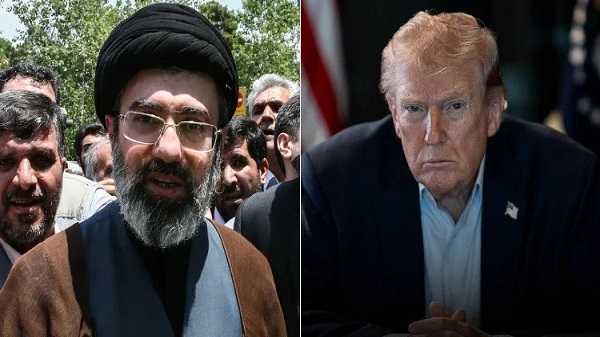
Iran’s newly appointed Supreme Leader Mojtaba Khamenei has issued fresh threats against U.S. President Donald Trump and Israeli Prime Minister Benjamin Netanyahu, rejecting ceasefire proposals and signaling a continued hardline stance as the conflict deepens.
According to a senior Iranian official cited by Reuters, Khamenei dismissed mediation efforts conveyed through intermediary countries, insisting that Tehran would not scale back its military posture. The official described his position as “very tough and serious,” particularly regarding retaliation against the United States and Israel.
The remarks came during Khamenei’s first foreign policy engagement since assuming leadership, underscoring a confrontational approach at a critical moment in the war. Earlier statements attributed to him vowed continued attacks and emphasized the strategic use of the Strait of Hormuz as leverage against Iran’s adversaries.
In his first public address since taking power, Khamenei pledged revenge for those killed in the conflict, including victims of a reported attack on a school in Minab, declaring that “the enemies will pay the price.” His rhetoric signals continuity with Iran’s broader strategy of resistance despite mounting military pressure.
Iranian President Masoud Pezeshkian has outlined conditions for any potential end to the الحرب, stating that Tehran would only consider de-escalation if its “legitimate rights” are recognized, compensation is provided for damages, and binding international guarantees are put in place to prevent further attacks.
On the U.S. side, Trump suggested the conflict could end “soon,” claiming there is “practically nothing left” for American forces to target. However, Iranian officials have countered that the country is prepared for a prolonged confrontation, describing it as a war of attrition that could inflict significant economic damage on the United States and its allies.
Israel has also indicated that its campaign is far from over. Defense Minister Israel Katz said the war had entered a “decisive phase” and would continue for as long as necessary. In remarks to senior military officials, Katz framed the conflict as part of a broader regional and global struggle against Iran.
“The campaign will continue until its objectives are achieved,” he said, adding that internal pressure within Iran could ultimately determine the outcome.
The conflict began with large-scale U.S. and Israeli strikes on February 28 targeting Iranian missile infrastructure, military facilities, and leadership sites across the country, including in Tehran. Since then, Iran has responded with missile and drone attacks across the region and has moved to restrict traffic through the Strait of Hormuz, a critical artery for global energy supplies.
Despite facing superior firepower, Iran has shown no signs of backing down. The latest statements from Khamenei reinforce expectations of a prolonged and increasingly dangerous confrontation, with diplomatic efforts stalled and both sides preparing for further escalation.
