

Ahmed Kamel – Egypt Daily News
Egypt is bracing for a drawn-out economic battle, with Prime Minister Mostafa Madbouly signaling that the global crisis gripping markets may linger far longer than many expect, even if conditions appear to stabilize.
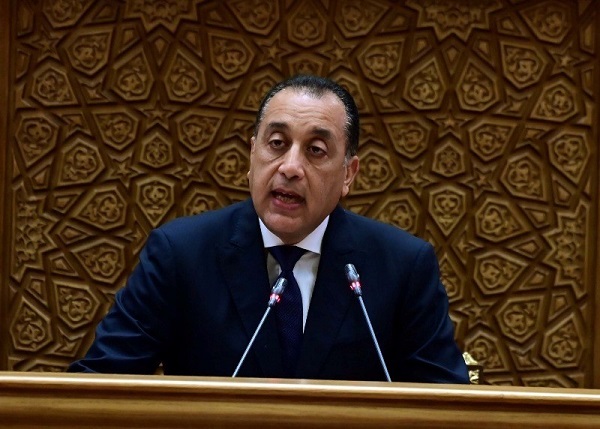
In a blunt assessment before parliament, Madbouly made clear the government is no longer treating the crisis as a temporary shock, but as a prolonged phase of instability shaped by overlapping geopolitical conflicts and fragile global conditions.
The key message: the crisis may “end” on paper but its damage will not.
Officials now expect economic repercussions to stretch at least until the end of the year, with risks tied not only to global inflation and trade pressures, but also to escalating regional tensions that continue to disrupt financial flows and investor confidence.
Planning for the Worst — Not the Best Case
Behind the scenes, the government has shifted into contingency mode.
Madbouly revealed that Cairo has developed multiple economic scenarios, preparing for both escalation and de-escalation paths, a sign that policymakers see uncertainty, not recovery, as the baseline.
This approach marks a clear shift from reactive policymaking to defensive economic strategy, aimed at preserving internal stability while maintaining room to maneuver.
International Backing — But With Conditions
Egypt’s handling of the crisis has drawn cautious approval from the International Monetary Fund, which recently described the country as a model for “responsible” crisis management, a notable endorsement as emerging markets face mounting pressure.
Credit agencies are also holding their ground.
Standard & Poor’s has kept Egypt’s sovereign rating unchanged with a stable outlook, pointing to a delicate balance: ongoing reforms and growth prospects on one side, and persistent external risks on the other.
Meanwhile, Fitch Ratings placed Egypt among the region’s more open investment destinations, highlighting the country’s potential to attract foreign capital, if reforms continue and currency flexibility is maintained.
The Real Test: Investor Confidence
At the center of Egypt’s strategy is one critical factor: foreign investment flows.
Officials are betting that a more flexible exchange rate, combined with structural reforms, can pull in fresh capital even as global conditions remain volatile.
But that bet comes with risk.
Sustaining investor confidence in a prolonged кризис environment will depend not just on policy direction, but on execution, especially as global investors grow more selective and risk-averse.
A Long Year Ahead
The government’s message is clear: this is not a short crisis.
Egypt is preparing for a long, uneven economic stretch, where stability not rapid growth, becomes the priority.
And in that environment, the real success won’t be avoiding pressure…
but managing it better than everyone else.
