

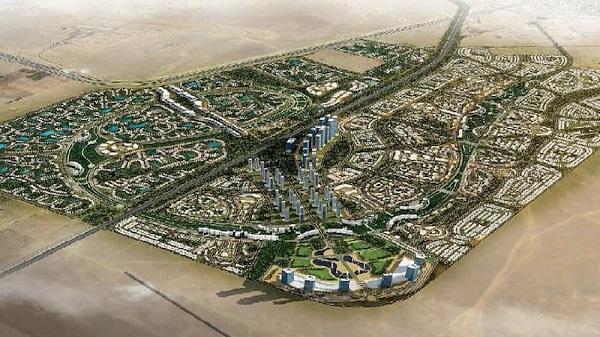
Egypt’s New Urban Communities Authority plans to offer three plots of land totaling 410 acres in Sheikh Zayed City, west of Cairo, to real estate developers before the end of the year. The proposed development projects are expected to attract more than EGP 250 billion in investment, according to a government official cited in the supplied report.
SODIC, Tatweer Misr and Nations of Sky are among the companies preparing to compete for the sites, the official said. The plots measure 190, 150 and 70 acres and are intended for integrated, mixed-use developments. The plans may include residential, hotel, commercial and administrative activities.
The authority intends to make the land available through a partnership arrangement rather than a conventional sale. Under the proposed model, the authority would contribute the land and receive a share of the projects’ returns, while the selected developers would be responsible for financing, development and construction.
The structure could allow the authority to generate value from public land without relying solely on proceeds from selling it outright. For developers, it could provide access to large sites without requiring them to pay the full land cost in advance. The specific terms, however—including how returns or project interests would be divided—are expected to be set out in the tender documents.
The planned offer is part of the government’s broader effort to bring large sites in established cities into development and attract private-sector investment. The aim is to encourage projects that combine housing with commercial and service-related uses. The Sheikh Zayed plots are described as among the city’s largest remaining areas available for development.
The land has been the subject of earlier attempts to secure a developer. It was first offered in a tender in 2007, when Saudi company Al Shoula won the bid. The authority later withdrew the site from the company in 2010 after it failed to complete payment for the land, according to the account provided.
A second attempt followed in 2018, when the authority included the site in the second phase of its partnership projects. Several companies reportedly competed, including Emaar Misr, SODIC, ARCO, Hassan Allam Sons and Hyde Park. ARCO won the offer, but subsequent negotiations did not reach completion. The land then returned to the New Urban Communities Authority.
The upcoming offer would therefore mark another effort to move the site into development, this time through a partnership arrangement that places greater emphasis on shared returns rather than an upfront land purchase. The authority’s approach reflects the financing and execution challenges involved in bringing large-scale urban projects to market, while seeking to preserve a financial stake in the resulting developments.
Real estate partnerships typically involve the public authority making land available in exchange for a portion of a project’s value. Depending on the agreed terms, that share may take the form of completed units, a percentage of revenues, or a combination of the two. The arrangement for the Sheikh Zayed sites has not yet been specified.
The tender documents are expected to clarify how the partnership will work, including the distribution of returns or assets between the authority and participating developers. They are also expected to set out construction requirements and project implementation schedules. Until those conditions are published, the precise financial obligations and timelines for bidders remain undetermined.
The three plots’ different sizes may allow for separate proposals or distinct development plans, although the authority has not yet announced how it will structure the competition. Each site is designated for a mixed-use project, but the balance between residential, hospitality, commercial and administrative components will depend on the final requirements and the proposals submitted by developers.
The scale of the expected investment makes the offer significant for both the authority and the companies seeking to participate. For the authority, a successful partnership could turn a large land asset into a continuing source of returns. For developers, the model offers the opportunity to undertake substantial projects while avoiding the need to finance a full land purchase at the outset.
The next key step will be the release of the tender conditions. Those terms will determine the authority’s share, the responsibilities assigned to developers and the standards and deadlines governing construction. The earlier attempts to develop the land illustrate the importance of reaching an agreement that can proceed beyond the bidding stage and into implementation.
