Ahmed Kamel – Egypt Daily News
A pattern is emerging across the Horn of Africa and it is no longer subtle, isolated, or easy to dismiss. What once appeared to be scattered reports of foreign investment, infrastructure projects, and regional partnerships is now converging into something far more strategic and far more concerning. Newly surfaced high-resolution satellite imagery, combined with geolocated convoy tracking and open-source intelligence analysis, points to a steady and organized flow of military-grade vehicles moving from the Port of Berbera deep into western Ethiopia, toward one of the most sensitive and volatile corridors in East Africa.
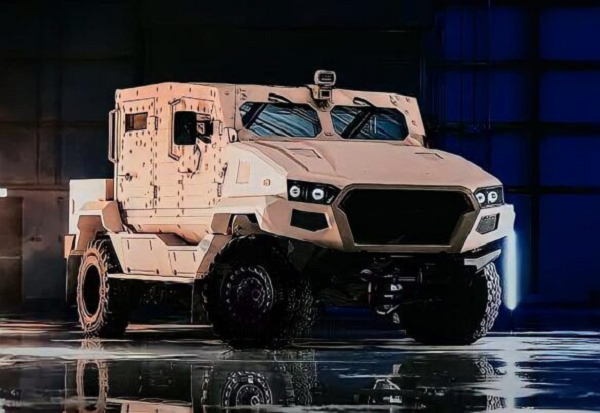
These are not routine shipments. They include dozens of modified Toyota Land Cruiser “technicals”vehicles widely used in active conflict zones, transported across borders with precision timing and apparent coordination. The destination, near the Sudanese frontier, raises urgent and unavoidable questions about intent, control, and the broader strategic game unfolding in a region already on edge.
They are instruments of war.
A Supply Route Hiding in Plain Sight
Convoys traced from Berbera to Dire Dawa and onward to Asosa in the Benishangul-Gumuz region have coincided with a noticeable surge in military activity at bases belonging to the Ethiopian National Defence Forces.
This is not coincidence, it is coordination.
Asosa sits near Sudan’s conflict zones, where the war involving the Rapid Support Forces continues to destabilize the region. Any influx of vehicles and equipment into this corridor raises a direct and urgent question:
Who are these weapons really for?
This is not coincidence it is coordination.
Asosa sits near Sudan’s conflict zones, where the war involving the Rapid Support Forces continues to destabilize the region. Any influx of vehicles and equipment into this corridor raises a direct and urgent question:
Who are these weapons really for?
The UAE’s Expanding Shadow
At the center of this unfolding picture is the United Arab Emirates, a country that has rapidly expanded its footprint across African ports, energy infrastructure, and strategic land over the past decade.
From Berbera’s transformation into a logistics hub, to billion-dollar energy deals through AMEA Power in Ethiopia, to agricultural land acquisitions near Kismayo the pattern is consistent:
Control the land.
Control the routes.
Control the future.
Officials frame these moves as investment and development. But when infrastructure expansion overlaps with military logistics routes and conflict zones, the line between commerce and coercion begins to disappear.
Somaliland: The Quiet Pivot
The role of Somaliland is especially critical and controversial.
Unrecognized internationally but increasingly treated as a strategic partner by Gulf powers, Somaliland has become a gateway for influence into East Africa. The expansion of Berbera is not just about trade; it is about projection of power, influence, and potentially military reach.
Reports of upcoming high-level meetings between Somaliland leadership and UAE officials, alongside growing speculation about renewed international recognition efforts, suggest that this relationship is entering a more consequential phase.
Sudan’s War and the Resource Equation
The war in Sudan is not just a civil conflict, it is a battle over resources, especially gold.
For months, allegations have circulated about external support flowing into the conflict. The United Arab Emirates has denied backing armed groups such as the Rapid Support Forces, but the persistence of complex supply routes and logistical activity raises difficult questions.
If these convoys are feeding into Sudan’s war economy directly or indirectly, the implications are significant.
Why This Matters to Egypt
For Egypt, this is not a distant development. It is a national security concern.
The build-up in Benishangul-Gumuz places increased military capability near the Grand Ethiopian Renaissance Dam, a project Cairo already views as a critical issue.
Add to that a foreign-backed logistics corridor, cross-border military movement, and a region shaped by competing external interests, and the picture becomes far more complex.
This is no longer just about water.
It is about leverage.
A Region Being Rewritten
Across Somalia, Ethiopia, Sudan, and the Red Sea corridor, a new reality is taking shape, one built on ports, deals, and movements that rarely make headlines.
Local communities report land acquisitions, shifting economic control, and decisions made far from the ground. Governments remain largely silent, while strategic assets quietly change hands.
And in the background, the same question grows louder:
Who is shaping the future of the Horn of Africa and at whose expense?
The Bottom Line
No single shipment, convoy, or agreement tells the full story. But together, they form a pattern that is becoming harder to ignore.
A network of influence.
A flow of equipment.
A region under pressure.
And for Egypt, watching from the north, the message is clear: What happens in the Horn of Africa does not stay in the Horn of Africa. The Egyptian President is keen to play his cards in the right time, knowing very well that he has a formidable army and a population that stands besides him. تحيا مصر.