

Ahmed Kamel – Egypt Daily News
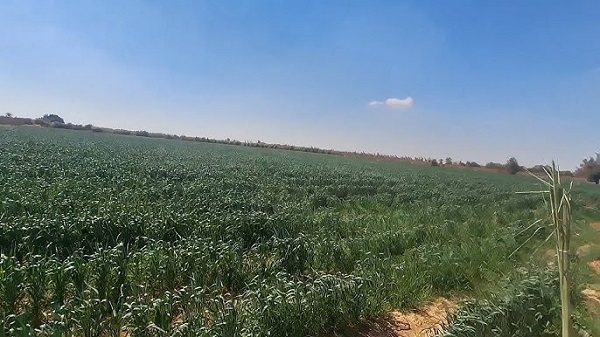
Egypt has introduced a new financial charge on agricultural land located along the Cairo–Alexandria Desert Road, marking a fresh step in the state’s ongoing effort to regulate land use in fast-developing areas west of Cairo.
The decision, announced by the New Urban Communities Authority, applies a so-called “improvement fee” of around 15,000 Egyptian pounds per feddan on farmland situated along both sides of the strategic highway. The road, one of the country’s most important development corridors, has seen accelerating urban expansion in recent years as residential, industrial, and commercial projects continue to spread outward from the capital.
The move links the new charges to infrastructure upgrades and road development works in the area, effectively tying land value increases to state-led improvements. Authorities indicated that similar measures are expected to be applied later to surrounding development zones, including the Wadi El Natrun–El Alamein axis once ongoing upgrades are completed.
Alongside the fee structure, the state has also revised long-standing rules governing the conversion of agricultural land into urban use. Under the updated framework, financial penalties have been fully removed. Instead, landowners seeking to regularize their status will now be required to surrender a portion of their land to the state as the sole form of settlement.
The percentage of land to be transferred varies according to size. Holdings between five and twenty feddans will see around 65 percent of their land allocated to the state, while larger properties exceeding twenty feddans will contribute roughly 50 percent. The state has also stipulated that the most strategically valuable sections of each property will be included in these allocations, allowing them to be integrated into future urban planning schemes.
Officials say the new system is designed to streamline the process of bringing informal or partially converted agricultural areas into the formal urban framework, while also securing state control over high-value land corridors that are rapidly gaining economic importance.
The shift effectively ends the option of cash-based settlements for land conversion cases, replacing monetary fines with direct land contributions. This marks a significant change in how Egypt manages disputes over land use, particularly in regions experiencing intense development pressure.
As implementation begins, the policy is expected to reshape ownership patterns along one of Egypt’s most valuable growth corridors, reinforcing the state’s role in directing urban expansion while tightening oversight of agricultural land transitioning into real estate development.
