

Ahmed Kamel – Egypt Daily News
The confrontation between Washington and Tehran sharpened dramatically on Tuesday after U.S. Secretary of State Marco Rubio accused Iran of effectively “holding the whole world hostage” through its influence over the strategic Strait of Hormuz, warning that even a limited escalation could send shockwaves through global energy markets.
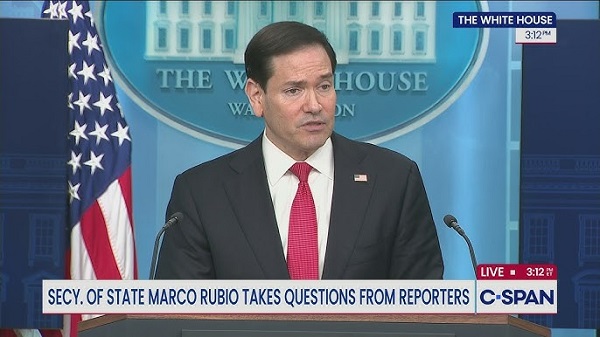
Speaking from the White House, Rubio delivered one of the most aggressive U.S. warnings in recent months, framing the crisis not as a regional standoff but as a direct threat to global economic stability. He argued that Iran’s leverage over the narrow waterway gives it the power to disrupt international shipping and energy flows at will, adding that a nuclear-armed Iran would make the situation uncontrollable.
The rhetoric quickly escalated beyond deterrence. Rubio said the United States would respond with “lethal efficiency” if American forces or commercial vessels are attacked, stressing that Washington does not seek conflict but will not hesitate to retaliate. The message was blunt: restraint will be met with restraint, but any strike will trigger immediate response.
At the same time, the U.S. defense establishment attempted to contain fears of imminent war. Defense Secretary Pete Hegseth insisted the fragile ceasefire framework remains in place and said Washington is “not looking for a fight” in the Strait. But the contradiction between diplomatic reassurance and military warning reflects how unstable the situation has become.
On the ground, the tension is no longer theoretical. The United Kingdom Maritime Trade Operations reported that a cargo vessel was struck by an unidentified projectile near the Strait of Hormuz, an incident that immediately raised alarms across the global shipping industry. While no actor has claimed responsibility, the strike has intensified fears that commercial routes could be dragged directly into the confrontation.
The crisis is also widening politically. Reports of air defense activity in the United Arab Emirates following alleged drone and missile threats from Iran have added another layer of instability, even as Tehran denies any involvement in recent attacks.
Behind the scenes, Washington is pushing a parallel diplomatic track through the United Nations, where it has reportedly adjusted a draft resolution to pressure Iran without triggering vetoes from major powers. The proposal threatens sanctions and calls for restrictions on attacks in the Strait, while also demanding greater transparency over maritime activity and support for humanitarian corridors.
But the language coming from Washington suggests patience is thinning. Rubio’s message went beyond standard deterrence, framing Iran as a destabilizing force with global leverage and warning that the current moment could tip in either direction containment or confrontation.
For now, the Strait of Hormuz remains open. But politically, it is tightening by the hour.
