

Ahmed Kamel – Egypt Daily News
Iraq has dismissed the commander responsible for military operations in Maysan province after an investigation determined that an attack on a major Saudi oil pipeline was launched from a site inside the southern Iraqi province.
The decision represents one of Baghdad’s strongest responses to an incident that has placed additional strain on relations with Saudi Arabia and raised concerns about the ability of Iraqi authorities to prevent armed groups from using national territory to target neighboring countries.
Prime Minister and Commander-in-Chief of the Armed Forces Ali Faleh al-Zaidi ordered the removal of the Maysan operations commander and instructed authorities to establish an investigative panel to examine the security failures surrounding the attack. Iraqi officials said the inquiry would determine how the launch site was used and identify those responsible.
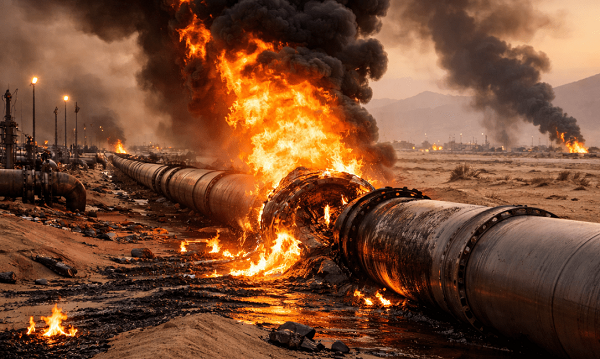
The incident involved Saudi Arabia’s East-West pipeline, a critical energy route linking the kingdom’s oil-producing areas with facilities on the Red Sea coast. Saudi authorities said the pipeline was struck by several drones that came from Iraq. The attack caused injuries and damage near pumping stations in the Riyadh and Medina regions, prompting Saudi Arabia to suspend operations temporarily as a precaution while technical teams assessed the infrastructure.
Satellite imagery reviewed after the incident showed signs of fire damage around at least one pumping station. Another image appeared to show smoke rising from a separate facility shortly after the strikes.
Saudi Arabia condemned the attack but decided not to launch an immediate military response. Riyadh said the decision followed a request from the Iraqi prime minister, who asked for time to allow Baghdad to take action against those responsible and prevent further attacks from Iraqi territory.
The Saudi Foreign Ministry said the kingdom supported Iraq’s efforts to address the matter but reserved the right to take whatever measures it considered necessary to protect its sovereignty, facilities, citizens and residents.
The Iraqi government has sought to reassure Riyadh that it will not allow the country to become a platform for attacks against neighboring states. Security officials said the government’s approach was based on what they described as “preventive sovereignty”—the principle that Iraq must not only defend its own territory but also ensure that its land is not used to threaten other countries.
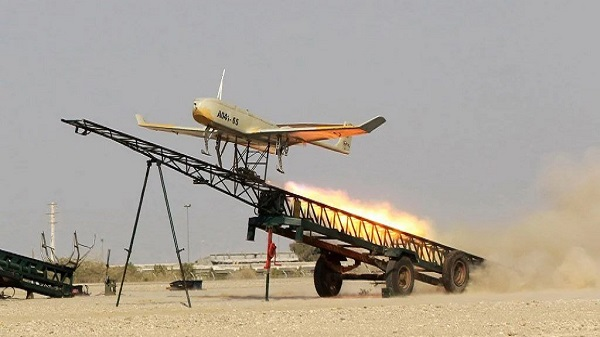
Iraqi security authorities later announced that they had located and seized a launch platform believed to have been used in the operation. Investigators were continuing to examine the equipment and gather intelligence to establish the identities and affiliations of those involved.
Lieutenant General Saad Maan, head of Iraq’s Security Media Cell, said security and intelligence teams were working in coordination with Saudi authorities. Information collected during the investigation was being shared with Riyadh, he added.
Maan said the dismissal of senior security officials was intended to demonstrate that the Iraqi state would not tolerate attacks launched from its territory. He also said changes to local command structures were designed to improve oversight, field monitoring and coordination during a period of heightened regional tension.
The central government introduced additional measures in Maysan and at border crossings with Iran. Several crossings were temporarily closed while officials reviewed administrative and intelligence procedures and inspected surveillance equipment, including sonar systems. The measures were presented as part of an effort to tighten control over movement across the border and prevent unauthorized military activity.
Iraqi authorities also ordered the removal or investigation of other senior officials in Maysan, including the provincial police commander and directors of local security agencies. Those officials were reportedly transferred to administrative custody pending the outcome of the investigation.
The pipeline attack has broader implications because the East-West route provides Saudi Arabia with an alternative path for exporting crude when maritime traffic through the Strait of Hormuz faces disruption. Its temporary closure therefore added to concerns about the security of energy infrastructure and international shipping routes across the region.
The incident also comes amid wider military tensions involving armed groups linked to Iran and conflicts across the Middle East. Saudi Arabia and the United States carried out joint strikes against an Iran-backed Iraqi militia in July after attacks targeted American forces and Saudi energy facilities. Those earlier incidents had already heightened fears that Iraq could become an arena for indirect confrontation between regional and international powers.
Baghdad has attempted to distance itself from such escalation while maintaining ties with powerful armed factions operating inside the country. The latest investigation will test the government’s ability to enforce its authority over military sites and prevent independent groups from drawing Iraq into conflicts beyond its borders.
Foreign Minister Fuad Hussein spoke by telephone with Saudi Foreign Minister Prince Faisal bin Farhan after the attack. The two officials reaffirmed the longstanding relationship between Iraq and Saudi Arabia and discussed regional developments and issues of mutual concern.
The diplomatic contact was intended to contain the dispute and preserve cooperation between Baghdad and Riyadh. For Iraq, the immediate priority is to identify the perpetrators, prevent another attack and demonstrate that national territory is under state control. For Saudi Arabia, the response will depend on whether Baghdad’s investigation produces concrete results and whether the measures announced by Iraqi authorities can effectively stop further attacks.
